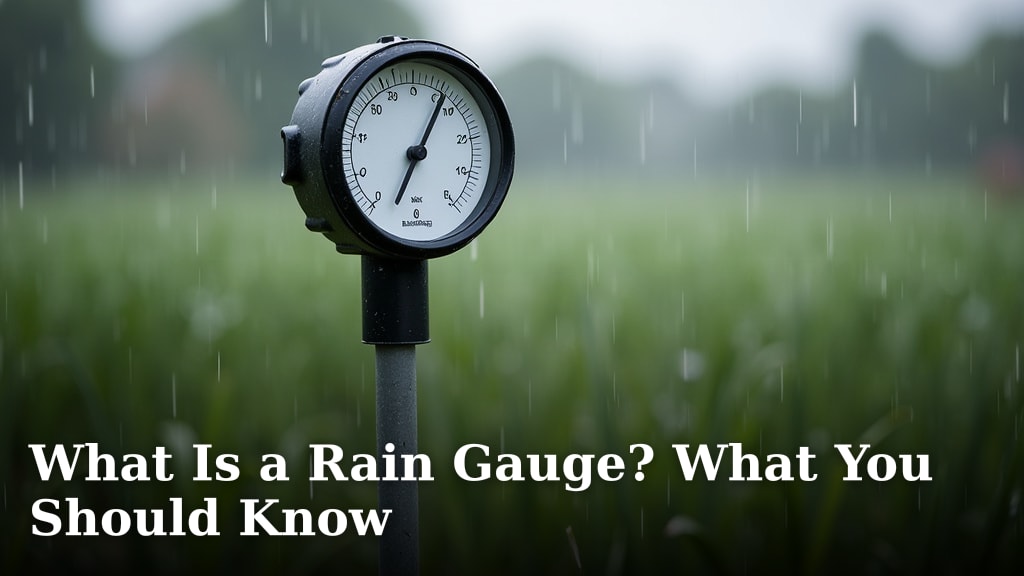
What Is a Rain Gauge? What You Should Know
A rain gauge is a simple tool used to measure the amount of precipitation that has fallen over a specific period. You can think of it as a trusty sidekick for understanding your local weather. It’s essential for gardeners, farmers, and anyone curious about rainfall patterns. Knowing how much rain you’ve received helps you make smarter decisions about watering plants or planning outdoor activities.
These devices are typically shaped like a cylinder or a funnel. They collect rainwater in a measuring tube or jar. This collection allows for a precise reading of the rainfall depth. Many modern gauges also offer features like digital readouts or even Wi-Fi connectivity. But at their core, they serve the fundamental purpose of tracking how much the skies have opened up.
- A rain gauge measures rainfall.
- It’s a simple, essential tool for weather tracking.
- It helps you understand local precipitation amounts.
- Gardeners and farmers find them particularly useful.
We’ve gathered the key details about what a rain gauge is and why you might want to use one. Let’s break down everything you need to know.
“`htmlUnderstanding Your Rainfall: A Guide to Rain Gauges
So, what exactly is a rain gauge, and why should you care about this simple weather instrument? Think of it as your personal weather station. It’s a straightforward device designed to help you measure and track how much rain falls in your specific location. This isn’t just for meteorologists; it’s a tool for anyone who wants to better understand their local climate.
How Does a Rain Gauge Work?
The basic principle behind a rain gauge is quite simple. It collects rainwater. Then, it allows you to measure the depth of that collected water. This measurement tells you the total precipitation that occurred during a set time. Most gauges are designed to be placed outdoors, open to the sky. They catch every drop that falls directly into them.
The Collection Process
When rain falls, it enters the top of the gauge. Depending on the type, it might go directly into a measuring tube. Or, it could be collected in a larger container first. The goal is always to capture a representative sample of the rainfall over a defined area. This sample then provides a clear reading.
Measuring the Water
After the rain stops, you simply read the measurement on the gauge. This usually involves looking at a scale marked on the tube or container. The scale will show the depth of the water in inches or millimeters. You can then record this number. Many people do this daily or after each rainfall event.
Types of Rain Gauges You’ll Find
Not all rain gauges are created equal. There’s a range of designs available, each with its own pros and cons. Knowing the different types can help you choose the best one for your needs. Some are very basic, while others have more advanced features. Let’s look at the most common ones.
The Standard Measuring Tube Gauge
This is perhaps the most traditional and common type. It typically consists of a funnel that directs rain into a narrow, calibrated tube. Because the tube is narrow, even a small amount of rain will show a noticeable rise in the water level. This makes it very accurate for measuring light to moderate rainfall. The markings on the tube are usually in inches or millimeters. You might need to empty it more frequently.
The Tipping Bucket Gauge
These gauges are more common in automated weather stations. They work by collecting rain in a small bucket. When the bucket fills with a specific amount of water (often 0.01 inches), it tips over. This action empties the bucket and triggers a count. The gauge then electronically records each tip. This is a great way to get continuous data. It’s also useful if you can’t be there to read the gauge immediately. Some home models use this technology.
The Storage Gauge (or Tall Cylinder Gauge)
This type is designed to collect and store rain over longer periods. It’s essentially a large, tall cylinder with a wide opening. Because it can hold more water, it’s ideal for areas that receive heavy or prolonged rainfall. You measure the water by pouring it from the cylinder into a separate measuring tube. These are often used in remote locations or where frequent emptying isn’t possible. They are built to be very durable.
Digital and Smart Rain Gauges
With technology advancing, digital rain gauges are becoming more popular. These often use the tipping bucket mechanism but connect to a display unit or even your smartphone via Wi-Fi. You can get instant readings and historical data. Some smart gauges can also measure other weather elements. They offer a convenient way to track rainfall without manual checks. You can often set up alerts for when a certain amount of rain has fallen.
Why Would You Want to Use a Rain Gauge?
You might be wondering if a rain gauge is really necessary for you. The answer depends on your interests and activities. For many people, it’s a fun way to connect with nature and the weather. For others, it’s a practical tool that can save time and resources.
For Gardeners and Farmers
This is where rain gauges truly shine. Gardeners and farmers rely heavily on accurate precipitation data. Knowing exactly how much rain has fallen helps you avoid over-watering or under-watering your plants. This leads to healthier growth and healthier crops. It can also help in managing irrigation systems more efficiently, saving water and money. Many experts suggest checking your soil moisture too, but rainfall data is a key piece of the puzzle (University Extension Offices).
For Weather Enthusiasts and Curious Minds
If you enjoy tracking weather patterns, a rain gauge is a fantastic addition. You can compare your local rainfall to regional averages. You can observe seasonal changes and notice trends over time. It turns passive weather observation into an active hobby. It’s a tangible way to interact with the weather data you see on the news.
For Homeowners and Property Managers
Understanding your rainfall can also be practical for home maintenance. For instance, knowing how much rain you get can inform decisions about drainage systems. It might help you assess the need for drought-tolerant landscaping. For property managers, it can assist in budgeting for water usage or managing irrigation schedules across different areas. It helps in efficient resource management.
For Specific Projects and Activities
Are you planning an outdoor event? Or maybe you’re involved in a project that requires specific weather conditions? A rain gauge can provide valuable historical data. It can help you make more informed decisions about scheduling. While you can’t control the weather, having data helps you plan more effectively.
Choosing the Right Rain Gauge for You
With so many options, picking the right rain gauge might seem a bit daunting. Consider these points to help you decide. Your budget, how you plan to use it, and how much effort you want to put into reading it are all important factors.
Accuracy and Type
For most home users, a standard measuring tube gauge offers a good balance of accuracy and simplicity. If you want automated tracking, a tipping bucket or digital model is better. If you live in an area with very infrequent but heavy rain, a large storage gauge might be useful.
Ease of Use and Reading
Are you okay with manually emptying and reading a gauge daily? Or do you prefer a device that sends data to your phone? Think about how often you’ll check it and what level of convenience you desire. Some gauges have larger, easier-to-read markings than others.
Durability and Placement
Your rain gauge will be outdoors, exposed to the elements. Choose one made from durable materials like UV-resistant plastic or metal. Also, consider where you will place it. It needs to be in an open area, away from trees or buildings that could block rainfall or cause false readings. A stable mount is also important.
Tips for Accurate Rainfall Measurements
To get the most out of your rain gauge, a few simple practices can make a big difference. Accuracy is key to getting useful data from your measurements. Following these tips will ensure your readings are reliable.
- Location, Location, Location: Place your gauge in an open area. Avoid placing it near trees, buildings, or fences. These can obstruct rainfall or create splashes that affect the reading.
- Level It Out: Ensure the gauge is placed on a perfectly level surface. Many gauges have a built-in level. This is critical for accurate measurement.
- Regular Emptying: Empty your gauge regularly, especially after each rain event. If you have a gauge that collects a lot of water, empty it before it overflows.
- Keep It Clean: Periodically clean your rain gauge. Remove any debris like leaves, twigs, or insect nests. This ensures the funnel and measuring tube remain unobstructed.
- Secure It: Make sure the gauge is firmly secured to its mount. Strong winds can blow it over, leading to inaccurate readings or damage.
What Do the Numbers Mean?
Once you start measuring, you’ll see numbers. What do they tell you? A reading of 1 inch means that if the water had pooled on a flat, level surface, it would be 1 inch deep. It doesn’t mean 1 inch of water fell on your entire property. It’s a measure of depth collected by the gauge. This depth is then used to calculate the total volume of rain that fell over a certain area.
Common Misconceptions About Rainfall Measurement
People sometimes misunderstand how rainfall is measured. It’s good to clear up a few common myths. This helps you interpret your readings correctly.
- Myth: More rain means a higher reading. Fact: A higher reading means more *depth* of rain. It’s about how much accumulated, not how hard it rained.
- Myth: All rain gauges measure the same. Fact: Different types and designs can have slightly different accuracy. Proper placement and maintenance are crucial for any gauge.
- Myth: Snowfall is measured the same way. Fact: Snowfall is typically measured differently. It’s often melted down to measure the equivalent water content. Some gauges have specific instructions for snow.
Your Simple Rainfall Checklist
Ready to get started or optimize your rain gauge use? Here’s a quick checklist to keep in mind:
- Select the right type of gauge for your needs.
- Choose an open, level spot for placement.
- Mount it securely so it won’t tip over.
- Record your measurements regularly after rain.
- Clean your gauge periodically for accuracy.
- Compare your readings to local weather reports.
Conclusion
You’ve learned that a rain gauge is a simple yet powerful tool for understanding your local weather. Whether you’re a gardener, a farmer, or just curious about the rain, knowing your precipitation amounts helps you make smarter decisions. From traditional measuring tubes to smart digital devices, there’s a gauge for every need. By choosing the right one and placing it correctly, you can accurately track rainfall. Start measuring today to gain a clearer picture of your environment and connect more deeply with the weather around you.
Frequently Asked Questions
How often should I empty my rain gauge?
You should empty your rain gauge after each rainfall event to get the most accurate reading for that specific period. If you have a gauge that collects a large amount of water, ensure you empty it before it overflows. This prevents lost data and maintains accuracy.
Where is the best place to put a rain gauge?
Place your rain gauge in an open area, away from anything that could block the rain. Avoid positioning it too close to trees, buildings, or fences. Ensuring it’s on a level surface and not subject to wind disruption is also key for reliable measurements.
Can I use a rain gauge to measure snowfall?
While some rain gauges can be adapted for snow, they aren’t always the best tool. Snowfall is typically measured by melting it down to its water equivalent. It’s best to check your gauge’s manual for specific instructions on measuring snow, or use a tool designed for it.
What is the difference between a tipping bucket and a standard measuring tube gauge?
A standard measuring tube gauge uses a funnel and a narrow tube to show a direct water level. A tipping bucket gauge collects rain in a small bucket that empties and electronically records each tip when a specific amount of rain falls. Tipping bucket gauges are often automated and provide continuous data.
Do I really need a rain gauge if I can just look at the weather report?
Weather reports give you general regional rainfall, but a personal rain gauge provides hyper-local data for your exact yard. This precise measurement is especially useful for gardeners to know if their plants are getting enough water directly. It also makes tracking rainfall a more engaging and personal experience.