What Is a Barometer? What You Should Know
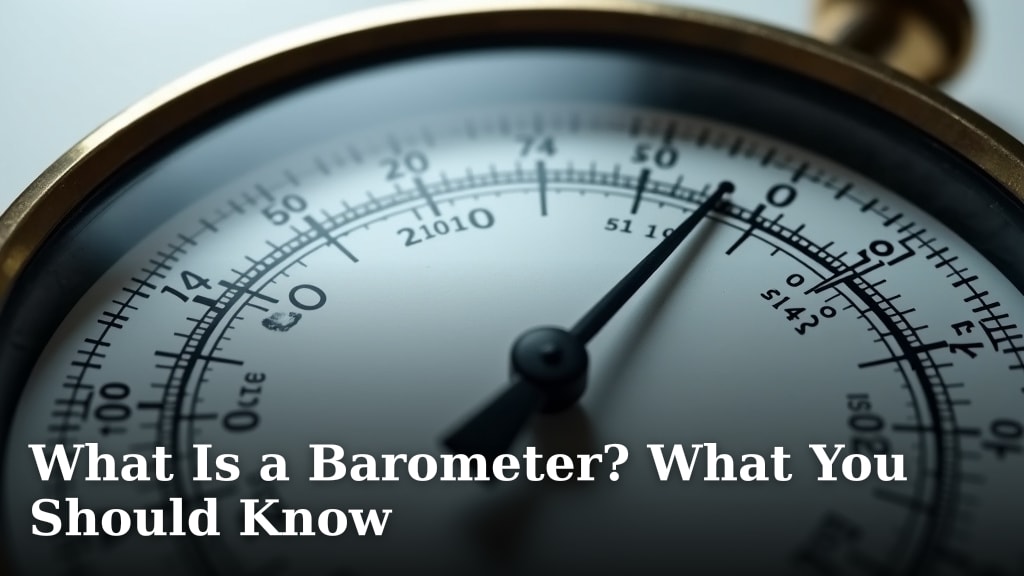
A barometer is a scientific instrument used to measure atmospheric pressure. This measurement helps us understand and forecast weather changes. Think of it as a weather detective’s tool!
Understanding barometric pressure is key to grasping weather patterns. When pressure drops, it often means storms are approaching. When it rises, clearer skies are usually on the way. Many weather apps and forecasts use this data.
- A barometer measures air pressure.
- Air pressure changes help predict weather.
- Falling pressure often signals storms.
- Rising pressure usually means good weather.
Below, we’ll explain exactly what a barometer is and what you should know about how it works.
Understanding Your Barometer: What It Is and How It Works
A barometer is a scientific tool that measures the weight of the air around us. This measurement is called atmospheric pressure. Think of the air as having a weight, and a barometer tells you how heavy that weight is at any given moment. This simple measurement can tell you a lot about the weather that’s coming your way. Many people find them useful for getting a heads-up on weather changes.
It might seem strange that air has weight. But the Earth’s atmosphere is a vast ocean of gases. This column of air presses down on everything. We just don’t notice it because we’re used to it. A barometer is the tool that makes this invisible pressure visible. It helps us understand weather patterns better.
How Does a Barometer Measure Air Pressure?
There are a few main types of barometers you might encounter. Each works a little differently to detect changes in air pressure. The most common types are the mercury barometer and the aneroid barometer. Both are quite clever in their own way.
The Mercury Barometer: A Classic Design
The mercury barometer is one of the oldest and most accurate types. It was invented by Evangelista Torricelli in the 17th century. He was curious about why water pumps could only lift water so high. His experiments led to this design. It’s a simple yet ingenious device. It uses mercury, a liquid metal, to show pressure.
Here’s how it works: a glass tube, closed at one end, is filled with mercury. This tube is then inverted and placed in a dish also containing mercury. The mercury in the tube will fall slightly. It leaves a vacuum at the top of the tube. The mercury in the dish is open to the atmosphere. The weight of the air pressing down on the mercury in the dish supports the column of mercury in the tube. If air pressure increases, it pushes down harder on the dish. This forces the mercury in the tube to rise. If air pressure falls, the air pushes less. The mercury in the tube falls.
The height of the mercury column in the tube directly indicates the atmospheric pressure. Standard sea-level pressure is often expressed as 29.92 inches of mercury or 760 millimeters of mercury. You can often see markings on the tube or a scale next to it to read the pressure. While very accurate, these barometers are fragile and the mercury is toxic. This makes them less common in homes today. They are still used in some scientific settings.
The Aneroid Barometer: No Liquid Required
The aneroid barometer is the type you’re most likely to see in homes or for general weather observation. “Aneroid” means “without fluid.” This design is more practical and safer for everyday use. It uses a small, flexible metal box. This box is sealed and contains a partial vacuum. Think of it like a tiny, collapsible bellows.
As atmospheric pressure changes, the metal box expands or contracts. When air pressure is high, it squeezes the box, making it smaller. When air pressure is low, the box expands. This expansion and contraction is linked to a pointer or needle on a dial. This needle moves to indicate the current air pressure. It’s a clever mechanical system that translates air weight into a visible reading.
Aneroid barometers are usually calibrated. This means they are set to agree with a standard mercury barometer or other known accurate pressure reading. They are quite good at showing trends. You can see the needle move over time. This helps you track whether the pressure is rising or falling. Many modern aneroid barometers also include a thermometer. They often have a dial with markings like “Rain,” “Change,” and “Fair.” These are general indicators, not precise predictions.
What Do Barometer Readings Mean for Your Weather?
Understanding how a barometer works is only half the story. The real value comes from knowing how to interpret the readings. Barometric pressure changes are closely linked to weather systems. They are a key indicator of approaching weather.
Falling Pressure: What to Expect
When you see the barometer needle dropping, it usually means lower pressure is moving in. Low-pressure systems are often associated with unsettled weather. This means you might see clouds forming. You could experience increased humidity. Eventually, this can lead to rain, snow, or storms. The faster the pressure falls, the more rapidly the weather is likely to change. A rapid drop can signal a strong storm approaching. It’s like the atmosphere is taking a deep breath before letting loose. Many experts point to a drop of 0.10 inches of mercury or more in three hours as a sign of changing weather (National Weather Service).
Rising Pressure: What to Expect
On the other hand, a rising barometer often signals improving weather. High-pressure systems are typically associated with clear skies and calm conditions. As pressure increases, it pushes down on the atmosphere. This helps to disperse clouds and moisture. You’ll likely see the sky clear up. The air tends to feel drier and the wind might die down. A steady rise in pressure generally means fair weather is expected to continue. It’s like the atmosphere is settling down. Stable high pressure can bring days of sunshine.
Steady Pressure: What it Means
If your barometer’s needle stays in the same place, it means the atmospheric pressure is stable. This usually suggests that the current weather conditions will continue. If it’s sunny and the pressure is steady, expect more sunshine. If it’s cloudy and the pressure is steady, the clouds might stick around. However, remember that even steady pressure can eventually change. It’s always good to keep an eye on the trend.
| Pressure Trend | Likely Weather | What It Means |
|---|---|---|
| Falling Quickly | Stormy or Rainy | Air is becoming lighter; low-pressure system approaching. |
| Falling Slowly | Cloudy, Possible Rain | Pressure is decreasing gradually; unsettled weather likely. |
| Steady | Continuing Current Weather | Atmospheric conditions are stable. |
| Rising Slowly | Clearing, Fair Weather | Pressure is increasing gradually; high pressure building. |
| Rising Quickly | Very Clear, Fair Weather | Strong high-pressure system moving in; stable conditions. |
Where Should You Place Your Barometer?
The accuracy of your barometer depends a lot on where you put it. You want it in a spot where it can accurately reflect the outside air pressure. This means avoiding conditions that could skew its readings. Think about what might influence the air around the instrument.
First, you should place your barometer away from direct sunlight. Heat from the sun can cause the metal parts inside an aneroid barometer to expand. This can make the reading higher than it actually is. It’s like giving it a false sense of high pressure. Also, keep it away from heat sources like radiators, fireplaces, or vents. These will also artificially warm the barometer.
Second, avoid placing it near drafts or open windows. A strong draft can create localized changes in air pressure around the instrument. This could lead to an inaccurate reading. You want it to reflect the general atmospheric pressure, not a sudden gust of wind. Think of it needing a calm environment to do its job.
Finally, ensure it’s on a stable, level surface. This is especially important for aneroid barometers. Their internal mechanisms need to be balanced. If the barometer is tilted, the readings might be off. A wall-mounted barometer should be securely fastened. Check that it hangs straight.
Tips for Using and Maintaining Your Barometer
Barometers are relatively low-maintenance instruments. However, a little care can ensure they keep providing useful information. They are not complicated devices, but some simple steps can help.
- Regularly check the reading: Make it a habit to look at your barometer each day. Note the pressure and whether it’s rising or falling. This helps you get a feel for your local weather patterns.
- Compare with local forecasts: See how your barometer readings align with weather forecasts from reliable sources. This helps you learn how your barometer performs in your specific location.
- Calibrate if needed: If your barometer seems consistently off, it might need calibration. Many aneroid barometers have a small screw on the back for adjustment. Consult your barometer’s manual for specific instructions. Many experts suggest recalibrating yearly or if the barometer is moved significantly.
- Keep it clean: Dust can affect the moving parts of an aneroid barometer. Gently wipe the casing and the glass with a soft, dry cloth. Avoid using any cleaning sprays directly on the instrument.
Is a Barometer Still Relevant Today?
You might be wondering if you still need a barometer when you have weather apps on your phone. The answer is yes, for many people! While your phone provides sophisticated forecasts, a barometer offers a direct, real-time reading of atmospheric pressure. It’s a physical connection to the atmosphere.
Having a barometer can be a fun and educational tool. It helps you understand the ‘why’ behind weather changes. You can see the pressure drop before a storm hits. This can make you feel more in tune with nature. It’s also a beautiful decorative item. Many barometers are crafted with care and add a touch of classic science to your home.
Furthermore, understanding barometric pressure can enhance your appreciation for weather reports. When you hear about rising or falling pressure, you’ll know what it means for yourself. It’s a skill that has been used for centuries to predict weather. This historical context adds to its charm. Many outdoor enthusiasts, sailors, and pilots still rely on barometric pressure readings as a key piece of weather information.
Barometer Checklist for Shoppers
Before you buy or start using a barometer, consider these points:
- Type of Barometer: Decide between aneroid (common, safer) or mercury (classic, precise, but fragile and toxic).
- Readability: Ensure the dial or markings are clear and easy to read from your preferred viewing distance.
- Calibration: Check if the barometer is pre-calibrated or if it offers an easy way to calibrate it yourself.
- Additional Features: Some barometers include thermometers or humidity indicators. Decide if these are important for you.
- Mounting Options: Consider if you want a desktop model or one to mount on a wall.
- Aesthetics: Barometers come in many styles. Choose one that complements your home decor.
Conclusion
You’ve learned that a barometer is a powerful tool for understanding atmospheric pressure and predicting weather changes. Whether you choose a classic mercury barometer for accuracy or a practical aneroid model for home use, knowing how it works helps you interpret its readings. Remember to place your barometer in a stable, draft-free spot away from heat and sun for the most accurate readings. By regularly checking your barometer and comparing its trends to local forecasts, you can become more attuned to the weather patterns around you. Take the next step by finding a barometer that fits your needs and start observing the atmosphere firsthand!
Frequently Asked Questions
How often should I check my barometer?
It’s best to check your barometer daily to get a good sense of the pressure trends. This regular observation will help you understand how pressure changes locally relate to different weather conditions. You’ll start to see patterns emerge over time.
Can I use my barometer to predict the exact time of rain?
A barometer is excellent for indicating that rain or storms are likely approaching, especially with a rapid pressure drop. However, it doesn’t give you a precise timing for weather events. It’s a great general weather indicator, not a minute-by-minute forecast.
What does it mean if my barometer has “Rain,” “Change,” and “Fair” markings?
These markings on many aneroid barometers are general indicators based on pressure trends. “Rain” usually corresponds to falling pressure, “Fair” to rising pressure, and “Change” to steady or slowly changing pressure. They are helpful guides but not exact predictions.
Do I need to calibrate my barometer?
Most aneroid barometers are pre-calibrated, but they can sometimes lose accuracy if bumped or moved. If your readings seem consistently off compared to actual weather, you may need to calibrate it. Always consult your barometer’s manual for specific calibration instructions.
Is a barometer still useful if I have a smartphone with weather apps?
Absolutely! While apps offer detailed forecasts, a barometer provides a direct, real-time measurement of atmospheric pressure. It connects you physically to the atmosphere and helps you understand the ‘why’ behind weather shifts, adding a deeper appreciation for meteorology.