How Much Electricity Does a Dehumidifier Use?
A dehumidifier’s energy use depends on its wattage and how many hours it runs. Multiply watts by hours, then divide by 1,000 to estimate kilowatt-hours.
On this page (9 sections)
- How much energy does a dehumidifier use?
- Do dehumidifiers use a lot of electricity?
- What changes how much electricity a dehumidifier uses?
- Does a dehumidifier’s size affect electricity use?
- Can a cordless moisture absorber reduce outlet use?
- Which powered options might suit larger spaces?
- Can winter conditions change energy use?
- How can you keep electricity use in check?
- How much electricity will your dehumidifier use?
A dehumidifier’s electricity use depends on its wattage, how long it runs, and the conditions in the room. Estimate energy in kilowatt-hours by multiplying watts by operating hours and dividing by 1,000.
For example, a hypothetical 500-watt dehumidifier running for 8 hours uses 4 kWh. Your actual use can differ because the unit may cycle on and off, and a damp room can keep it running longer.
How much energy does a dehumidifier use?
Use the wattage and runtime to estimate energy use; the number of pints it removes alone doesn’t tell you the electricity consumed. Find the wattage on the appliance label or in its manual, then multiply it by the hours it operates.
The formula is:
Watts × hours ÷ 1,000 = kilowatt-hours (kWh)
A hypothetical 500-watt unit running 8 hours uses 4 kWh. If it runs for 4 hours instead, the same unit uses 2 kWh at that wattage.
This is an estimate based on the stated wattage. The unit may not draw the same power throughout the day, especially if it cycles or changes modes.
Do dehumidifiers use a lot of electricity?
They can use a noticeable amount when they draw more power or run for many hours each day. A unit that switches off after reaching its target humidity may use less over time than one that runs continuously.
Room conditions affect runtime. A damp basement, frequent door openings, or a target humidity that is hard to reach can keep a unit operating longer.
The most useful comparison is estimated kWh over the same period, such as a day or a month. Check the wattage and consider how many hours the unit will likely run in your space.
What changes how much electricity a dehumidifier uses?
Wattage and runtime are the main factors, while room conditions influence how long the unit needs to run. Capacity can help you choose a suitable model, but it isn’t a direct measure of energy use.
A larger or more powerful unit may draw more power while running. It may also remove moisture faster, which can shorten runtime in a room suited to its capacity.
Temperature and moisture levels matter too. If the room is unusually damp or the unit has to work against ongoing moisture entering the space, it may run more often.
A clean filter and a sensible humidity setting can help the unit operate as intended.
How do you estimate daily or monthly energy use?
Calculate an estimate for one day, then multiply by the number of days you use the dehumidifier. Use the hours it actually runs rather than assuming it operates all day.
For a hypothetical 500-watt unit running 8 hours daily:
- Daily use: 500 × 8 ÷ 1,000 = 4 kWh
- Use over 30 days: 4 × 30 = 120 kWh
This estimate assumes the unit draws 500 watts during all 8 operating hours. Actual consumption can differ if it cycles or changes its power draw.
To estimate electricity cost, multiply the kWh estimate by your utility’s price per kWh. That price varies by location and plan, so use your own bill for a relevant figure.
Does a dehumidifier’s size affect electricity use?
Size can affect both power draw and runtime, so compare units for the room you need to dry. A unit that is too small may run for long periods without keeping up, while an oversized one may draw more power than the task requires.
Look at the recommended space and moisture-removal capacity alongside wattage. Capacity describes how much moisture a unit can remove under stated conditions, not the amount of electricity it uses.
If you’re choosing a model, start with which dehumidifier to buy and compare options in our guide to a best energy efficient dehumidifier.
What role does ENERGY STAR certification play?
ENERGY STAR certification can help you identify models that meet energy-efficiency criteria. Compare certified models with the room conditions, capacity, and features you need.
Certification doesn’t tell you exactly how many kWh a particular home will use. Runtime depends on moisture, temperature, the selected setting, and how the unit is used.
Read our guide to choosing an ENERGY STAR rated dehumidifier for more on comparing these models.
Can a cordless moisture absorber reduce outlet use?
A cordless moisture absorber does not use outlet power while absorbing moisture, though a rechargeable model may use electricity when recharging. It’s suited to small, enclosed spaces rather than whole-room moisture control.
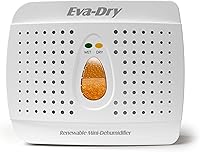
The Eva-Dry Wireless Mini Dehumidifier uses silica gel and is designed for areas up to 333 cubic feet. It can be placed or hung in areas such as closets, cabinets, and cars, and its beads need recharging after absorbing moisture.
Choose this type for a compact space with a modest moisture problem. For a damp basement or another large room, compare powered models designed for larger spaces.
Which powered options might suit larger spaces?
Powered compressor models are better suited to larger damp areas, but estimate their energy use from wattage and actual runtime. Don’t treat a pint-per-day capacity as a kWh figure.
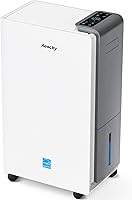
The hOmeLabs Dehumidifier removes up to 50 pints per day at 80°F and 60% relative humidity, with a maximum of 120 pints per day at 95°F and 90% relative humidity. It has a built-in pump for continuous drainage.
The hOmeLabs Dehumidifier is designed for spaces up to 7,000 square feet and has Wi-Fi controls and a hose outlet for continuous drainage. Check its wattage and expected runtime to estimate electricity use for your room.
These models’ capacity figures describe moisture removal, not the energy they use. For a basement, compare options in our guide to a best energy efficient dehumidifier for basement.
Can winter conditions change energy use?
Cold conditions can affect a dehumidifier’s operation and runtime, so check its operating guidance before using it in winter. A unit may need to work differently in a cold space than it does in a warm room.
Consider whether you need the appliance at all during colder months. Our guide on whether to use a dehumidifier in winter covers that decision.
How can you keep electricity use in check?
Choose a suitable size, set a reasonable humidity target, and track runtime. Those steps help you understand whether the unit is running longer than expected.
- Close windows and doors while the unit operates.
- Clean the filter as directed in the manual.
- Use a drainage option if frequent bucket emptying interrupts operation.
- Check whether the unit switches off or cycles at the selected setting.
- Compare wattage and runtime when reviewing energy-efficient models.
A quieter model may suit a room where you spend time, while a high-capacity unit may fit a basement. See our best quiet energy efficient dehumidifier guide and best rated energy star 50 pint dehumidifier options.
How much electricity will your dehumidifier use?
Estimate use from wattage and hours of operation, then adjust your estimate using the unit’s actual runtime. This gives you a clearer picture than relying on capacity or room-size claims alone.
Pick a cordless absorber for a small enclosed space where outlet use is a concern. For larger damp areas, compare powered models by wattage, capacity, drainage, and expected runtime, then use the formula to estimate kWh.
Frequently asked questions
Do dehumidifiers use a lot of electricity?
They can use a noticeable amount if they draw substantial power and run for many hours, but use varies by model and conditions. Check the appliance’s wattage and estimate its daily kilowatt-hours from its runtime.
A humid room, low temperature, or frequent operation can affect how long it runs.
How can I calculate a dehumidifier’s electricity use?
Multiply the dehumidifier’s watts by the hours it runs, then divide by 1,000 to estimate kilowatt-hours. For example, a hypothetical 500-watt unit running 8 hours uses 4 kWh.
Use actual runtime and wattage for a useful estimate, since cycling and conditions change consumption.
Does a larger dehumidifier use more electricity?
A larger unit may draw more power while operating, but it may also remove moisture faster and run for fewer hours. Compare the wattage and expected runtime for your room instead of judging energy use by capacity alone.
Match the unit to the space and moisture level.
Does a cordless dehumidifier use electricity?
A cordless moisture absorber does not draw power from an outlet while it absorbs moisture, but a rechargeable model may use electricity during recharging. Its moisture capacity and intended space differ from those of a compressor dehumidifier, so consider the job it needs to do as well as outlet use.