9 Best Basement Dehumidifiers with Pumps (November 2026)
The best basement dehumidifiers with pumps include the yaufey 150 Pint Dehumidifier with Pump for long drain runs, the hOmeLabs Dehumidifier for remote control, and the AEOCKY 5500 Sq.Ft Energy Star Most Efficient for floor drains.
On this page (6 sections)
- Which best basement dehumidifier with pump fits your drain route?
- How do you choose pump lift, hose reach and drainage?
- How much capacity does a basement need?
- How should you set up a pump dehumidifier?
- What mistakes can interrupt basement drainage?
- Which basement dehumidifier with a pump should you choose?
The yaufey 150 Pint Dehumidifier with Pump is the top choice when the drain sits uphill and you want backup drainage methods. It has a 16.4 ft pump hose, plus gravity drainage and a tank.
Measure the route before you buy. Note the vertical rise to the drain and the full hose path, including turns.
A long hose does not always mean the pump can lift water the full length. Compare both the stated lift and hose length when both are given.
This model suits a basement where the nearest suitable drain is across the room or above the unit. The tank can collect water in the short term, and gravity drainage can work when a downhill route exists.
Check the floor space first because a unit of this size needs a stable, level spot. Leave clearance around the intake and outlet so airflow is not blocked by a wall or stored items.
The 1.85 gal tank is useful for occasional use, but it will need frequent emptying in damp conditions. Continuous drainage is the better plan for hands off operation.
Set the humidity target to match the room rather than always using the lowest setting. A target based setting lets the unit cycle as conditions change through the day.
The 30% to 80% range gives flexibility for different seasons and uses. Living Area, Basement and Continuous modes add another layer of choice.
The stated maximum removal is 150 pints per day at 95°F and 90% RH. That describes very humid air, so do not expect the same rate in a cooler basement.
The stated coverage of up to 8,500 sq ft should be read with that condition in mind. Size the choice to your basement and moisture conditions rather than treating the area figure as a guarantee.
Before fitting the hose, confirm which outlet is for the pump and which is for gravity drainage. Secure the hose at the drain end so it cannot slip out during a cycle.
Place the unit near a power outlet close enough to avoid stretching the cord. Clean the washable filter as directed, and empty and clean the tank regularly when using tank collection.
For a smaller space, compare small bathroom dehumidifiers.
If you are still deciding what type and capacity you need, start with our guide to which dehumidifier to buy.
For a broader shortlist, see our best basement dehumidifiers for home.
Our picks at a glance
-
1

-
2

-
3
 Best for floor drains
AEOCKY 5500 Sq.Ft Energy Star Most Efficient
9.6/10 our score
See it on Amazon
- 4
 Best for downhill drainsCheck it
- 5
 Check it
AEOCKY 6000Sq.Ft Commercial Dehumidifier
Best for large floor drains - 6
 Check it
avylo Dehumidifier for Basement with Pump
Best for 15 ft lift - 7
 Check it
Waykar 150 Pint Commercial Dehumidifier with Pump
Best for very damp basements - 8
 Check it
avylo 5000 Sq.Ft Dehumidifier for Basement
Best for dark-room decor - 9
 Check it
Gasbye Energy Star 2026 Dehumidifier with [𝗥𝗲𝗽𝗹𝗮𝗰𝗲𝗮𝗯𝗹𝗲
Best for pump servicing
Which best basement dehumidifier with pump fits your drain route?
The yaufey fits a long pump-hose route, hOmeLabs suits remote adjustments, and avylo specifies a 15 ft pump lift. A gravity-drain model can work only when water can flow downhill to the drain.
yaufey 150 Pint Dehumidifier with Pump: Best for long drain runs
- 16.4 ft pump hose
- Three drainage options
- 30%–80% humidity range
- 1.85 gal tank
A long pump hose and three drainage methods suit basements where water must travel uphill or where a tank and gravity drain are useful alternatives.
Pros
- Pump, gravity and tank drainage
- 16.4 ft pump hose
- Humidity settings from 30% to 80%
Cons
- Large footprint needs a clear location
- Maximum capacity is stated for very humid conditions
The yaufey is the clearest fit when the drain is far from the unit or sits above it. Its 16.4 ft pump hose gives you room to plan a route, while the tank and gravity-drain options can help in other situations.
Its settings cover 30% to 80% humidity, and it offers Living Area, Basement and Continuous modes. That range gives you a target-based option for routine control or a continuous setting when conditions call for it.
The maximum removal rate is 150 pints per day at 95°F and 90% RH, with a stated area of up to 8,500 sq ft. Those figures describe maximum performance under very humid conditions, so size the choice to your basement and moisture conditions rather than treating the area figure as a guarantee.
Choose it for a long uphill run and drainage flexibility. Skip it if the available floor space is tight or your drain route is short enough that a pump adds little value.
hOmeLabs Dehumidifier: Best for remote control
- Built-in pump
- Wi-Fi control
- Up to 7,500 sq ft
- Comfort, Turbo and Continuous modes
Wi-Fi control lets you adjust settings remotely, while the built-in pump supports continuous drainage and reduces manual bucket emptying.
Pros
- Remote Wi-Fi control
- Built-in pump for continuous drainage
- Digital humidity readout
Cons
- Maximum removal rate uses very humid test conditions
- Drain route and hose reach need checking
hOmeLabs is the pick for a basement where remote access matters. Its Wi-Fi control works with a built-in pump, and its digital panel displays humidity for local adjustments.
The remote option suits a basement that is not visited every day. You can change settings without going downstairs to the unit.
Comfort, Turbo and Continuous modes give you a few ways to match operation to the room. Comfort may suit routine use, while Turbo is aimed at faster moisture removal.
The stated 120 pints per day maximum uses 95°F and 90% RH. The separate 50 pint per day rating is measured at 80°F and 60% RH, so compare ratings only when conditions are similar.
It is rated for spaces up to 7,500 sq ft and has a 1.6 gal tank. Manual emptying will be needed more often if continuous drainage is not used.
Before choosing it, confirm the pump hose reach and height against your drain. Leave room for airflow and for reaching the controls or tank.
Clean the filter as directed and empty the tank when using bucket collection. Skip it if you do not need Wi-Fi and a longer specified pump hose is your main requirement.
See our best smart dehumidifier for basement guide for more connected options.
AEOCKY 5500 Sq.Ft Energy Star Most Efficient: Best for floor drains
- 80 pints per day at 95°F, 95% RH
- Up to 5,500 sq ft
- ENERGY STAR Most Efficient 2025
- Automatic defrost
This AEOCKY model includes a gravity drain hose, not a pump. Consider it only if a downhill route works for your basement or you can place it above a floor drain.
Pros
- ENERGY STAR Most Efficient 2025 designation
- Automatic defrost
- Drain hose and garden hose adapter
Cons
- No built-in pump
- Gravity drainage needs a downward route
AEOCKY 5500 Sq.Ft Energy Star Most Efficient suits a basement with a downhill drain and a preference for its ENERGY STAR Most Efficient 2025 designation. It removes up to 80 pints per day under 95°F and 95% RH conditions and includes automatic defrost.
The downhill requirement is the key point to check first. Water must flow down from the unit to the drain without rising over a sill.
It comes with a drain hose and garden hose adapter, but no built-in pump is specified. That limits it to gravity drainage and tank collection.
The adapter can make the hose connection more straightforward. Check that the drain end is secure and that the hose can run without loops.
Automatic defrost helps in cooler conditions where frost can build on the coils. It supports steadier operation when the basement stays cool for long periods.
Its stated coverage is up to 5,500 sq ft, and the tank holds 1.45 gal. The tank is a backup option rather than a hands off solution for a damp room.
Place the unit above the drain level so gravity can do the work. Keep the hose path visible during the first run to check for leaks.
If you need uphill drainage, choose one of the pump-equipped models instead.
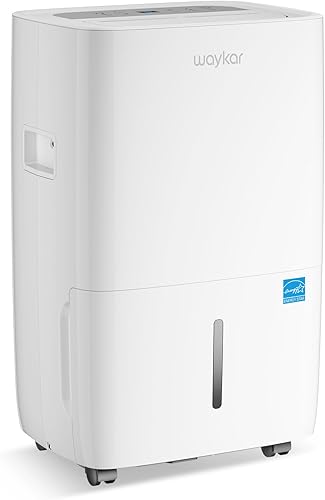
Waykar 80 Pints 5000 Sq. Ft: Best for downhill drains
- 80 pints per day at 95°F, 90% RH
- Up to 5,000 sq ft
- Included gravity hose
- 30%–80% humidity control
This Waykar supports continuous gravity drainage with an included hose, but it does not provide the uphill pumping that defines this roundup.
Pros
- Included hose for gravity drainage
- ENERGY STAR certified
- Humidity control from 30% to 80%
Cons
- No pump for uphill drainage
- Hose needs a suitable downward route
Waykar 80 Pints 5000 Sq. Ft is a gravity-drain option for a basement with a suitable floor drain.
It suits a layout where the drain is lower than the unit.
An included 3.3 ft hose supports continuous drainage, and the tank holds 1.14 gal. The short hose means the unit must sit close to the drain.
It does not specify a built-in pump, so it cannot move water uphill by itself. Do not place it where the hose would need to rise to reach the outlet.
Its 80 pint per day maximum is stated at 95°F and 90% RH, and the stated coverage is up to 5,000 sq ft. Those figures reflect very humid conditions.
Humidity control ranges from 30% to 80%, and the auto-swing function distributes airflow. Even coverage can help reduce damp corners in a large room.
Choose it only when gravity drainage works. A continuous downhill slope is needed for the hose to drain properly.
Keep the hose straight and free of pinches during setup. Check the connection after the first cycle before leaving it unattended.
If you need a pump and hose setup, compare our best basement dehumidifier with drain hose.
AEOCKY 6000Sq.Ft Commercial Dehumidifier: Best for large floor drains
- 105 pints per day at 95°F, 95% RH
- Up to 6,000 sq ft
- ENERGY STAR Most Efficient 2024
- Automatic defrost
Its stated capacity and coverage suit a large space, but its hose-based drainage has no pump for uphill runs.
Pros
- Up to 6,000 sq ft stated coverage
- ENERGY STAR Most Efficient 2024 designation
- Automatic defrost
Cons
- No built-in pump
- Gravity drainage needs a downward route
AEOCKY 6000Sq.Ft Commercial Dehumidifier suits a large basement with a downhill drain. It removes up to 105 pints per day at 95°F and 95% RH, has stated coverage up to 6,000 sq ft, and includes automatic defrost.
The large stated coverage makes it a candidate for a big open basement. The drain route must still be downhill from the unit.
The included drain hose and garden hose adapter provide hose-based drainage, but no pump is specified. That makes it a poor match for an outlet above the unit.
Automatic defrost supports use in cooler spaces where ordinary units can frost. It helps maintain operation instead of stopping completely.
The tank holds 1.45 gal, and the model carries the ENERGY STAR Most Efficient 2024 designation. Tank use is best as a short term alternative to a permanent drain.
Position the unit so the hose can run continuously downward. Avoid uphill sections, loops and tight bends that can slow or stop flow.
Choose it for the large space and gravity route. Skip it if uphill pumping is essential.
avylo Dehumidifier for Basement with Pump: Best for 15 ft lift
- Built-in pump with 15 ft lift
- 15 ft drain hose
- Three drainage options
- 2.11 gal tank
The built-in pump and 15 ft lift target long or uphill basement drainage, with tank and gravity options for other setups.
Pros
- 15 ft pump lift
- Three drainage options
- Full-tank reminder and auto shut-off
Cons
- Coverage figures differ between title and specifications
- Pump hose needs a suitable outlet
avylo Dehumidifier for Basement with Pump suits a drain that needs a defined lift. It specifies a 15 ft pump lift and includes a 15 ft drain hose, with tank and gravity drainage as additional options.
The defined lift makes planning easier when the drain is above the unit. Measure the rise first and leave some margin below the stated limit.
The stated maximum removal is 90 pints per day at 90°F and 90% RH, and coverage is up to 4,500 sq ft. Those conditions are different from models rated at 95°F, so compare with care.
Its top-mounted 2.11 gal tank has a full-tank reminder and automatic shutoff. The reminder helps prevent overflow when the tank is used on its own.
The sound and light off function and 24-hour timer can be useful in a basement near a work or living area. They let you reduce light and sound during rest hours.
Choose avylo when the measured rise and route fit its pump rating. The hose still needs a suitable outlet at the far end.
Empty the tank before setting up pump drainage, as its instructions advise. Check the hose connection and drain after the first cycle.
Waykar 150 Pint Commercial Dehumidifier with Pump: Best for very damp basements
- Up to 150 pints per day at 95°F, 90% RH
- Up to 7,000 sq ft
- Pump lift up to 9.84 ft
- 1.85 gal tank
A high stated moisture-removal rate suits larger or wetter spaces, and the pump can send water upward as much as 9.84 ft.
Pros
- Pump supports uphill drainage
- Three drainage options
- 30%–80% humidity adjustment
Cons
- Pump lift is shorter than some picks here
- The pump setting may need resetting after unplugging
Waykar 150 Pint Commercial Dehumidifier with Pump is aimed at larger or wetter spaces where a high stated removal rate is a priority. It removes up to 150 pints per day at 95°F and 90% RH, with stated coverage up to 7,000 sq ft.
Its built-in pump can drain upward as much as 9.84 ft. That lift is shorter than some other picks in this group.
It also supports gravity drainage and tank collection, and its tank holds 1.85 gal. The extra options can help if the pump route is not suitable on a given day.
The panel displays humidity and supports target settings and a timer. A target setting lets the unit cycle as the room reaches the chosen level.
The pump setting may need to be reset after unplugging, so account for that if you expect frequent power interruptions. Check the manual for the exact restart steps.
Choose Waykar for high moisture loads when its lift is enough. Skip it if your drain needs a greater rise than 9.84 ft.
Place the unit on a level surface with room for airflow. Secure the hose and check for leaks before leaving it unattended.
avylo 5000 Sq.Ft Dehumidifier for Basement: Best for dark-room decor
- Built-in pump with 15 ft lift
- 15 ft drain hose
- Three drainage options
- 2.11 gal tank
This black avylo model shares the 15 ft pump lift and three drainage options, making it a fit where the finish or drain setup matters.
Pros
- 15 ft pump lift
- Three drainage options
- Tank auto shut-off
Cons
- Capacity conditions are not specified
- Hose route still needs a suitable outlet
This black avylo model is a fit if its finish suits the basement and its pump route works for your drain. It shares the other avylo model’s 15 ft pump lift, 15 ft hose and three drainage options.
The finish does not change the drainage setup. Measure the rise and hose distance in the same way before deciding.
The unit removes up to 90 pints per day and is rated for up to 5,000 sq ft. The coverage figure differs from the white model, so check the specifications for the exact model.
Its 2.11 gal tank has automatic shutoff, and the unit also includes a timer, automatic defrost and a key sound and light off function. These features can help in a basement that doubles as a work or living area.
Automatic defrost supports cooler conditions where frost can reduce efficiency. The timer lets you schedule operation around your routine.
Choose it for the black finish and pump setup. Skip it if you need a removal figure tied to a stated humidity and temperature condition, since those conditions are not specified here.
Empty the tank before pump setup if the instructions call for it. Check the hose route during the first run.
Gasbye Energy Star 2026 Dehumidifier with [𝗥𝗲𝗽𝗹𝗮𝗰𝗲𝗮𝗯𝗹𝗲: Best for pump servicing
- Removable, cleanable pump
- 16.5 ft pump hose
- 75 pints per day
- 1.45 gal tank
The removable pump can be accessed for cleaning or replacement, and the 16.5 ft hose gives flexibility for an uphill drain route.
Pros
- Pump is designed to be removable and cleanable
- 16.5 ft pump hose
- Automatic restart after a power outage
Cons
- Smallest stated coverage in this group
- Pump access does not remove the need for routine care
Gasbye is the strongest fit for buyers who want access to the pump for care. Its pump is designed to be removed for cleaning or replacement, and its 16.5 ft pump hose can support a longer route when the hose path and lift suit the installation.
Access to the pump matters because dust in the air can build up over time. A removable design makes routine cleaning more straightforward.
It removes up to 75 pints per day and is rated for up to 4,500 sq ft. That stated coverage is smaller than several other picks here.
The 1.45 gal tank, automatic shutoff and automatic restart after a power outage add flexibility for regular use. Restart can help after a brief outage without manual setup.
Gasbye also describes automatic humidity control that shuts off below the set target and restarts as humidity rises. This can reduce unnecessary running when the target is reached.
Choose it if cleanable pump access is a deciding factor. It still needs a suitable drain route and regular care.
Skip it if your basement needs more stated capacity or coverage. A larger or wetter space may need a higher rated model.
How do you choose pump lift, hose reach and drainage?
Measure the rise and the hose route separately, then choose a pump that meets both requirements. A hose can be long enough to reach a drain while the pump's lift rating is too low for the vertical rise.
Start at the dehumidifier's drain connection and measure to the outlet. Record the highest point water must reach, the total hose distance, and any turns or obstacles along the route.
Use a tape measure along the path the hose will actually follow. A straight line on a plan can be much shorter than the real route around joists or stored items.
A gravity hose needs a continuous downward slope. Avoid loops, pinches and uphill sections, which can slow drainage or stop it.
If the drain is higher than the unit, select a model with a specified pump lift that exceeds the rise in your setup, and follow its manual for hose routing.
Leave a small margin between your measured rise and the rated lift. That margin can help if the hose path changes during installation.
You can compare this setup with our guide to dehumidifiers with a pump versus no pump.
If your placement is in a crawl space, see our best crawl space dehumidifier with pump guide.
How much capacity does a basement need?
Choose capacity by considering the basement's size, how damp it is and the conditions used for the stated pint rating. A single square-foot number cannot account for every basement layout or moisture source.
Compare ratings only when the stated temperature and humidity conditions are similar. For example, the yaufey and Waykar 150 Pint models state their maximum rate at 95°F and 90% RH, while the AEOCKY models use 95°F and 95% RH.
The avylo white model uses 90°F and 90% RH.
If your basement is cool, look for automatic defrost and check the operating guidance for the temperature range. A dehumidifier can manage indoor moisture, but it does not fix water entering through a leak, drain backup or foundation problem.
Address the source as well as the room humidity.
For a broader sizing process, follow how to choose a basement dehumidifier. If you are comparing options by room size and general use, the best basement dehumidifiers for home roundup may help.
How should you set up a pump dehumidifier?
Set up the unit on a stable, level surface near a suitable power outlet and close enough to the drain for the hose to reach without strain. Leave room around the air intake and outlet, and use the clearances in the manual.
Before connecting the hose, check which outlet is for the pump and which is for gravity drainage. Some models support more than one drainage method, but the connections and operating steps differ.
Follow the instructions for the exact model, and empty the tank first if the instructions call for it.
Secure the hose at the drain end so it cannot slip out, and make sure discharged water cannot run back toward the basement. Run the unit and check the hose connection and drain after the first cycle before leaving it unattended.
Set a humidity target that fits the space, then allow the unit to cycle and recheck the room after it has run. Continuous mode can be useful when the unit supports a permanent drain, but it still depends on a clear hose path and a working outlet.
What mistakes can interrupt basement drainage?
The most common setup mistake is buying by hose length alone. Check the pump lift rating as well, and leave some margin between the rated rise and the route you measured.
Hose length and lift are different measures. A long hose can still fail to lift water to a high outlet.
A kinked hose, loose connection or outlet that lets water flow back can defeat continuous drainage. Keep the hose path visible during initial setup, and check for leaks before leaving the area.
Run the unit through a first cycle while you can watch the route. Look at each connection and at the drain end for drips or slips.
Another mistake is treating a dehumidifier as a fix for every source of dampness. A unit can remove moisture from indoor air, but recurring water intrusion or a plumbing leak needs its own repair.
Find and fix the source as well as controlling the room humidity. Sealing or repairing the source can reduce the load on the unit.
Do not ignore filters or pump care. Clean the washable filter as directed, empty and clean the tank when using it, and follow model-specific instructions for any removable pump components.
A clogged filter can reduce airflow and slow drying. Check that the tank is seated correctly when using bucket collection, as a misaligned tank can trigger a full alert or stop operation.
If collection stops, use our guide to why a dehumidifier is not collecting water.
Also check the humidity target and room temperature, as the unit may cycle off if the target has already been reached. Keep the intake and outlet clear, and follow the manual for defrost and restart steps in cooler conditions.
Which basement dehumidifier with a pump should you choose?
Choose the yaufey if you need a long pump hose and want tank and gravity drainage as alternatives. It gives flexibility when the drain route is uphill or when a permanent drain is not available.
Choose hOmeLabs for Wi-Fi control if you want to adjust settings remotely. That suits a basement that is not visited daily.
Choose avylo when a specified 15 ft lift fits your measurements. The defined lift makes it easier to compare against your measured rise.
Choose Gasbye when pump access for cleaning matters. A removable pump design can make routine care more straightforward over time.
Pick the Waykar 150 Pint when its 9.84 ft lift is enough for a high moisture load. Its stated removal rate suits larger or wetter spaces.
The AEOCKY and Waykar gravity models are suitable only if water can flow downhill from the unit to the drain. They do not provide a pump for uphill routes.
Match the model to the basement size and the conditions used for the stated pint rating. A rating at 95°F and 90% RH will not match a cool basement in the same way.
Check the filter and tank care for each model before deciding. Washable filters and tank emptying are part of regular ownership.
Confirm the floor space for the unit and for tank access. A clear location helps with airflow, hose checks and emptying.
For a final shortlist, compare these choices with our best dehumidifier deals and confirm the drain route, tank access and floor space before deciding.
Our top 3 picks at a glance
-
1
-
2
-
3
Best for floor drains
AEOCKY 5500 Sq.Ft Energy Star Most Efficient
9.6/10 our score
See it on Amazon
Frequently asked questions
Why choose a basement dehumidifier with a pump?
A pump can move collected water uphill to a sink, standpipe or other drain point, so the dehumidifier does not have to sit above the drain. Check the model's stated lift and hose reach against your route before buying.
A gravity hose works only when water can flow downward.
How high can a dehumidifier pump drain?
Pump lift varies by model. The picks here specify lifts from 9.84 ft to 15 ft, while the yaufey has a 16.4 ft pump hose and supports upward drainage.
Measure the rise from the unit to the outlet and check the product manual for hose routing.
Can I use a drain hose without a pump in a basement?
Yes, if the hose can run continuously downhill from the dehumidifier to a drain. A gravity hose cannot lift water over a sill or up to a higher sink.
For drainage options that rely on gravity, compare our basement dehumidifiers with drain hoses.
Should a basement dehumidifier run continuously?
Use the humidity control or operating mode that matches your space and follow the manual. A target setting lets the unit cycle as room humidity changes, while continuous mode may suit ongoing moisture control when the unit supports a suitable drain route.
Check the tank or hose setup before leaving it unattended.
What should I check before buying a dehumidifier with a pump?
Measure the vertical rise and hose distance to the drain, then compare them with the pump's stated lift and hose length. Also check the room's size, available floor space, tank capacity and whether the unit offers a gravity or tank option.
Our guide explains how to choose a basement dehumidifier.