Can a Dehumidifier Cool a Room?
A dehumidifier usually doesn't cool a room; it removes moisture, which can make humid air feel more comfortable. Its motor can also add some heat to the room.
On this page (8 sections)
- Can a dehumidifier cool a room?
- Why can drier air feel cooler?
- When should you use a dehumidifier instead of AC?
- How do you choose a dehumidifier for the space?
- How should you set up and use the right appliance?
- What common mistakes keep a room uncomfortable?
- Can a dehumidifier help in a bathroom or during winter?
- Can a dehumidifier cool a room, or do you need another appliance?
A dehumidifier usually can't cool a room. It removes moisture, which can make humid air feel less muggy, but the appliance may add heat as it runs.
If you searched “can dehumidifier cool room,” the key distinction is simple: a dehumidifier changes humidity, while an air conditioner lowers temperature.
Use a dehumidifier when damp air is the problem and the room is already cool enough. Choose air conditioning when the temperature is too high.
If both readings are uncomfortable, use equipment suited to each job.
Can a dehumidifier cool a room?
No, a regular dehumidifier removes moisture rather than moving heat outdoors. It draws in humid air, collects water, and sends drier air back into the room.
An air conditioner moves heat outside as part of its cooling process. A dehumidifier does not do that.
Its operating parts can release heat indoors. The room may feel less sticky, stay about the same temperature, or even warm slightly.
This is why a dehumidifier is a poor substitute for AC during hot weather. It can change how the air feels, but it cannot provide the same temperature control.
Why can drier air feel cooler?
Drier air may feel more comfortable even when the thermometer reading stays the same. Humidity is one factor in comfort, alongside temperature, air movement, sunlight, and heat from appliances.
Check temperature and relative humidity separately with a thermometer and hygrometer. Place them away from direct sunlight, windows, vents, and the dehumidifier’s exhaust, then give the readings time to settle.
If the temperature is acceptable but the room feels damp, lowering humidity may help. If the thermometer shows that the room is too warm, choose cooling equipment instead of expecting moisture removal to lower the reading.
When should you use a dehumidifier instead of AC?
Use a dehumidifier for excess moisture and an air conditioner for excess heat. If the room is both hot and damp, you may need both, though an air conditioner may already remove enough moisture to make a separate dehumidifier unnecessary.
An AC unit’s cooling function moves heat outdoors and can also remove water vapor. A dehumidifier is designed to focus on moisture control, so it’s useful when humidity is the main concern rather than temperature.
For a closer comparison, read our guide to dehumidifiers vs. air conditioners. If moisture control is the right job, our guide explains which dehumidifier to buy.
Can a portable AC with dehumidifier mode cool a room?
Yes, a portable air conditioner can cool a room while removing moisture. Its cooling function expels heat through an exhaust hose; the unit may also collect or drain water as it operates.
Follow the manufacturer’s instructions for venting and water handling. A portable unit that combines cooling and moisture removal may suit a room without a window AC installation, provided you can set up its exhaust correctly.
If you want to compare combined options, see our guide to the best portable air conditioners with dehumidifiers. Keep in mind that the AC function, not moisture removal alone, is what lowers the room temperature.
How do you choose a dehumidifier for the space?
Match the unit to the space and the moisture problem, not to a desire for cooling. A small passive absorber can suit a closet or cabinet, while a compressor model is intended for larger household areas.
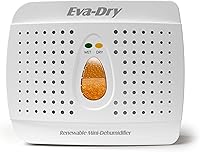
The Eva-Dry Wireless Mini Dehumidifier uses silica gel and is cordless. It’s designed for enclosed spaces such as closets, cabinets, cars, boats, and gun safes, with stated coverage up to 333 square feet and moisture absorption up to 6 ounces before recharging.
Choose this type when you want a compact way to manage moisture in a small enclosed area. Skip it if you need to change the humidity of a large room or lower its temperature.
Its small absorption capacity makes it a poor fit for a persistently damp basement or open living area.
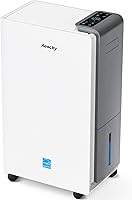
For broader household coverage, the AEOCKY RHEA-001 is a compressor dehumidifier with adjustable humidity control and several modes. It has a stated coverage area of 5,500 square feet, a 1.45-gallon tank, and an included drain hose.
This style suits someone managing humidity across a large area who can accommodate a floor-standing appliance and plan for collected water. Skip it if the main goal is cooling, or if you only need moisture control in a tiny cabinet.
Its tank also needs attention unless you set up the drain hose as directed.
A room air conditioner is the better category when your priority is temperature. The Midea 5,000 BTU EasyCool is a window AC for rooms up to 150 square feet, with mechanical controls, two cooling speeds, two fan-only speeds, and a washable filter.
Pick this if the room is warm and has a suitable window for installation. Skip it if you cannot use a window unit or need humidity control without cooling.
Check the window dimensions and installation instructions before choosing a window AC.
How should you set up and use the right appliance?
Place the unit where air can move freely and follow its setup instructions. Good placement helps the appliance work as intended and makes it easier to read the room’s temperature and humidity accurately.
For a portable or compressor dehumidifier, leave the required clearance around the air intake and outlet. Keep it on a stable, level surface, close doors and windows when practical, and make sure the water tank is seated correctly or the drain hose is routed as instructed.
For the Eva-Dry, place or hang it in the small enclosed area it is meant to serve. Watch its moisture indicator and recharge it when indicated; its cordless design avoids a power cord in the space, but it still needs periodic recharging.
A window AC needs a suitable window and secure installation. The Midea model fits windows 23–36 inches wide and at least 13 inches high.
Installation requires a screwdriver. Wash its reusable filter as directed so dust does not build up and restrict airflow.
What common mistakes keep a room uncomfortable?
The most common mistake is choosing moisture removal when the real problem is heat. A dehumidifier can make air feel less clammy, but it will not deliver the temperature drop of an air conditioner.
Another mistake is buying by room size alone. A small moisture absorber is meant for enclosed spaces, not for managing an entire damp room.
Consider how much moisture needs to be removed, whether you can empty a tank or use a hose, and whether the appliance’s placement fits the space.
Don’t place a dehumidifier where its outlet blows directly at a thermometer or hygrometer. That can make the reading less useful for judging the room as a whole.
Finally, don’t run both AC and a dehumidifier automatically. Check temperature and humidity first.
Then use only the equipment needed to address those conditions. For tips on managing indoor moisture from laundry, read whether dehumidifiers can dry clothes.
Can a dehumidifier help in a bathroom or during winter?
It can help with excess moisture if the unit suits the space and operating conditions. For a bathroom, consider the room’s size, safe placement, and how often you can empty or drain the unit.
A compact moisture absorber may suit a cabinet or other small enclosed area, but it isn’t a replacement for ventilation or a full-size dehumidifier when a room has persistent dampness. Compare small dehumidifiers for bathrooms if you need a unit for a bathroom-sized space.
Cold conditions can affect dehumidifier operation, so check the instructions for the temperature range before using a unit in winter. Our guide covers whether you need a dehumidifier in winter.
Can a dehumidifier cool a room, or do you need another appliance?
A dehumidifier can make humid air feel less sticky, but it won’t cool the room. Choose it when the humidity is the main issue and the temperature is comfortable.
Choose a window or portable air conditioner when the room is too warm. Consider using both only when humidity remains a problem after cooling.
Check temperature and humidity separately, then pick equipment that changes the reading you actually want to change.
Frequently asked questions
Can a dehumidifier make a room colder?
Usually, no. A dehumidifier removes water vapor from the air, but it doesn't work like an air conditioner that moves heat out of a room.
Drier air may feel less sticky at the same temperature, while the appliance can add heat as it runs.
Use air conditioning when you need the room temperature to drop.
Why does my room feel cooler after using a dehumidifier?
Drier air can feel more comfortable than humid air at the same temperature, so a room may seem less muggy after a dehumidifier runs. That feeling doesn't mean the air temperature fell.
Check a thermometer to distinguish a comfort change from actual cooling.
Does a dehumidifier use more electricity than an air conditioner?
Energy use depends on the equipment and how long it runs, so there isn't one answer for every home. A dehumidifier removes moisture, while an air conditioner cools and often removes some moisture as it runs.
Compare the energy information for the specific models and the job you need done.
Should I use a dehumidifier and air conditioner together?
You can use both when a room needs temperature control and humidity control, but first check whether the air conditioner already keeps humidity comfortable. Set the dehumidifier's humidity target according to its instructions, and avoid running equipment unnecessarily.
A thermometer and hygrometer can show whether the room needs both.
Can a dehumidifier cool a room enough to replace AC?
No. A standard dehumidifier removes moisture, not heat, so it cannot replace air conditioning when a room is too warm.
It may reduce a clammy feeling in humid conditions, but use a properly sized air conditioner for actual cooling.