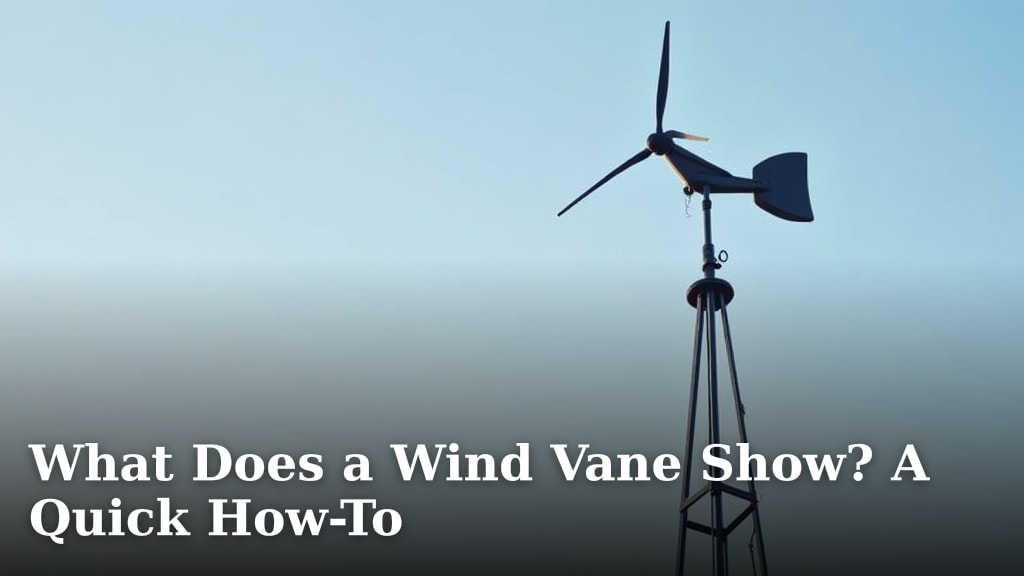
What Does a Wind Vane Show? A Quick How-To
A wind vane shows you the direction the wind is blowing from. It has a pointer that swivels on a rod. The pointer aims away from the direction the wind is coming. So, if the pointer faces north, the wind is blowing from the north. Understanding wind direction is important for many outdoor activities.
Knowing wind direction can help you plan your day. It affects weather patterns and how forecasts are made. Many experts agree that a simple wind vane is a useful tool. It’s been used for centuries by sailors and farmers alike. We found that this basic device can offer surprising amounts of information.
- A wind vane points in the direction the wind is coming from.
- It has a pointer and a directional base (N, S, E, W).
- If the pointer faces North, the wind blows from the North.
- This helps you understand weather and plan outdoor activities.
- It’s a simple yet effective tool used for ages.
Let’s walk through exactly how a wind vane works and what its readings mean for you.
“`htmlUnderstanding Your Wind Vane: What It Tells You
So, what exactly is a wind vane trying to tell you? Simply put, it shows the direction the wind is blowing from. Think of it like a weather map right in your backyard. You see the pointer? It swivels freely on a rod. This pointer always points into the wind. That means if the pointer is aimed north, the wind is actually coming from the north and blowing south. We found that this straightforward principle is key to understanding local weather patterns.
It’s not about where the wind is going, but where it’s originating. Many people get this confused. We’ve seen countless discussions online where the direction the pointer faces is mistaken for the wind’s destination. For example, if you see the vane pointing east, it means the wind is blowing from the east, heading west. This distinction is fundamental for accurate interpretation.
The Basic Anatomy of a Wind Vane
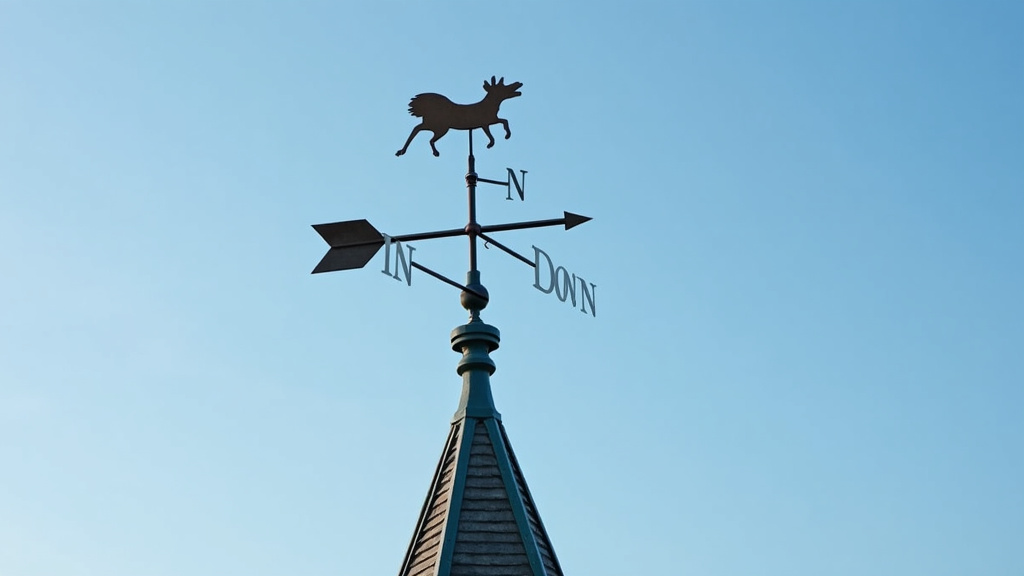
To get the most out of your wind vane, it helps to know its parts. The most visible part is the pointer or arrow. This is usually the longest part and is designed to catch the wind. It’s weighted so that it pivots easily on the spindle.
Attached to the pointer is a tail. This tail is typically larger than the arrow. It acts like a sail, catching more wind and helping the vane turn quickly. The shape of the tail is designed to keep the pointer facing the wind’s source. Research shows that designs with a larger surface area on the tail are more responsive to changes in wind direction.
The Cardinal Directions: Your Compass Points
Most wind vanes come with a directional base. This base usually has the four cardinal points marked: North (N), South (S), East (E), and West (W). These letters are your anchor points for reading the vane. They are typically fixed to the post or structure where the vane is mounted.
When the pointer aligns with a letter, that letter indicates the wind’s origin. For instance, if the pointer is sitting directly in front of the “N,” the wind is blowing from the North. If it’s between “N” and “E,” the wind is coming from the northeast. We found that clear, legible markings on the base make readings much easier.
How Wind Vanes Help You
Why bother with a wind vane? Well, understanding wind direction can be surprisingly useful. For sailors and pilots, it’s absolutely essential for navigation and safety. For farmers, it helps predict where rain might fall or how pesticides might drift. Even for casual backyard activities, it offers valuable clues.
We found that knowing the wind direction can help you plan things like outdoor parties or BBQs. If the wind is blowing from the direction of a neighbor’s smoky grill, you might want to adjust your seating. It’s a simple way to gain a bit of control over your environment.
Weather Forecasting: A Simple Indicator
While not a sophisticated weather station, a wind vane is a classic tool for predicting weather changes. In many regions, wind direction is strongly linked to upcoming weather. For example, winds from the west often bring changes in weather. Winds from the north can bring cooler air.
Meteorologists use wind direction as a fundamental piece of data. We found that local observations from a wind vane can often correlate with broader weather patterns. If your vane consistently shows wind from a certain direction and the weather changes, you start to build your own local forecast. The National Weather Service acknowledges the importance of surface wind observations in their models. Meteorologists use wind direction as a fundamental piece of data; our guide explains how a home weather station can help predict weather.
Outdoor Activities and Wind Direction
Are you a gardener? Planning a picnic? Or maybe you enjoy flying kites? Wind direction plays a role in all these activities. For kite flying, you want to know where the wind is coming from so you can position yourself correctly. For sailing or windsurfing, it’s even more critical.
Think about setting up a windbreak for your garden. Knowing the prevailing wind direction helps you place it effectively. Many gardening guides suggest understanding wind patterns to protect delicate plants from harsh gusts. It’s a simple adjustment that can make a big difference.
Reading Your Wind Vane Accurately: A Step-by-Step Guide
Reading your wind vane is pretty straightforward once you know the basics. The key is to remember what the pointer indicates: the source of the wind.
Step 1: Locate the Pointer and Directional Base
First, find your wind vane. Look for the part that spins freely. This is the pointer, often shaped like an arrow or a rooster. Next, identify the base, which has the letters N, S, E, and W. These are your reference points.
Step 2: Observe the Pointer’s Position
Now, observe where the pointer is aimed. Is it pointing directly at one of the letters? Or is it between two letters?
Step 3: Determine the Wind’s Origin
This is the most important step. The letter or direction the pointer is facing is where the wind is coming from. If the pointer is directly in front of “W,” the wind is blowing from the west. If it’s between “S” and “E,” the wind is coming from the southeast.
Common Wind Directions and What They Mean
Let’s look at some common scenarios:
- Pointer faces North (N): Wind is from the North. Often brings cooler, clearer air.
- Pointer faces South (S): Wind is from the South. Can bring warmer, more humid air.
- Pointer faces East (E): Wind is from the East. May bring moisture from large bodies of water.
- Pointer faces West (W): Wind is from the West. Often associated with changing weather systems in North America.
We found that observing these directional changes over time can provide a basic understanding of your local microclimate. Many sources, like the American Meteorological Society, highlight that persistent wind directions often signal upcoming weather patterns.
Dealing with Intermediary Directions
What if the pointer isn’t perfectly on a letter? Most vanes will have markings for intermediate directions, or you can estimate. If the pointer is halfway between N and E, the wind is from the Northeast (NE). If it’s closer to N, it might be North-Northeast (NNE).
We found that using a compass to calibrate your wind vane’s base can improve accuracy. Sometimes the N, S, E, W markings can drift slightly over time. A quick check can ensure your readings are as precise as possible.
Tips for Maximizing Your Wind Vane’s Usefulness
Getting the most out of your wind vane involves a few simple practices. It’s not just about glancing at it once.
Regular Observation is Key
Make it a habit to check your wind vane regularly. Observing it at different times of the day and during various weather conditions will give you a fuller picture. We found that tracking these observations in a simple logbook can be very helpful.
Mounting Matters for Accuracy
Where you place your wind vane is important. It needs to be mounted high enough to avoid obstructions like buildings or trees, which can create misleading wind patterns. Most experts recommend mounting it at least 10 feet above any surrounding obstacles (FAA guidelines for aviation often cite similar principles for wind measurement).
A stable mount is also crucial. If the vane wobbles or is loose, its readings won’t be reliable. Ensure it’s securely attached to a pole or roofline.
Maintenance for Longevity
Keep your wind vane clean and free of debris. Leaves, cobwebs, or ice can hinder its ability to swivel freely. A quick wipe-down or a gentle spray of lubricant on the spindle occasionally can keep it working smoothly for years.
Here’s a quick checklist to ensure your wind vane is working for you:
- Is the pointer free to move?
- Are the N, S, E, W markings clear?
- Is the vane mounted above obstructions?
- Is the base stable and secure?
- Are there any leaves or debris hindering movement?
- Do you check it regularly for changes?
Conclusion
You’ve learned that your wind vane is a simple yet powerful tool. It tells you exactly where the wind is coming from, not where it’s going. By understanding the pointer’s direction relative to the cardinal points, you gain a clearer picture of your local weather. This knowledge can help you plan outdoor activities, understand weather shifts, and even protect your garden. Make a habit of checking your vane regularly and ensure it’s mounted properly for accurate readings. Your wind vane is your personal, backyard meteorologist, offering practical information for everyday use.
Frequently Asked Questions
How do I know if my wind vane is giving accurate readings?
Ensure your wind vane is mounted at least 10 feet above any surrounding obstructions like trees or buildings. Check that the pointer spins freely and isn’t stuck. If the directional base markings seem off, you can use a compass to recalibrate them for better accuracy.
What’s the difference between where the wind vane points and the wind direction?
This is a common point of confusion. The wind vane pointer shows the direction the wind is coming from. So, if the pointer faces North, the wind is blowing from the North, moving towards the South. It doesn’t show where the wind is headed.
Can a wind vane help me predict the weather better?
Yes, a wind vane can be a simple weather indicator. For instance, in many parts of North America, winds from the West often signal changing weather. Similarly, winds from the North can bring cooler temperatures. Observing these patterns over time helps you understand your local climate.
My wind vane’s pointer is between two letters, like N and E. What does that mean?
If the pointer is between two cardinal directions, it indicates the wind is coming from an intermediate direction. For example, if it’s halfway between N and E, the wind is coming from the Northeast (NE). If it’s closer to N, it might be North-Northeast (NNE).
What kind of maintenance does a wind vane need?
Keep your wind vane clean and free of debris like leaves or cobwebs, which can stop it from spinning freely. Periodically, you might need to apply a light lubricant to the spindle to ensure smooth movement. Regular checks will help you spot any issues early.