10 Best Digital Weather Stations for Home (November 2026)
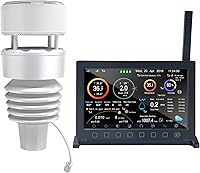
The best digital weather stations for home include the AcuRite Iris for backyard weather, the Newentor Weather Station Wireless Indoor Outdoor Thermometer for flexible home monitoring, and the Ambient Weather WS-2902 Wi-Fi Smart Weather Station for connected households.
On this page (8 sections)
- Which digital weather stations for home use stand out?
- How do you choose the best digital weather station for home?
- Which readings are worth paying attention to?
- Do you need Wi-Fi, extra sensors, or a forecast display?
- How should you set up and care for a home weather station?
- What mistakes should you avoid when buying a digital weather station?
- Is an indoor-only station a better fit?
- Which digital weather station should you choose?
The AcuRite Iris is the best digital weather station for home use if you want backyard readings for wind and rain, along with Wi-Fi sharing. If you mainly need temperature and humidity, a Newentor or La Crosse console is a simpler fit.
The best digital weather station for home use depends on where you want readings and what you’ll do with them. A wireless sensor and indoor console cover everyday checks; an outdoor array adds wind, rainfall, UV, or solar readings, while Wi-Fi can make data available away from home.
For a broader comparison, see our guide to best home weather stations. If you’re weighing whether local readings are worth adding to your routine, read the pros and cons of a home weather station.
Our picks at a glance
-
1

-
2
 Best for flexible home monitoring
Newentor Weather Station Wireless Indoor Outdoor Thermometer
9.7/10 our score
See it on Amazon -
3
 Best for connected households
Ambient Weather WS-2902 Wi-Fi Smart Weather Station
9.6/10 our score
See it on Amazon
- 4
 Check it
Newentor Weather Station Wireless Indoor Outdoor
Best for across-room viewing - 5
 Check it
La Crosse Technology Weather Station with Customizable
Best for humidity alerts - 6
 Check it
La Crosse Technology Advanced Weather Station
Best for bedside forecasts - 7
 Check it
Sainlogic 12-in-1 Wireless Weather Station with Rain
Best for garden weather - 8
 Check it
AcuRite Wireless Home Weather Station with Color
Best for simple home forecasts - 9
 Check it
Ambient Weather WS-2000 Smart Weather Station
Best for detailed dashboards - 10
 Check it
AcuRite Multi-Room Weather Station with Wireless Indoor/Outdoor
Best for room-to-room checks
Which digital weather stations for home use stand out?
The right pick depends on whether you need backyard measurements, several indoor locations, or a readable forecast console. These stations cover those use cases, from a connected sensor array to a basic outdoor thermometer.
AcuRite Iris: Best for backyard weather
- Color LCD display with adjustable dimmer
- Tracks temperature, humidity, wind, pressure, and rainfall
- Wi-Fi connection to Weather Underground
AcuRite Iris brings a broad set of backyard measurements to a color console and can share data through Weather Underground. It suits households that want more than temperature and humidity.
Pros
- Measures wind speed and direction, and rainfall
- Shows more than 25 data points
- Connects to Weather Underground
Cons
- More measurements and setup may be unnecessary for basic temperature checks
AcuRite Iris is the strongest fit here for a household that wants more than an outdoor thermometer. Its color LCD display shows indoor and outdoor readings, while the sensor system tracks wind speed and direction, barometric pressure, and rainfall.
The display includes an adjustable dimmer, time, and date. It provides more than 25 data points, including heat index, dew point, wind chill, rainfall history, and threshold alarms.
That depth matters in daily use when heat index and dew point change how warm the air feels, and when wind chill helps explain a cold day on an exposed yard. Rainfall history and alarms also help you notice a setting you would otherwise miss until conditions are already uncomfortable.
Wi-Fi lets you share data with Weather Underground and monitor it remotely. Choose Iris when you will use wind and rainfall alongside temperature; skip its broader sensor set if all you need is an outdoor temperature reading.
Newentor Weather Station Wireless Indoor Outdoor Thermometer: Best for flexible home monitoring
- Color LCD with adjustable backlight
- One remote sensor included; supports up to 3
- Shows indoor and outdoor temperature and humidity
Newentor’s Q3 combines indoor-outdoor readings with daily highs and lows, alerts, a forecast, moon phase, and barometric pressure. Choose it if you want a versatile display and may add sensors for more locations.
Pros
- Supports up to 3 remote sensors
- Offers both adapter and battery modes
- Includes forecast and customizable alerts
Cons
- Battery mode lights the screen briefly for a quick glance
The Newentor Q3 suits a home that needs a broad set of readings on one screen without an outdoor sensor array. For a portable option focused on pressure readings, compare portable digital barometers.
It shows indoor and outdoor temperature and humidity, daily highs and lows, barometric pressure, forecast, moon phase, and customizable alerts.
One remote sensor is included, and the station supports up to three channels. That leaves room to monitor other spots such as a basement or nursery if you add compatible sensors.
The display can stay lit when connected to its power adapter. On battery power alone, it enters an energy-saving mode and lights up for a brief glance, so plan for an outlet if you want a continuously lit screen.
Choose the Q3 if you want an everyday temperature display that also serves as a clock and forecast station. Skip it if wind speed or rainfall is central to your plans.
Ambient Weather WS-2902 Wi-Fi Smart Weather Station: Best for connected households
- Color LCD console
- Tracks wind, temperature, humidity, rain, UV, and solar radiation
- Wi-Fi access and smart home connections
The WS-2902 pairs a sensor array with a color console and supports remote access, alerts, and smart home links. It fits buyers who want backyard measurements connected to a broader home setup.
Pros
- Measures wind, rain, UV, and solar radiation
- Supports Google Home, Alexa, and IFTTT
- Can share data through Ambient Weather Network
Cons
- Requires a larger sensor array setup than a single outdoor thermometer
The Ambient WS-2902 fits a household that wants backyard conditions plus online access. Its sensor array measures wind speed and direction, temperature, humidity, rainfall, UV intensity, and solar radiation, while the color console displays readings at home.
Wi-Fi supports remote access and alerts, and the station can connect with Google Home, Alexa, and IFTTT. Ambient also offers an online network where you can customize a dashboard and share local weather data.
Those connected options are useful when you want to check conditions away from the house or link a reading to a routine at home. UV and solar radiation also add context that a plain thermometer cannot give, especially for garden placement and time spent outdoors.
This is a more involved setup than a basic display-and-sensor pair. The array mounts to a pole, so plan a suitable outdoor location and a clear path for its wireless signal to the console.
Pick it if you will use the extra measurements and connected features. If you want only temperature and humidity in one or two places, a multi-sensor thermometer station is a more direct fit.
Newentor Weather Station Wireless Indoor Outdoor: Best for across-room viewing
- LCD designed for wide viewing angles
- One remote sensor included; supports 3 channels
- Adapter-powered backlight with 3 brightness settings
The Newentor Q7 focuses on an easy-to-view screen with indoor-outdoor readings and room for multiple sensor locations. Its adapter keeps the display lit, while batteries provide memory backup.
Pros
- Wide viewing angles
- Can monitor up to 3 sensor channels
- Offers high, low, or off backlight settings
Cons
- Battery operation only lights the screen for about 10 seconds
The Newentor Q7 focuses on a wide-view display for a home where the console may be viewed from across a room. It shows indoor and outdoor temperature and humidity, along with a forecast, barometric pressure, and clock features.
The station includes one remote sensor and supports three channels for different locations. With its power adapter connected, the backlight can remain on at one of three brightness settings; battery backup helps retain memory.
That setup suits a kitchen, living room, or bedroom where people glance at the screen from different angles during the day. Extra channels can cover a basement, storage room, or nursery, although each added location needs its own sensor.
Choose this model when screen visibility and multiple sensor locations matter more than outdoor measurements. Skip it if you need wind and rainfall data from an all-in-one array.
La Crosse Technology Weather Station with Customizable: Best for humidity alerts
- Color forecast display with trend arrows
- Indoor and outdoor temperature and humidity
- Custom high and low alerts
La Crosse’s C85845-INT keeps core home readings together with daily high and low records, comfort bars, and adjustable alerts. Its included power cord supports a constant backlight.
Pros
- Tracks dew point and heat index
- Shows daily high and low values
- Includes customizable alerts
Cons
- The forecast display needs 7–10 days for barometric calibration
La Crosse C85845-INT is a good match for households that want alerts and daily records on a single console. It monitors indoor and outdoor temperature and humidity, then adds dew point, heat index, and comfort bars for humidity.
The color forecast uses icons and trend arrows, with 7–10 days allowed for barometric calibration. You can set high and low alerts for temperature and humidity, while the screen records daily highs and lows.
Comfort bars can make humidity easier to read at a glance than a number alone, which helps when you are deciding whether a room feels muggy or dry. Daily records also show whether a morning reading has moved in a helpful direction by evening.
Its included power cord supports a constant backlight with adjustable settings. Choose this station if alerts and at-a-glance indoor comfort readings are useful; skip it if you need an outdoor array for wind or rain.
La Crosse Technology Advanced Weather Station: Best for bedside forecasts
- Full-color forecast icons
- Indoor and outdoor temperature and humidity
- Atomic time and adjustable backlight
This La Crosse station combines color forecast icons with wireless indoor-outdoor readings, alerts, and min/max records. The self-setting clock and snooze alarm make it a useful shared display.
Pros
- Shows heat index and dew point
- Has adjustable backlight intensity
- Includes a weather-resistant outdoor sensor
Cons
- Battery-only mode uses a temporary backlight
This La Crosse Advanced Weather Station combines everyday indoor-outdoor readings with a color forecast display. It tracks temperature and humidity, keeps min/max records, and can alert you to extreme temperatures.
The display also includes heat index and dew point, plus atomic self-setting time and date. An adjustable backlight and time alarm with snooze make it useful on a desk, kitchen counter, or bedside table.
Min and max records are handy for seeing how far conditions swung overnight or during the day. Heat index and dew point add another layer, since they help explain why a given temperature feels more or less comfortable.
Choose it when you want indoor-outdoor readings, forecast icons, and a clock in one place. Skip it if battery-only use is your plan and you want the display lit continuously, since that mode illuminates the screen temporarily.
Sainlogic 12-in-1 Wireless Weather Station with Rain: Best for garden weather
- Tracks wind, rainfall, pressure, temperature, and humidity
- 6.5-inch screen with 3 backlight levels
- Solar power with battery backup
Sainlogic’s station tracks several outdoor conditions, including rainfall and wind, alongside indoor readings. Its large screen and adjustable backlight suit a display placed in a frequently used room.
Pros
- Tracks wind speed and direction, and rainfall
- Displays dew point and perceived temperature
- Offers manual rainfall calibration
Cons
- No Wi-Fi
Sainlogic suits a home where rain and wind readings matter alongside temperature and humidity. Its display tracks wind speed and direction, rainfall, air pressure, dew point, and perceived temperature, with a 6.5-inch screen and three backlight levels.
The station uses solar power with battery backup. It also offers manual rainfall calibration, which can help you adjust the rain measurement for local conditions.
A large screen helps when the console sits in a busy room and you need to read several values without moving closer. Solar power with battery backup also reduces the worry of keeping the outdoor unit running when direct power is not available outside.
Choose it if you want a large display and several outdoor measurements without Wi-Fi. Skip it if you need remote access or smart home connections.
AcuRite Wireless Home Weather Station with Color: Best for simple home forecasts
- Color LCD with adjustable dimmer
- Indoor and outdoor temperature and humidity
- 12-hour personalized forecast
This AcuRite pairs a color display with an outdoor sensor for temperature, humidity, and barometric trends. It makes sense for a home that needs everyday conditions and a forecast without wind or rain monitoring.
Pros
- Shows daily high and low records
- Displays moon phase and trend arrows
- Includes an outdoor sensor
Cons
- Does not provide the broad wind and rainfall tracking of an all-in-one sensor array
This AcuRite model is a straightforward option for a home that needs an outdoor sensor and a forecast without extensive backyard measurements. It displays indoor and outdoor temperature and humidity, along with barometric pressure trends and moon phase.
The station provides a personalized forecast for the next 12 hours based on current conditions. Its color LCD has an adjustable dimmer, while daily high and low records make it easier to check how readings have changed.
That combination suits a home where the main questions are whether it feels warm or cool inside and what the next few hours may bring. Trend arrows and daily records give simple context without asking you to study a longer dashboard.
Choose it for everyday household monitoring and a clear color display. Skip it if you need wind and rainfall, and choose an all-in-one array such as the Iris or Ambient WS-2902 instead.
Ambient Weather WS-2000 Smart Weather Station: Best for detailed dashboards
- High-definition color TFT display
- Sensor array measures wind, rain, UV, and solar radiation
- Wi-Fi option for sharing weather data
The WS-2000 combines an outdoor sensor array with a detailed color console for a wide range of backyard readings. It also supports metric or imperial units and calibration of major parameters.
Pros
- Tracks wind, rainfall, UV, and solar radiation
- Shows forecast and calculated readings
- Supports online weather publishing
Cons
- An indoor sensor for additional indoor readings is sold separately
The Ambient WS-2000 suits a home weather setup where a detailed console and a broad set of outdoor readings matter. Its outdoor array measures wind speed and direction, temperature, humidity, rainfall, UV, and solar radiation, and the color TFT display presents additional weather information.
The console supports both imperial and metric units, and major parameters can be calibrated. Wi-Fi can publish weather data online, while the screen includes calculated readings such as feels-like temperature and dew point.
Calibration is a practical plus when you want to fine tune readings for your own yard rather than accept every default setting. Feels-like temperature and dew point also translate raw numbers into comfort terms that are easier to use when planning outdoor time.
An indoor sensor for additional indoor readings is sold separately. Choose this model if you want an array and detailed color console; plan for the extra sensor if indoor measurements are part of your setup.
AcuRite Multi-Room Weather Station with Wireless Indoor/Outdoor: Best for room-to-room checks
- Three sensors included for up to 4 locations
- Color display for temperature and humidity
- Programmable alarms
AcuRite’s multi-room station is built around comparing temperature and humidity in several places at home. The display can show conditions from up to four locations, indoors or outdoors.
Pros
- Includes three wireless sensors
- Supports up to four monitored locations
- Offers programmable alarms
Cons
- Focused on temperature and humidity rather than wind and rainfall
AcuRite’s Multi-Room Weather Station is designed to compare conditions across several parts of a home. It includes three wireless sensors and can monitor up to four locations with the display’s built in sensor.
The color screen shows temperature and humidity readings from each location, and programmable alarms can flag conditions outside your preferred range. You can label locations on the display to make it clear which sensor is reporting each reading.
That comparison helps when one room feels colder, a nursery needs closer watch, or a garage does not match the rest of the house. Labels matter because a list of similar numbers is hard to use if you cannot tell which room produced which reading.
Choose this station for a nursery, basement, garage, or several indoor rooms. Skip it if you want wind, rainfall, or solar readings, since its focus is temperature and humidity.
How do you choose the best digital weather station for home?
Start with the readings you’ll check and the places you want to monitor. A bedroom, garden, and whole-yard weather setup call for different sensors, so match the station to a real task before comparing extra features.
For a basic household setup, indoor and outdoor temperature and humidity are often enough. A garden or weather-watching routine may call for wind and rainfall, while UV and solar readings can be useful if those measurements are part of what you plan to follow.
Think about how many locations need their own sensor. A station with several channels gives you room to add readings from a basement, nursery, or garage; the AcuRite Multi-Room option is built to show four locations with its included sensors.
Then consider how you want to see the data. A bright console in a shared room is useful for quick glances, while Wi-Fi makes more sense if you want remote monitoring or smart home links.
Which readings are worth paying attention to?
Temperature and humidity are the most useful starting points for many homes. They help you compare indoor comfort with outdoor conditions and see whether a room differs from the rest of the house.
Humidity matters as much as temperature because it changes comfort and can signal when a room feels stuffy or dry. A nursery, bedroom, or basement may show a different pattern from a kitchen or living room, and that difference is often more useful than a single reading.
Wind and rainfall are useful when you care about the yard, garden, or local weather patterns. An array such as the Iris or WS-2902 brings those readings together, while a thermometer station focuses on a smaller set.
Wind speed and direction can help you judge exposure in a yard, while rainfall totals can show whether a spot received more rain than expected. Those readings are most useful when you place the sensor where it reflects the area you actually use.
Forecast icons and barometric pressure trends can add context, but they are not a substitute for a regional forecast. If you want to understand what sensors do, see our guide to the sensors included with a home weather station.
Treat a forecast display as a local trend tool rather than a promise. It works best alongside your own records of temperature, humidity, and pressure over time.
Daily high and low records also help you separate a brief change from a real shift in conditions. That habit makes the station more useful than checking one number once and moving on.
Do you need Wi-Fi, extra sensors, or a forecast display?
Wi-Fi is useful if you want remote access or data sharing; extra sensors help when readings from multiple locations matter. A forecast display is convenient at home, but none of these features is essential for every household.
Start by asking where you will check the data most often. A console in a shared room suits quick glances, while Wi-Fi makes more sense if you want to check readings away from home or share them with others.
The Ambient WS-2902 supports remote monitoring and smart home connections. The AcuRite Iris can share readings through Weather Underground, while the Newentor and La Crosse stations focus on the console and nearby sensor readings.
That difference is about use case rather than quality. A connected station can fit a broader home setup, while a console-only station can be simpler when all you need is a clear local display.
Extra sensors help when one location cannot represent the whole home. A basement, nursery, garage, and yard can each behave differently, so added channels can explain readings that would otherwise look strange.
Count the sensors included in the package before you plan coverage. A station may support more channels than the number of sensors in the box, and that gap affects cost and setup.
A forecast icon is best treated as one source of context, not a promise about conditions. Read our guide to home weather stations with forecast displays if that feature is high on your list.
Forecast displays often rely on local pressure and recent changes, so they can be helpful for following trends. They still work best when you compare them with a wider forecast and your own daily records.
How should you set up and care for a home weather station?
Place the console where you can read it easily and where its power arrangement suits your routine. Before mounting the outdoor sensor, read its instructions and choose a location that fits the sensor’s design and wireless connection.
For an array, plan the mounting spot before installation. A pole-mounted sensor needs a secure, suitable location, and the console needs to receive its wireless signal; avoid placing the display where a weak connection or inconvenient outlet will disrupt everyday use.
For a multi-room system, label or note which sensor belongs to each location. Keep a record of the sensor placement so you can make sense of readings when comparing a basement, nursery, or garage.
Check readings over time and clean or maintain the sensor according to the model’s instructions. If a display stops recognizing a sensor, our guide to why an AcuRite display may not recognize its sensor covers useful troubleshooting steps.
What mistakes should you avoid when buying a digital weather station?
The most common buying mistake is paying for measurements you will not use. A wind and rain array is a poor fit for someone who only wants a temperature reading by the door, while a single-sensor unit may leave a gardener without the outdoor data they want.
Don’t assume wireless sensor communication means Wi-Fi or remote access. A sensor can communicate with its console over radio while the station has no internet connection, so check for Wi-Fi specifically if you need data away from home.
Also check the screen’s power behavior. Some displays stay lit on an adapter but dim or briefly illuminate on batteries, and an always-on console may need a convenient outlet.
Finally, count the included sensors, not just the number of locations the station can support. A system that supports more channels may require additional sensors to cover every room you have in mind.
Is an indoor-only station a better fit?
An indoor weather station is a better fit when you mainly want to compare room temperature and humidity. It can monitor indoor spaces without requiring an outdoor sensor array.
For a bedroom, nursery, or basement, a multi-room model may be more useful than a station built around wind and rainfall. See our guide to best indoor weather stations for home if monitoring indoor spaces is your main goal.
If budget is your first filter, compare the best medium-priced home weather stations and best cheap weather station guides. Choose by the readings and sensors you need, rather than paying for features you won’t use.
Which digital weather station should you choose?
Choose the AcuRite Iris for detailed backyard readings and Weather Underground sharing, the Ambient WS-2902 for Wi-Fi and smart home connections, and the Newentor Q3 for a flexible home display with room for more sensors.
Each of those picks fits a different routine. Iris suits wind and rain, WS-2902 suits connected use, and Q3 suits a home display that may grow with added sensors.
For basic temperature and humidity checks, choose a La Crosse or the AcuRite 02077M. Those models keep the focus on everyday readings, daily records, and a forecast without requiring an outdoor array.
If you want to compare several rooms, choose the AcuRite Multi-Room station. It is built for room to room checks rather than wind, rainfall, or solar readings.
The best digital weather station for home is the one whose readings and display match where you will use it. Match the sensors to your yard or rooms first, then decide whether Wi-Fi, extra sensors, or a forecast display is worth adding.
Our top 3 picks at a glance
-
1
-
2
Best for flexible home monitoring
Newentor Weather Station Wireless Indoor Outdoor Thermometer
9.7/10 our score
See it on Amazon -
3
Best for connected households
Ambient Weather WS-2902 Wi-Fi Smart Weather Station
9.6/10 our score
See it on Amazon
Frequently asked questions
What should a digital weather station for home use measure?
Start with indoor and outdoor temperature and humidity, then add readings that fit your plans. A garden may benefit from wind and rainfall data, while a bedroom or living room may need only a clear display and temperature alerts.
Check whether the outdoor sensor is included and how many locations the station can monitor.
Do home weather stations need Wi-Fi?
No. A wireless outdoor sensor can send readings to an indoor console without Wi-Fi.
Wi-Fi matters if you want remote access, online sharing, or smart home connections, as offered by the Ambient WS-2902 and some other connected stations.
Choose based on whether you need data while away from home.
Can one home weather station monitor several rooms?
Yes, if the display supports multiple remote sensors. The Newentor models here support up to 3 sensor channels, while the AcuRite Multi-Room station is designed to show conditions from up to four locations with its included sensors.
Check how many sensors come in the package before planning coverage.
Can a digital weather station predict the weather?
Many home stations show a forecast based on local readings or barometric pressure, but that forecast is not a guarantee. It can help you follow local trends alongside a broader forecast.
Our guide explains whether a home weather station can predict weather and what those displays can tell you.