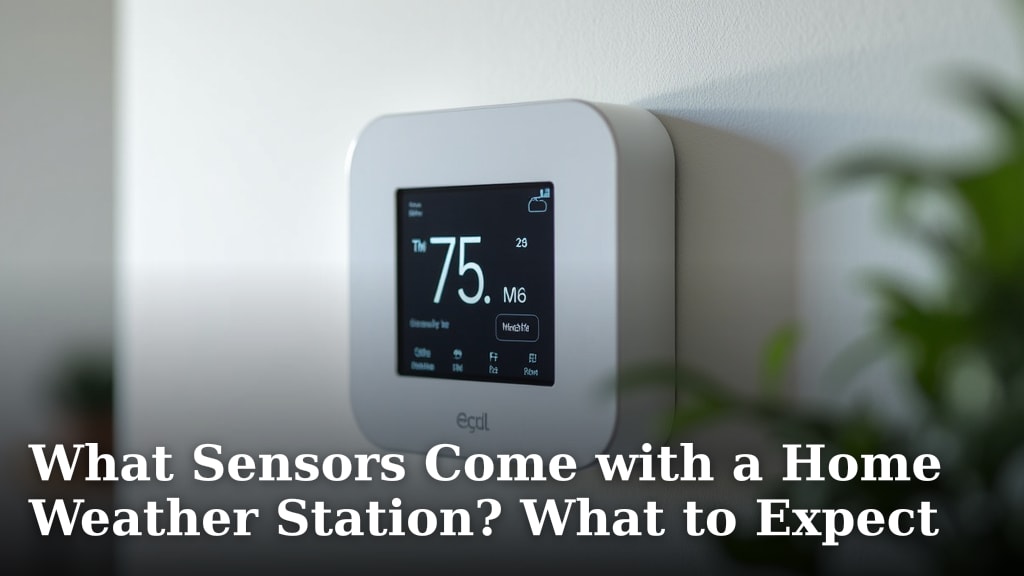
What Sensors Come with a Home Weather Station? What to Expect
Most home weather stations come with a core set of sensors to measure basic weather conditions. You can typically expect a temperature sensor and a humidity sensor right out of the box. These are usually combined into a single unit, often called an all-in-one sensor or integrated sensor suite, to give you a good starting point for monitoring your local climate.
Beyond those essentials, many stations include sensors for wind speed and wind direction. You’ll also often find a sensor for barometric pressure, which helps predict weather changes. Some advanced models might even include sensors for rainfall and UV index, offering a more complete picture of your backyard weather.
- Core sensors usually include temp & humidity.
- Wind speed, direction, and pressure are common additions.
- Rainfall and UV sensors are found on more advanced models.
- Your budget and needs will determine which sensors you get.
- Knowing what’s included helps you choose the right station.
We found that understanding these basic components is key. Let’s break down exactly what each sensor does and what to expect from your new home weather station. Understanding these basic components is key to troubleshooting your weather station.
Understanding Your Home Weather Station’s Sensors
So, you’re thinking about getting a home weather station. That’s fantastic! It’s like having your own personal meteorologist right in your backyard. But what exactly comes inside that box? We know it can be a little confusing with all the different options. Let’s break down the sensors you can expect, so you know exactly what you’re getting.
The Essential Core Sensors: Temperature and Humidity
Most home weather stations start with the basics. Think of these as the foundation of your weather-tracking journey. You’ll almost always find these two working together.
Temperature Sensor
This is pretty straightforward. The temperature sensor measures the **air temperature** around your station. You’ll see readings in Fahrenheit or Celsius, depending on your preference. It’s usually housed in a small, often white, radiation shield. This shield protects the sensor from direct sunlight. Without it, the sun would heat up the sensor. That would give you artificially high temperature readings.
We found that most units place this sensor in an all-in-one outdoor unit. This unit often communicates wirelessly with your indoor display. The accuracy can vary, but most consumer-grade sensors are within a degree or two. This is perfectly fine for most home use.
Humidity Sensor
Closely paired with temperature is the humidity sensor. This measures the amount of **water vapor in the air**, often shown as a percentage. Why is this important? High humidity can make warm days feel hotter and cold days feel colder. It also plays a role in plant health and even how your home feels. For example, low humidity can dry out your skin and furniture.
Many weather stations combine the temperature and humidity sensors into one unit. This is frequently called an “integrated sensor suite” or “all-in-one sensor.” It’s efficient and saves space. We found that checking the humidity alongside temperature gives you a much better picture of “feels like” conditions.
Common Additions: Wind and Barometric Pressure
Once you have temperature and humidity covered, the next most common sensors measure wind and air pressure. These add a lot more detail to your weather picture.
Anemometer (Wind Speed)
This is the gadget with the little spinning cups. It measures the **speed of the wind**. You’ll usually see this reported in miles per hour (mph), kilometers per hour (kph), or knots. It helps you gauge how breezy it is outside. Is it strong enough to fly a kite or just a gentle rustle of leaves?
Some stations offer a more advanced wind sensor called a sonic anemometer. These have no moving parts and can be more accurate. However, for most homeowners, the traditional cup anemometer is more than sufficient. We found that wind speed data is great for planning outdoor activities or just knowing if you need to secure loose items outside.
Wind Vane (Wind Direction)
Often attached to the anemometer, the wind vane tells you **where the wind is coming from**. It’s the arrow-shaped part that pivots. It points towards the direction the wind is blowing from. For example, a “north wind” means the wind is coming from the north.
Knowing wind direction is helpful for many reasons. It can predict incoming weather systems. It’s also useful for gardeners and homeowners. For instance, if you’re spraying pesticides, you want to know which way the wind will carry them. We found that this sensor typically points to North, South, East, and West, with intermediate directions like NE or SW.
Barometer (Barometric Pressure)
A barometer measures **atmospheric pressure**. This is the weight of the air pressing down on the Earth’s surface. Why does this matter for your backyard weather? Changes in barometric pressure are a good indicator of approaching weather. Falling pressure often means a storm is coming. Rising pressure usually signals clearing skies and calmer weather.
Many stations include a built-in barometer in the indoor display unit. This is because it needs to be in a stable indoor environment to get accurate readings. Some outdoor units also have them. We found that tracking barometric pressure trends can help you make your own short-term weather forecasts. Many resources, like the National Weather Service, use this data extensively.
Advanced Additions: Rain and UV
If you want to go beyond the basic weather metrics, some higher-end stations include sensors for rainfall and UV index. These provide even more specialized data.
Rain Gauge
This sensor measures the **amount of rainfall** over a specific period. Most home weather stations use a tipping-bucket rain gauge. It has a small seesaw-like bucket. When a small amount of rain fills one side, it tips over, emptying the water. Each tip is counted, and the system calculates the total rainfall. You’ll see readings in inches or millimeters.
This is fantastic for gardeners, farmers, or anyone who wants to track precipitation accurately. It’s much more precise than just looking at a national weather report. We found that some units might require you to manually empty the collected water or connect to a drain. Others are self-contained. Ensure the gauge is properly leveled for accurate readings.
UV Sensor
This sensor measures the **intensity of ultraviolet (UV) radiation** from the sun. It’s often expressed on a scale from 0 upwards. A higher number means stronger UV rays. This is particularly important for protecting your skin from sunburn. It also helps determine if you need extra sun protection like hats and sunscreen.
Some sources, like the World Health Organization, recommend using UV index information to plan outdoor activities. Knowing the UV level can help you avoid overexposure. We found that this sensor is typically located in the outdoor unit, exposed to direct sunlight. It’s a great feature for health-conscious individuals or families with children.
What to Expect in Your Package: A Quick Summary
So, what does this mean for what you’ll actually find when you open the box? It really depends on the price point and the brand you choose.
Basic Models
Expect a temperature and humidity sensor, usually in a single outdoor unit. You’ll likely get an indoor display that shows these readings. Some might include a basic barometer in the display.
Mid-Range Models
These often add wind speed and wind direction sensors to the outdoor unit. You’ll also usually get a barometer included. The indoor displays are often more advanced, showing historical data.
High-End Models
You’ll get all of the above, plus a rain gauge and a UV sensor. Some premium models might even offer specialized sensors for soil moisture or lightning detection.
Here’s a quick checklist of what to look for:
- Temperature Sensor: Always included.
- Humidity Sensor: Almost always included with temperature.
- Wind Speed & Direction: Common in mid-range and up.
- Barometric Pressure: Often in the indoor display.
- Rain Gauge: Found on more advanced systems.
- UV Sensor: A premium feature for sun exposure.
We found that many manufacturers clearly list the included sensors on their product packaging and websites. Always double-check before you buy. This helps ensure you get exactly the weather data that matters most to you.
Conclusion
You’ve learned that your home weather station likely comes with essential sensors like temperature and humidity. Many also include wind speed, direction, and barometric pressure for a more complete picture. Advanced models might add rainfall and UV sensors. By understanding what each sensor does, you can choose the perfect station for your needs. Take a moment to list the weather data you care about most. Then, compare that list to the sensors included in models you’re considering. This simple step ensures you invest in a station that truly benefits your daily life and outdoor activities.
Frequently Asked Questions
Can I add more sensors to my weather station later?
It depends on the brand and model. Some weather stations are designed to be expandable, allowing you to purchase and add extra sensors, like soil moisture probes or additional temperature/humidity sensors, down the line. Always check the manufacturer’s specifications to see if your chosen station supports expansion.
Where should I place the outdoor weather station sensors?
For accurate readings, place the outdoor unit in an open area away from direct heat sources like vents or buildings, and clear of obstructions that could block wind or rain. Generally, a few feet off the ground in a central location in your yard is ideal for temperature, humidity, and wind measurements.
Do I need a separate sensor for temperature and humidity?
Typically, no. Most home weather stations combine the temperature and humidity sensors into a single outdoor unit, often called an all-in-one sensor or integrated sensor suite. This design is efficient and provides both readings from the same location.
How accurate are the sensors in a typical home weather station?
Consumer-grade weather station sensors are generally accurate enough for home use, usually within a degree or two for temperature and a few percentage points for humidity. While not professional-grade meteorological equipment, they offer a reliable overview of your local conditions.
What does the barometer sensor do if it’s inside the house?
The barometer sensor measures atmospheric pressure. Placing it indoors, away from direct weather influences, allows it to accurately detect changes in air pressure. These changes can help predict upcoming weather shifts, like storms approaching or clearing skies, often displayed as a trend on your indoor console.