9 Best Home Weather Stations with Wind Speed (November 2026)
The best home weather stations that measure wind speed include the AcuRite Iris (best overall for home weather tracking), the Ambient Weather WS-2902 Wi-Fi Smart Weather Station for connected backyard monitoring, and the Sainlogic Wireless Weather Station with Rain Gauge for a large, adjustable display.
On this page (7 sections)
- How we chose home weather stations with wind speed
- What should a home wind station measure?
- How do you choose a wind station for your home?
- The best home weather stations with wind speed compared
- Do wind stations need a rain gauge?
- When is a wind meter a better fit than a station?
- Which home weather station with wind speed should you choose?
The best home weather station with wind speed for most households is the AcuRite Iris, which combines wind speed and direction with temperature, humidity, pressure and rainfall. For Wi-Fi monitoring, consider the Ambient Weather WS-2902; for current and top wind speed readings with historical records, consider La Crosse Technology.
Wind readings can help you understand conditions around your house, garden or patio. The right station depends on what else you want to track, whether you need remote access and where you can mount an outdoor sensor.
Our picks at a glance
-
1

-
2
 Best for connected backyard monitoring
Ambient Weather WS-2902 Wi-Fi Smart Weather Station
9.6/10 our score
See it on Amazon -
3
 Best for a large, adjustable display
Sainlogic Wireless Weather Station with Rain Gauge
9.2/10 our score
See it on Amazon
- 4
 Check it
Sainlogic 12-in-1 Wireless Weather Station with Rain
Best for a broad set of local readings - 5
 Check it
Ambient Weather WS-2000 Smart Weather Station
Best for a detailed console - 6
 Check it
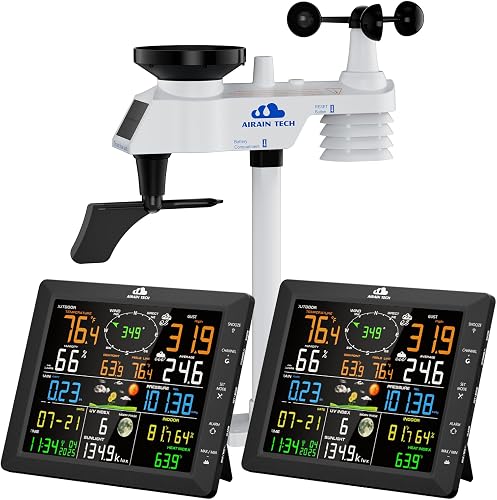
AIRAIN TECH Wireless Weather Station with Dual Displays
Best for two display locations - 7
 Check it
AcuRite Iris Weather Station with Rain Gauge
Best for wind alerts and rainfall history - 8
 Check it
La Crosse Technology 327-1417BW Wind Speed Weather
Best for straightforward wind monitoring - 9
 Check it
WeatherFlow Tempest Weather Station with Built-in Wind
Best for a no-moving-parts sensor
How we chose home weather stations with wind speed
Home weather stations with wind speed should report local wind and make those readings useful alongside other conditions. We compared the stated sensors, displays, connectivity and alerts, then weighed how well each system fits a home user’s needs.
We gave priority to stations that report both wind speed and direction. Direction can help you understand where wind is coming from, while speed gives you a reading to compare over time.
Other useful differences include rainfall measurement, indoor readings, a console, Wi-Fi and alert options. A station with more measurements is not automatically the right choice if you only want wind speed and a simple display.
Our score weighs specs, features and buyer feedback against what you’re shopping for.
What should a home wind station measure?
A home wind station should report wind speed clearly, and wind direction is useful if you want a fuller picture of local conditions. Many all-in-one systems also measure temperature, humidity and rainfall, so you can check several outdoor conditions from one console.
Check whether a station shows current wind speed, peak speed or a history of readings. La Crosse includes current and top speeds, historical records and a speed alert.
For a closer look at combined sensors, see our guide to what sensors come with a home weather station. If rain data matters as much as wind, compare these picks with our best home weather stations with rain gauges.
How do you choose a wind station for your home?
Choose a wind station by matching its sensor set, display and connection options to how you plan to use it. A local console suits quick checks at home, while Wi-Fi can help if you want to check or share readings remotely.
What wind readings do you need?
Look for both speed and direction if you want more than a basic wind reading. If you mainly want to know how strong the wind is, current speed, peak speed and an alert may matter more than a long list of additional sensors.
For stations that report both measures, browse our guide to the best weather stations with wind speed and direction. A broader best weather station 7 in 1 roundup can help if you want an all-in-one sensor array.
Do you want Wi-Fi or a local display?
A display gives you a place to check readings without opening an app. Wi-Fi can add remote access or sharing, but check which part of the system connects to the network and what services it supports.
The AcuRite Iris and Ambient Weather WS-2902 both offer Wi-Fi features. The Sainlogic stations and AIRAIN TECH station are described as no-Wi-Fi options, which may suit buyers who prefer readings on a local console.
WeatherFlow Tempest takes a different approach because it has no dedicated display. Consider it if you’re comfortable using connected services to view readings.
Where can you mount the outdoor sensor?
Choose a mounting place that gives the outdoor sensor room to measure local wind. Avoid putting it somewhere that could make readings less representative of the area you care about, such as a sheltered spot beside a wall.
Some stations need a mounting pole or a suitable post. The WS-2902 includes a mounting bracket, but the pole is not included; the La Crosse sensor comes with a mounting bracket and hardware.
Check your available mounting location before you choose.
The best home weather stations with wind speed compared
The top three picks cover different priorities: a well-rounded home setup, Wi-Fi monitoring and a large display. The remaining stations add options for broader sensor sets, multiple displays, wind alerts or a no-moving-parts sensor.
| Product | Best for | Wind readings | Other measurements | Connectivity | Our score |
|---|---|---|---|---|---|
| AcuRite Iris | overall for home weather tracking | Wind speed and direction | Temperature, humidity, pressure and rainfall | Wi-Fi and 433 MHz wireless | 9.7 |
| Ambient Weather WS-2902 Wi-Fi Smart Weather Station | connected backyard monitoring | Wind speed and direction | Temperature, humidity, rainfall, UV and solar radiation | Wi-Fi and 915 MHz sensor connection | 9.6 |
| Sainlogic Wireless Weather Station with Rain Gauge | a large, adjustable display | Wind speed and direction | Temperature, humidity, pressure, rainfall and dew point | 9.2 | |
| Sainlogic 12-in-1 Wireless Weather Station with Rain | a broad set of local readings | Wind speed and direction | Temperature, humidity, pressure, rainfall and dew point | 8.8 | |
| Ambient Weather WS-2000 Smart Weather Station | a detailed console | Wind speed and direction | Temperature, humidity, rainfall, UV and solar radiation | 8.6 | |
| AIRAIN TECH Wireless Weather Station with Dual Displays | two display locations | Wind speed and direction | Temperature, humidity, pressure, rainfall and UV | 8.5 | |
| AcuRite Iris Weather Station with Rain Gauge | wind alerts and rainfall history | Wind speed and direction | Temperature, humidity, pressure and rainfall | 8.3 | |
| La Crosse Technology 327-1417BW Wind Speed Weather | straightforward wind monitoring | Current and top speeds with historical records | Temperature and humidity | 8.2 | |
| WeatherFlow Tempest Weather Station with Built-in Wind | a no-moving-parts sensor | Wind speed and direction | Temperature, humidity, pressure, rainfall, UV and lightning | 8.1 |
1. AcuRite Iris: Best overall for home weather tracking
AcuRite Iris: Best overall for home weather tracking
- Wind speed and direction
- Indoor and outdoor temperature and humidity
- Rainfall and barometric pressure
- Wi-Fi connection to Weather Underground
This AcuRite system pairs wind readings with indoor and outdoor weather data. Its color display and Wi-Fi connection suit home users who want local readings and an option to share them.
Pros
- Tracks wind speed and direction
- Measures rainfall and indoor conditions
- Wi-Fi sharing with Weather Underground
Cons
- The display uses a power cord
- The outdoor sensor needs a suitable mounting spot
AcuRite Iris is a strong fit if you want wind readings as part of a broad home weather picture. It reports wind speed and direction, along with indoor and outdoor temperature and humidity, barometric pressure and rainfall.
Its large color LCD display shows indoor and outdoor conditions, time and date, and has an adjustable dimmer. The system can connect to Weather Underground over Wi-Fi, so you can monitor readings remotely and share weather data.
The Iris provides more than 25 data points, including heat index, dew point, wind chill and rainfall history. Those details can be useful if you want to look back at local conditions instead of checking only the current reading.
Plan the outdoor sensor location before setup, and make sure the display can reach power. Choose this model if you want wind speed alongside home weather measurements and Wi-Fi sharing.
2. Ambient Weather WS-2902: Best for connected backyard monitoring
Ambient Weather WS-2902 Wi-Fi Smart Weather Station: Best for connected backyard monitoring
- Wind speed and direction
- Rainfall, UV and solar radiation
- Wi-Fi remote monitoring and alerts
- LCD color display
The WS-2902 brings wind, rain and other outdoor measurements to a Wi-Fi-enabled home station. Its color console displays local conditions, and Wi-Fi supports remote monitoring.
Pros
- Measures wind speed and direction
- Includes rain, UV and solar radiation readings
- Supports remote monitoring and alerts
Cons
- The mounting pole is not included
- The sensor array and console use separate connections
The WS-2902 suits home users who want wind speed and direction plus several outdoor measurements. Its sensor array also measures temperature, humidity, rainfall, UV intensity and solar radiation, while the color LCD console presents conditions indoors.
Wi-Fi supports remote monitoring and alerts, and the station can send data to the Ambient Weather Network. The sensor array connects to its console by radio frequency, separate from the console’s internet connection.
Ambient Weather describes the array as solar powered, with optional battery backup. Its mounting bracket fits a pole between 1.25 and 2 in, but the mounting pole itself is not included.
Pick the WS-2902 if you want connected backyard readings and a wide mix of sensors. Confirm that you have a place to mount the array and a way to supply the console.
3. Sainlogic Wireless Weather Station with Rain Gauge: Best for a large display
Sainlogic Wireless Weather Station with Rain Gauge: Best for a large, adjustable display
- 7.5-inch color display
- Wind speed and direction
- Rainfall tracking
- No Wi-Fi
This Sainlogic station puts wind and rainfall readings alongside indoor and outdoor conditions on a large color screen. It suits buyers who want a local display and do not need Wi-Fi.
Pros
- Large adjustable-brightness display
- Shows wind direction and speed
- Tracks rainfall by hour, day, week, month and year
Cons
- No Wi-Fi connection
- The display needs room on a table or shelf
This Sainlogic station is built around a 7.5-inch color screen with adjustable brightness. It displays wind speed and direction alongside indoor and outdoor temperature, humidity, pressure, rainfall and dew point.
Rain tracking is a useful addition if you want to compare wind conditions with local precipitation. The screen also shows rainfall totals by hour, day, week, month and year.
This model does not include Wi-Fi, so it suits buyers who want to check readings on the console itself. Its large display may need more counter or shelf space than a smaller unit.
Choose it when easy-to-read local data matters more than remote access. Check the available space for the display and the outdoor sensor before setting up the system.
4. Sainlogic 12-in-1: Best for a broad set of local readings
Sainlogic 12-in-1 Wireless Weather Station with Rain: Best for a broad set of local readings
- Wind speed and direction
- Rainfall and pressure readings
- 6.5-inch display with adjustable backlight
- Solar power with battery backup
The 12-in-1 station combines wind and rain measurements with temperature, humidity, pressure and dew point. Its display offers local data without requiring Wi-Fi.
Pros
- Combines wind and rainfall data
- Manual rainfall calibration
- Adjustable display backlight
Cons
- Backup batteries are not included
- No Wi-Fi feature is specified
The Sainlogic 12-in-1 pairs wind speed and direction with rainfall, temperature, humidity, pressure and dew point. Its 6.5-inch screen has three backlight levels for different room lighting.
For rain tracking, the station offers manual calibration and cumulative rainfall statistics. Its stated temperature range is -40°F to 140°F, with accuracy up to ±2°F.
The outdoor sensor can be mounted on a pole, rooftop or fence, so consider your location and access before choosing it. Solar power is paired with battery backup, but the backup batteries are not included.
This station suits buyers who want several types of local readings on one display without Wi-Fi. Choose it if the range of measurements is useful to you and you have a practical sensor mounting spot.
5. Ambient Weather WS-2000: Best for a detailed console
Ambient Weather WS-2000 Smart Weather Station: Best for a detailed console
- TFT color display
- Wind speed and direction
- Rainfall, UV and solar radiation
- Enhanced Wi-Fi option
The WS-2000 combines a color console with an outdoor array for wind, rain and other readings. Its console supports imperial and metric units, calibration and alerts.
Pros
- Tracks several outdoor conditions
- Supports imperial and metric units
- Console supports calibration and alerts
Cons
- Indoor sensor is sold separately
- Sensor array needs a suitable pole
The WS-2000 measures wind speed and direction, along with temperature, humidity, rainfall, UV and solar radiation. Its high-definition TFT color display presents readings from the outdoor array.
The console supports imperial and metric units, calibration options and high or low alerts. It can also publish weather data over the internet when connected.
The sensor array uses a solar panel as its primary power source, with optional battery backup. It mounts to a pole between 1.25 and 2 in, and the optional indoor sensor is sold separately.
Consider this model if you want a detailed console and the option to share data online. If you need indoor temperature and humidity from a separate sensor, account for that additional component.
6. AIRAIN TECH Wireless Weather Station with Dual Displays: Best for two display locations
AIRAIN TECH Wireless Weather Station with Dual Displays: Best for two display locations
- Two display units
- Wind speed and direction
- Rainfall and UV readings
- No Wi-Fi
AIRAIN TECH includes two displays for checking local readings in separate rooms. Its wireless outdoor sensor reports wind speed and direction alongside other conditions.
Pros
- Two displays included
- Measures wind and rainfall
- Includes an outdoor sensor mounting pole
Cons
- No Wi-Fi connection
- The displays need power or battery planning
AIRAIN TECH includes two display units and one outdoor sensor, which can make readings available in more than one room. The sensor reports wind speed and direction along with rainfall, temperature, humidity, pressure, UV and other data.
Its displays are 8.5-inch color LCD screens with adjustable brightness. This model has no Wi-Fi, so it is designed around local readings on the included displays.
The outdoor sensor comes with a mounting pole and hardware. Decide where both consoles will sit and how you’ll power them before setup.
Choose this station if you value having two screens more than remote access. If you want app-based viewing or online sharing, compare it with the connected Ambient Weather or AcuRite options.
7. AcuRite Iris Weather Station with Rain Gauge: Best for wind alerts and rainfall history
AcuRite Iris Weather Station with Rain Gauge: Best for wind alerts and rainfall history
- Wind speed and direction
- Custom wind and weather alerts
- Rain gauge and rainfall history
- High-definition display
This AcuRite Iris model tracks wind, rain and indoor and outdoor conditions, with customizable alerts for wind speed and other readings. Its display includes rainfall history and weather data.
Pros
- Custom wind speed alerts
- Rainfall history and storm alarm
- Displays more than 25 data points
Cons
- Lightning sensor is sold separately
- The outdoor sensor needs a pole or post
This AcuRite Iris combines wind speed and direction with rain tracking and indoor and outdoor temperature and humidity. Its high-definition display shows more than 25 data points, including rainfall history, heat index and dew point.
Customizable alerts cover wind speed, temperature, humidity and rainfall. The station also includes a storm alarm that activates when barometric pressure drops.
The outdoor sensor mounts to a pole or post using its bracket. You can expand the system with a compatible AcuRite lightning sensor, sold separately.
This model fits buyers who want wind and rain alerts on a home display. Pick it if alert settings and rainfall history matter, and check the sensor mounting location before setup.
8. La Crosse Technology 327-1417BW Wind Speed Weather: Best for straightforward wind monitoring
La Crosse Technology 327-1417BW Wind Speed Weather: Best for straightforward wind monitoring
- Current and top wind speeds
- Wind speed alerts and historical records
- Outdoor temperature and humidity
- Frost and storm warnings
La Crosse focuses on wind speed, temperature and humidity, with current and top speed readings, records and alerts. Its console also displays forecast icons and frost or storm warnings.
Pros
- Wind speed history and alerts
- Measures temperature and humidity
- Includes a mounting bracket and hardware
Cons
- Does not include a rain gauge
- Display and sensor batteries are not included
La Crosse focuses on current and top wind speeds, along with temperature and humidity. Its console keeps historical wind speed records and supports a speed alert, so it offers wind features without a rain gauge.
The wireless outdoor sensor combines wind, temperature and humidity readings. Indoors, the LCD display shows forecast icons, temperature, humidity, wind speed and feels-like temperature, with frost and storm warnings.
The included bracket and hardware support sensor mounting. The console needs 3 AA batteries, and the sensor needs 2 C batteries; neither set is included.
Choose La Crosse if your main goal is to monitor wind speed and related temperature conditions. If you want rainfall measurements too, select one of the stations with a rain gauge.
9. WeatherFlow Tempest Weather Station with Built-in Wind: Best for a no-moving-parts sensor
WeatherFlow Tempest Weather Station with Built-in Wind: Best for a no-moving-parts sensor
- Built-in wind speed and direction measurement
- Rainfall, lightning and UV readings
- Solar-powered outdoor sensor
- App and Alexa enabled
Tempest combines wind measurements with rainfall, lightning and other weather data in one outdoor device. It has no dedicated display, so it suits buyers comfortable checking readings through connected services.
Pros
- Measures wind, rain and lightning
- No moving parts
- Supports app and Alexa connections
Cons
- No dedicated display
- A connected device is needed to view readings
Tempest combines wind speed and direction with temperature, humidity, pressure, rainfall, solar radiation, UV and lightning readings. The outdoor sensor is solar powered and has no moving parts.
Unlike the other picks, Tempest has no dedicated display. You’ll need a connected device or service to view readings, so consider whether that fits your daily routine.
The system supports app and Alexa connections, as well as integrations such as Rachio and IFTTT. Those options may suit you if you want to use local weather data with compatible smart home tools.
Choose Tempest for a single outdoor sensor with a wide range of measurements and no moving parts. If you want readings on a screen at home, choose a station with a console instead.
Do wind stations need a rain gauge?
A rain gauge is useful if you want one station to track both wind and precipitation, but it is not required to measure wind. La Crosse focuses on wind speed, temperature and humidity, while the AcuRite, Ambient Weather and Sainlogic systems add rainfall readings.
Choose a station with rain measurement if you track garden watering, storms or seasonal rainfall. If rain is your main concern, our home weather station with rain gauge guide compares those systems.
When is a wind meter a better fit than a station?
A wind meter may be a better fit if you mainly need portable readings for outdoor activities or site checks. A home weather station suits ongoing readings from a sensor mounted near your house.
Before you buy, decide whether you need a fixed sensor, a console or portable equipment. Our guide to the best Kestrel weather meters covers handheld alternatives, and our best digital weather stations with wind sensors roundup focuses on digital station options.
For a fixed outdoor setup, also consider how you’ll mount the sensor. The best weather station tripod mounts can help you compare mounting options.
Which home weather station with wind speed should you choose?
Choose the AcuRite Iris for a home station with wind, rain, indoor readings and Wi-Fi sharing. Pick the WS-2902 for connected backyard monitoring, Sainlogic for a large local display, or La Crosse if wind speed records and alerts matter most.
If your preferred model measures wind direction too, check that its sensor can be mounted where it will represent the conditions you care about. Choose a station whose readings, display and connections fit the way you’ll use it at home.
Our top 3 picks at a glance
-
1
-
2
Best for connected backyard monitoring
Ambient Weather WS-2902 Wi-Fi Smart Weather Station
9.6/10 our score
See it on Amazon -
3
Best for a large, adjustable display
Sainlogic Wireless Weather Station with Rain Gauge
9.2/10 our score
See it on Amazon


