9 Best Radon Detector for Basement (November 2026)
The best radon detectors for basements include the Airthings Corentium Home Radon Detector 223 Portable for flexible placement, the AEGTEST HOUND-1011S Portable Radon Detector for alarm alerts, and the X-Sense Radon Detector for Basement for quiet rooms.
On this page (6 sections)
- How we chose the best radon detector for basement monitoring
- The best radon detectors for basements
- What should you consider when choosing a basement radon detector?
- How should you set up and use a basement radon detector?
- What mistakes can make basement readings harder to interpret?
- Which radon detector should you choose for your basement?
The Airthings Corentium Home is the best radon detector for most basements because it combines battery power with short- and long-term readings on its own screen. The X-Sense XR0A-SR is the quiet choice, while SafetySiren Pro4 suits a basement with an outlet and a preference for alarms.
Choose a basement detector based on how you want to power it, read results and receive alerts. Radon levels fluctuate, so use longer-term readings to understand patterns instead of drawing conclusions from a brief spike.
For more placement options around the house, see our guide to the best radon detector for home. We also explain how radon detectors work and compare them with broader indoor air devices in our air quality monitor guide.
Our picks at a glance
-
1
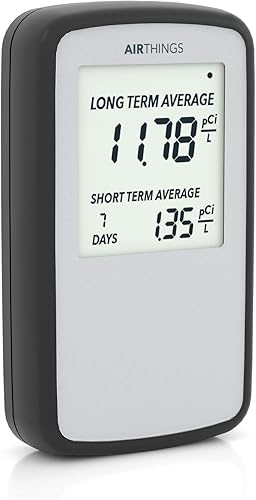 Best for flexible placement
Airthings Corentium Home Radon Detector 223 Portable
9.7/10 our score
See it on Amazon -
2

-
3

- 4
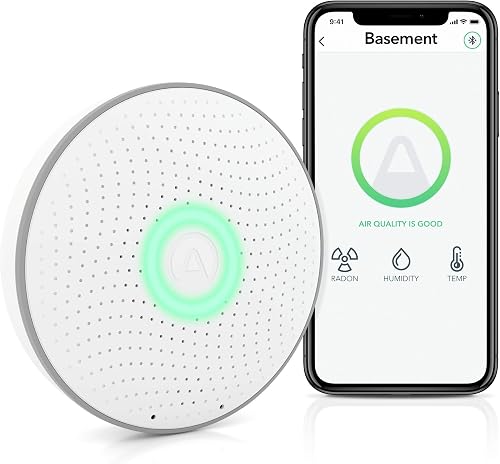 Best for app trend viewsCheck it
- 5
 Check it
SafetySiren Safety Siren Pro4 Series Plug-In Radon
Best for outlet access - 6
 Check it
AEGTEST HOUND-1008 Radon Detector for Home
Best for fewer battery changes - 7
 Check it
Aranet Radon Plus Radon Detector for Home
Best for room data - 8
 Check it
X-Sense Radon Detector for Home
Best for saved records - 9
 Check it
AEGTEST HOUND-1011 Portable Radon Detector for Home
Best for muted alarms
How we chose the best radon detector for basement monitoring
The right basement detector depends on how you will check and use its readings. We compared the products' stated viewing periods, power sources, alarm types, portability and extra room measurements to match different basement setups.
An audible or visual alert can help you notice a reading change without walking over to the display. That can be useful when the basement is mostly storage or utility space, though an alarm does not replace checking the longer-term average.
Silent monitors suit spaces where beeps and flashing lights would be unwelcome. Battery power also gives you more freedom to place a detector away from an outlet, while a corded unit can stay powered in one location.
Longer monitoring periods matter because radon readings can move up and down. A reading available within hours is useful as an initial check, but a longer average provides a broader view of conditions.
| Product | Best for | Power | Readings | Placement | Our score |
|---|---|---|---|---|---|
| Airthings Corentium Home Radon Detector 223 Portable | flexible placement | 3 AAA batteries | Short- and long-term on-screen averages | Portable between rooms | 9.7 |
| AEGTEST HOUND-1011S Portable Radon Detector | alarm alerts | Type-C cable for continuous monitoring; built-in battery | 12-hour to 504-day timeframes | 9.6 | |
| X-Sense Radon Detector for Basement | quiet rooms | 3 AA batteries | Past 1, 7, 30 and 90 days, plus long-term average | 9.5 | |
| Airthings 2950 Wave Radon | app trend views | Battery powered | Short- and long-term results in the app | 9.2 | |
| SafetySiren Safety Siren Pro4 Series Plug-In Radon | outlet access | Corded electric | Short- and long-term levels on display | 8.9 | |
| AEGTEST HOUND-1008 Radon Detector for Home | fewer battery changes | 3 AAA batteries | 8.8 | ||
| Aranet Radon Plus Radon Detector for Home | room data | 2 AA batteries | Every 10 minutes; 24-hour, 7-day and 30-day averages | 8.5 | |
| X-Sense Radon Detector for Home | saved records | 3 AA batteries | 8.3 | ||
| AEGTEST HOUND-1011 Portable Radon Detector for Home | muted alarms | Type-C cable for continuous monitoring; built-in battery | 6-hour to 504-day timeframes | 8.1 |
The best radon detectors for basements
The Airthings Corentium Home is the leading all-around pick for battery-powered monitoring and on-device averages. The other options fit specific priorities, including alerts, phone access, silent operation and extra environmental readings.
Airthings Corentium Home Radon Detector 223 Portable: Best for flexible placement
- Runs on 3 AAA batteries
- On-screen short- and long-term readings
- Shows average daily, weekly and long-term concentrations
- Can generate a radon self-inspection report
Battery operation makes placement easier when a basement outlet is inconvenient. Its screen shows short- and long-term readings, and the device can generate a radon self-inspection report.
Pros
- No outlet needed
- Short- and long-term readings on screen
- Portable between rooms
Cons
- No audible or visual alarm details are provided
- Uses AAA batteries
The Corentium Home runs on 3 AAA batteries, so you can place it without routing a cord across a basement floor. Its display includes daily, weekly and long-term averages, making it straightforward to check the unit itself.
It can also generate a radon self-inspection report. That can help you keep a record of readings or compare conditions before and after a mitigation change.
Choose it if you want portable monitoring without depending on an outlet or app. Skip it if audible alerts are a must, since no alarm details are specified for this model.
AEGTEST HOUND-1011S Portable Radon Detector: Best for alarm alerts
- Audible and visual alarms
- First results within 12 hours
- Hourly updates
- Displays readings from 12 hours to 504 days
This portable detector combines audible and visual alarms with several short- and long-term viewing periods. It supports pCi/L and Bq/m³ and can run continuously from its Type-C cable.
Pros
- Audible and visual alarms
- Hourly reading updates
- Supports two radon units
Cons
- First reading takes about 12 hours
- High humidity can affect readings
The HOUND-1011S fits a basement where audible and visual alarms are a priority. Its display offers several short-term windows, updates hourly, and shows the first result within about 12 hours.
You can view readings in pCi/L or Bq/m³ and choose periods from 12 hours up to 504 days. The Type-C cable supports continuous operation, while the built-in battery is rated for up to 45 days in sleep mode.
Choose this model if you want alarms and a wide range of timeframes. Avoid placing it in a very humid or brightly lit spot, as those conditions can affect its readings.
For a walkthrough of another Airthings device, see how to use an Airthings radon detector.
X-Sense Radon Detector for Basement: Best for quiet rooms
- Silent operation
- Shows short-term and cumulative averages
- Data retention during battery changes
- Up to 24 months of battery life under typical use
Silent operation suits a basement where you want continuous tracking without beeps or flashing alerts. It shows several short-term averages and a long-term cumulative average.
Pros
- Silent operation
- No app required for readings
- Retains data through battery interruption
Cons
- No audible or visual alarm
- Power should be restored within 4 hours after battery interruption
The X-Sense XR0A-SR is a strong fit for a finished basement where silent operation matters. It has no audible or visual alerts, so you check the screen when you choose; a button activates the backlight in low light.
The screen shows averages for the past 1, 7, 30 and 90 days, plus a long-term cumulative average. X-Sense says its readings reach 90% consistency with reference results after 7 days of continuous operation.
Choose it if you want a quiet, self-contained display and several averaging periods. Skip it if you rely on a sound or light warning, and restore power within 4 hours after a battery interruption to preserve data accuracy.
Airthings 2950 Wave Radon: Best for app trend views
- Battery-powered continuous monitoring
- Bluetooth app access to short- and long-term averages
- Tracks humidity and temperature
- Color-coded visual indication
Wave Radon connects to the Airthings app over Bluetooth for readings and trend review. It also tracks humidity and temperature, which can help you understand basement conditions alongside radon.
Pros
- App access to readings and trends
- Tracks humidity and temperature
- Battery powered
Cons
- Bluetooth syncing requires a phone within range
- App is needed for detailed results
Wave Radon is for households that prefer phone-based trend viewing. It connects to the Airthings app over Bluetooth for short- and long-term averages and trend analysis.
The battery-powered unit also measures humidity and temperature, adding context about basement conditions alongside radon. At the device, a color-coded visual indication gives a quick status; detailed readings are available in the app.
Choose it if you are comfortable syncing a phone within Bluetooth range and want app-based records. If you want a broader indoor gas picture, read how to monitor CO2 levels or compare options in our guide to the best NDIR CO2 monitor.
SafetySiren Safety Siren Pro4 Series Plug-In Radon: Best for outlet access
- Continuous short- and long-term monitoring
- Audible and visual alarms
- Backlit display
- Daily self-test
The plug-in design suits a basement outlet location where you want a backlit screen and both audible and visual alarms. It monitors short- and long-term radon levels continuously.
Pros
- Audible and visual alerts
- Backlit display
- No app, Wi-Fi or subscription required
Cons
- Needs a suitable outlet
- Less flexible to move than a battery-powered unit
SafetySiren Pro4 suits a basement where a nearby outlet makes corded operation convenient. It continuously monitors short- and long-term radon levels and has audible and visual alarms.
Its backlit digital display is easier to read in a dim room. SafetySiren describes a fail-safe self-test every 24 hours, and the unit works without an app, Wi-Fi or subscription.
Choose it if the detector will stay near a suitable outlet and you want alarms without phone features. Skip it if you plan to move the monitor between rooms, and keep its cord out of walkways.
For more on outlet-powered options, see our guide to a plug-in radon detector for home.
AEGTEST HOUND-1008 Radon Detector for Home: Best for fewer battery changes
- Up to 400 days of battery life
- First reading about 12 hours after startup
- Hourly updates
- Audible and visual alerts
The HOUND-1008 pairs portable battery operation with audible and visual alerts. Its stated battery life of up to 400 days may suit a basement where you want to avoid frequent charging.
Pros
- Up to 400 days of battery life
- Audible and visual alerts
- Supports pCi/L and Bq/m³
Cons
- First reading takes about 12 hours
- No multi-period display details are provided
The HOUND-1008 suits a basement where you want portable monitoring with long stated battery life. AEGTEST rates it for up to 400 days, and the package includes 3 AAA batteries.
The first reading appears about 12 hours after startup, followed by hourly updates. Audible alerts and a concentration indicator help draw attention to changes without requiring an app.
Choose it if you want battery-powered alerts and do not need phone access. The stated display information does not describe multiple averaging periods, so pick another model if seeing a range of historical windows is central to your decision.
Aranet Radon Plus Radon Detector for Home: Best for room data
- Radon readings every 10 minutes
- Tracks temperature, humidity and pressure
- E-ink display with color-coded levels
- Up to 7 years on 2 AA batteries
This standalone monitor updates radon readings every 10 minutes and also tracks temperature, humidity and pressure. Its E-ink display shows color-coded levels and averages without requiring the app.
Pros
- Frequent radon readings
- Tracks three other room conditions
- Long stated battery life
Cons
- App is needed for detailed data management
- No audible alarm details are provided
The Aranet Radon Plus is a good choice if you want frequent readings and room conditions from one monitor. It measures radon every 10 minutes and tracks temperature, humidity and atmospheric pressure.
Its E-ink display shows real-time, 24-hour, 7-day and 30-day averages, with color-coded levels. It can work as a standalone device; the app adds data management, custom warning thresholds and export.
Choose it if regular updates and extra environmental readings are useful. Skip it if you need an audible alarm, since alarm details are not specified for this model.
X-Sense Radon Detector for Home: Best for saved records
- Audible and visual warnings
- Up to 999 days of tracking
- Stores up to 99 records locally
- Tracks temperature and humidity
This X-Sense model adds sound and light alerts to long-term radon tracking. It also displays temperature and humidity and can store up to 99 records locally.
Pros
- Audible and visual warnings
- Temperature and humidity display
- Local record storage
Cons
- First-day readings are less settled than longer-term averages
- No app details are provided
This X-Sense model suits a basement where alerts and saved records are useful together. It provides sound and light warnings, tracks radon for up to 999 days, and stores up to 99 records locally.
The screen also shows temperature and humidity. The detector uses 3 AA batteries, with a stated life of up to 2 years.
Choose it if you want local records and visible or audible warnings. X-Sense says accuracy reaches 95% after 7 days or more, so use the longer record to understand patterns instead of treating the first day as the final picture.
AEGTEST HOUND-1011 Portable Radon Detector for Home: Best for muted alarms
- First reading within 6 hours
- Hourly updates
- Displays timeframes from 6 hours to 504 days
- Alarm can be muted in Eco menu
The HOUND-1011 offers a first reading within 6 hours and several viewing periods for tracking radon over time. Its alarm can be muted in the Eco menu.
Pros
- First reading within 6 hours
- Many short- and long-term timeframes
- Alarm can be muted
Cons
- Built-in battery lasts up to 45 days in sleep mode
- High humidity can affect readings
The HOUND-1011 gives you multiple reading windows and an alarm that can be muted in the Eco menu. AEGTEST says the first reading appears within 6 hours, with hourly updates and views ranging from 6 hours to 504 days.
It supports pCi/L and Bq/m³. A Type-C cable supports continuous monitoring, while the built-in battery lasts up to 45 days in sleep mode.
Choose it if you want a faster initial reading than the HOUND-1011S and the option to mute the alarm. Avoid a humid or brightly lit placement, since the manufacturer notes those conditions can affect readings.
What should you consider when choosing a basement radon detector?
Start with the room and your routine: decide where the detector will sit, how you will check it and whether you need an alert. Then compare power, display access and the length of the averages each model provides.
A basement can include separate finished, unfinished and utility areas. Think about which area you want to monitor, and follow the unit's instructions for placement and clearance.
Does a radon detector for a basement need an alarm?
An alarm is useful if you may not notice a display while you are away from the basement. The HOUND-1011S, HOUND-1008, X-Sense XR0B-SR and SafetySiren Pro4 have stated audible and visual alerts.
A silent model can be a better match for a finished room, a bedroom area or a home where alert sounds are disruptive. The X-Sense XR0A-SR displays readings without audible or visual alerts, so you need to check it yourself.
Should you choose a plug-in or battery radon detector for a basement?
Choose a plug-in model if the detector can stay near a suitable outlet and you prefer not to manage batteries. Battery-powered models are easier to place away from outlets and move between rooms.
If you choose a corded detector, plan placement so the cord does not cross a walkway. For a battery model, check what kind of battery it takes and how often you are willing to replace or recharge it.
Are short-term or long-term radon readings more useful?
Both are useful, but they describe different time periods. A short-term view shows recent movement, while a longer average helps you understand readings across more days or weeks.
Radon can fluctuate, so do not treat a brief change as the whole picture. Let the detector build its longer average, and follow public health guidance for testing and next steps.
What else can a basement monitor measure?
Some radon devices also track temperature and humidity, while the Aranet Radon Plus adds atmospheric pressure. These readings help describe other room conditions, but they do not replace radon measurements.
A general air-quality monitor may measure other pollutants instead of radon. Check the sensors included before choosing a device for a different indoor-air concern.
How should you set up and use a basement radon detector?
Set the detector in the area you want to understand, then let it run according to its instructions. Keep its position stable while readings accumulate, and use the screen or app to compare short- and long-term views.
Where should you place it?
Follow the model's placement directions for height and clearance. Avoid direct sunlight, vents, open windows and damp spots, particularly with models whose guidance warns that light or humidity can affect readings.
Use the detector in the basement area that matters to you. If you have separate finished and unfinished spaces, one reading may not describe conditions in both.
How long should you wait before using the reading?
The first display result is only an early point in the measurement period. These products have different stated wait times, from about 6 hours for the HOUND-1011 to about 12 hours for the HOUND-1011S and HOUND-1008; longer averages take more time to build.
Keep the monitor running if you want to follow long-term conditions. If you reset or move it, check the instructions so you understand whether the history remains and how soon new readings appear.
How do you care for the monitor and its records?
Keep air inlets clear and the unit in a stable, suitable location. Replace or recharge batteries as directed, and check the display or app periodically so you know the monitor is still operating.
Before replacing batteries, check whether the model retains its previous data and whether it has a time limit for restoring power. For example, X-Sense XR0A-SR says to restore power within 4 hours for data accuracy.
What mistakes can make basement readings harder to interpret?
The most common mistake is treating one early reading as a complete picture. Radon readings fluctuate, so give the monitor time to build a longer average and compare periods rather than reacting to a momentary change alone.
Moving a detector repeatedly also makes comparisons harder because the new location may have different conditions. Keep it in one place while you observe a trend, then follow the instructions if you move it to another room.
Do not assume that one basement location represents every floor or room. If your concern extends beyond the basement, consider monitoring the other area separately and follow public health guidance.
Humidity, direct light and strong airflow can affect some detectors. Use the device-specific placement guidance, especially for models whose instructions mention these conditions.
Finally, do not confuse a radon detector with a general air-quality monitor. A device that tracks temperature, humidity or CO2 does not necessarily measure radon; check that radon sensing is explicitly included.
Which radon detector should you choose for your basement?
Choose the Airthings Corentium Home for portable battery use and on-screen short- and long-term averages. Pick the HOUND-1011S or SafetySiren Pro4 if alerts matter, the X-Sense XR0A-SR for silent monitoring, or Wave Radon for app-based trends.
If you want frequent radon readings plus temperature, humidity and pressure, choose the Aranet Radon Plus. For a simple decision rule, match power and alerts to the room, then choose a monitor whose longer averages you will check.
The best radon detector for basement monitoring is one that fits your placement and notification needs and gives you a useful view over time. If you are deciding what to do about raised readings, see our guide to radon mitigation in a basement.
Our top 3 picks at a glance
-
1
Best for flexible placement
Airthings Corentium Home Radon Detector 223 Portable
9.7/10 our score
See it on Amazon -
2
-
3
Frequently asked questions
Where should you place a radon detector in a basement?
Place the detector in the basement area you want to monitor, following its instructions for height and clearance. Keep it away from direct sunlight, vents, open windows and damp spots, since airflow, light or humidity may affect some sensors.
If the basement has separate finished and unfinished areas, one reading may not describe both.
How long should a radon detector run in a basement?
Run a detector continuously for long-term monitoring because radon levels can fluctuate over time. Some models show an early reading within hours, while their longer averages build over days or weeks.
Use the longer-term view to understand patterns, and follow the device instructions when resetting or moving it.
Can a plug-in radon detector work in a basement?
Yes. A plug-in monitor can work in a basement if there is an outlet in a suitable spot, and it avoids battery changes while powered.
Check whether its display and alarms fit your needs, and see our guide to a plug-in radon detector for home for more placement and feature considerations.
Are basement radon readings different from readings upstairs?
They can be. Radon can enter from the ground, and concentrations may vary between rooms and floors, so a basement reading does not automatically represent every room in the home.
Use a monitor where you spend time or where you need to evaluate conditions, and follow public health guidance for testing and next steps.
Do radon detectors need an app?
No. Several detectors show readings directly on a screen, including the Corentium Home and X-Sense XR0A-SR.
App-connected models can add trend views or data management, but check whether the features you want work without a phone.
For a broader look at devices that measure indoor conditions, see our air quality monitor guide.