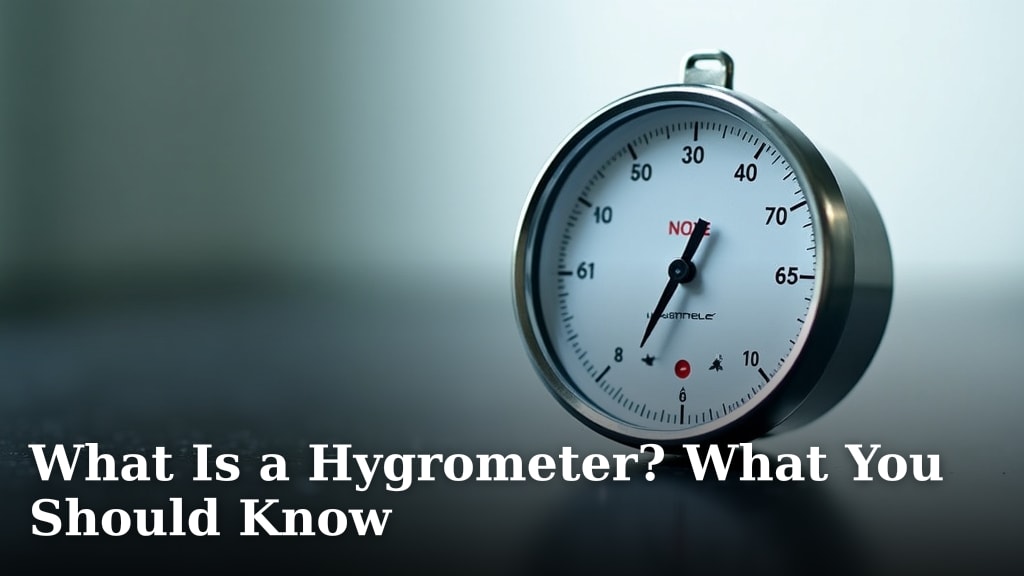
What Is a Hygrometer? What You Should Know
A hygrometer is a tool used to measure humidity, which is the amount of water vapor in the air. You might know it as a humidity gauge. It’s important because the right humidity levels affect your comfort, health, and even your home. Understanding this simple device helps you control your environment better.
These devices are surprisingly common and useful. They help prevent issues like mold growth and dry skin. Many experts say that monitoring indoor humidity is key to a healthy living space. A hygrometer can even help keep your wooden furniture and musical instruments in good condition by preventing warping.
- A hygrometer measures humidity.
- Humidity is the amount of water vapor in the air.
- It helps you manage comfort and health.
- It protects your home and belongings.
Let’s get into what a hygrometer is, why it matters, and how to pick the right one for your needs.
Understanding Your Hygrometer: A Practical Guide
So, you’ve heard about hygrometers, but what exactly do they do? Simply put, a hygrometer is a device that measures humidity. Think of it as a humidity gauge for your home. It tells you how much moisture is in the air around you. Why is this important? Because the right humidity levels can greatly affect your comfort, health, and even the condition of your belongings.
You might be surprised how often you encounter them. They’re in some thermostats, weather stations, and even humidors for cigars. Knowing what it is and why it matters is the first step to controlling your indoor environment more effectively. We’ll walk you through what you need to know. You might be surprised how often you encounter them, as they are found in some thermostats and weather stations.
What Exactly Is Humidity?
Before we dive deeper into hygrometers, let’s clear up what humidity actually means. Humidity is the amount of water vapor present in the air. It’s invisible, but it’s always there. The amount of water vapor can change throughout the day and from place to place.
There are two main ways humidity is measured: relative humidity and absolute humidity. For most home uses, you’ll focus on relative humidity (RH). This is the amount of water vapor in the air compared to the maximum amount of water vapor the air can hold at a specific temperature.
Relative Humidity Explained
Imagine the air is like a sponge. At a certain temperature, that sponge can only hold so much water. Relative humidity tells you how “full” that sponge is. If the RH is 50%, it means the air is holding half the maximum amount of water vapor it could at that temperature.
When the temperature changes, the air’s capacity to hold water also changes. For instance, if the temperature drops, the RH can increase even if no extra water vapor enters the air. This is why a hygrometer is useful – it gives you a clear reading, no matter the temperature fluctuations.
Why Does Humidity Level Matter?
Maintaining the right humidity level isn’t just about feeling a bit more comfortable. It impacts your well-being and your home in several ways. For most people, the ideal indoor RH is between 30% and 50% (Mayo Clinic).
- Health Benefits: Too dry air can irritate your nasal passages and throat, making you more prone to colds and other respiratory issues. It can also worsen conditions like asthma and allergies. On the other hand, air that is too humid can encourage the growth of mold and dust mites, which are also harmful to your health.
- Comfort: High humidity can make you feel sticky and hot, while very low humidity can make your skin feel dry and itchy. Finding that sweet spot in the middle is key for a pleasant living environment.
- Home Protection: Wooden furniture, musical instruments, and even the structure of your home can be affected by humidity. Dry air can cause wood to shrink and crack, while overly humid air can lead to warping and rot.
How Do Hygrometers Work?
Hygrometers come in various types, but they all aim to measure the amount of water vapor in the air. Different hygrometers use different methods to do this. We’ll look at the most common types you’ll find for home use.
Mechanical Hygrometers
These are often the most affordable and straightforward types. They typically use materials that change their physical state based on the amount of moisture in the air.
Hair Hygrometers
You might find these in older or more basic models. They use a strand of human or animal hair. Hair expands when it’s humid and contracts when it’s dry. This movement is linked to a needle on a dial that shows the humidity reading. They are simple but can sometimes be less accurate than other types.
Diaphragm Hygrometers
Similar to hair hygrometers, these use a thin, flexible material, often a synthetic membrane. This material also expands and contracts with changes in humidity. The movement is then translated into a reading on a dial.
Digital Hygrometers
Digital hygrometers are becoming increasingly popular because they are often more precise and easier to read. They use electronic sensors to detect humidity levels.
Capacitive Hygrometers
These are very common in digital devices. They use a sensor that has two electrodes with a thin layer of moisture-absorbing material between them. As the humidity changes, the amount of water in the material changes, which alters the electrical capacitance between the electrodes. The device then converts this change into a digital RH reading.
Resistive Hygrometers
These work by measuring the change in electrical resistance of a material as it absorbs moisture. The more moisture absorbed, the more the material’s resistance changes, and this change is then converted into a digital humidity reading.
Choosing the Right Hygrometer for You
With so many options, how do you pick the best hygrometer for your needs? Consider where you plan to use it and what features are most important to you.
Key Features to Consider
- Accuracy: Look for devices that specify their accuracy range. For most homes, an accuracy of +/- 3-5% RH is usually sufficient.
- Readability: Do you prefer a simple dial, or a clear digital display? Digital screens are often easier to read at a glance.
- Features: Some hygrometers show temperature as well as humidity. Others might have a memory function to track the highest and lowest readings, which can be helpful for understanding trends.
- Placement: Will it sit on a shelf, hang on a wall, or be part of another device? Make sure it fits your intended space.
Where to Use a Hygrometer
Think about the specific areas in your home where humidity control is most important.
- Living Areas: To maintain general comfort and health for everyone in the household.
- Bedrooms: Especially helpful if you or a family member suffers from dry skin, allergies, or respiratory issues.
- Basements or Bathrooms: These areas can be prone to higher humidity and potential mold growth.
- Humidors or Musical Instrument Cases: If you have items sensitive to moisture, a precise hygrometer is essential for their preservation.
We found that many users appreciate hygrometers that offer both temperature and humidity readings, as these two factors are closely related (National Weather Service). A device that can display both gives you a more complete picture of your environment.
Tips for Using Your Hygrometer
Once you have your hygrometer, using it correctly ensures you get the most accurate information. Here are a few simple tips:
- Placement is Key: Avoid placing your hygrometer near heat sources, vents, or direct sunlight. These can skew the readings. Also, don’t put it in drafty areas or right next to a humidifier or dehumidifier, as this will give you an inaccurate local reading.
- Calibration: Some hygrometers might need occasional calibration to ensure accuracy. Check the manual for your specific device. A simple salt test is a common method for calibrating many mechanical and digital hygrometers.
- Give It Time: When you first set up your hygrometer, allow it some time to adjust to the room’s conditions before relying on its readings.
A Quick Checklist for Understanding Your Hygrometer
To help you remember the essentials, here’s a quick rundown:
- Know what humidity is (water vapor in the air).
- Aim for 30%-50% RH for health and comfort.
- Understand the difference between mechanical and digital types.
- Consider accuracy and readability when choosing.
- Place your hygrometer in a spot that reflects the room’s general conditions.
Conclusion
You now understand what a hygrometer is and why it’s more than just a gadget. It’s a key tool for creating a healthier and more comfortable living space. By measuring humidity, you can protect your home, your belongings, and your well-being. Remember, aiming for that sweet spot of 30% to 50% relative humidity is a simple yet effective way to manage your indoor environment.
Take the next step by choosing a hygrometer that fits your needs and place it wisely. Your home will thank you for it.
Frequently Asked Questions
How often should I check my hygrometer?
For most home users, checking your hygrometer daily or a few times a week is sufficient. This allows you to see any trends in your indoor humidity. If you notice sudden changes or have specific concerns, you might check it more frequently.
Can I use a thermometer as a hygrometer?
No, a thermometer only measures temperature. A hygrometer specifically measures the amount of water vapor in the air, which is humidity. While many devices combine both functions, a standard thermometer cannot provide humidity readings.
Are digital hygrometers always more accurate than mechanical ones?
Digital hygrometers are often more precise and easier to read than mechanical types. However, accuracy can vary by model. It’s important to look at the product’s specifications for its accuracy range, regardless of whether it’s digital or mechanical.
What is the “salt test” for calibrating a hygrometer?
The salt test is a common DIY method to check and calibrate your hygrometer. It involves placing the hygrometer in a sealed bag with a salt and water mixture, which creates a high-humidity environment. You then compare the reading to the expected result (usually 75% RH) and adjust your hygrometer if needed.
Is it bad if my hygrometer reads humidity above 50%?
Reading humidity above 50% for extended periods can be problematic. High humidity levels can encourage mold growth, dust mites, and make your home feel uncomfortably stuffy. If your hygrometer consistently shows high readings, you may need to use a dehumidifier.