Battery Powered or Hand Crank Radio: Which to Choose? (November 2026)
Choose a battery radio for simple, replaceable power; choose a hand crank radio when you want a way to recharge without spare batteries. For emergency listening, the right fit depends on how you'll keep it powered and whether you need weather alerts, lights, or phone charging.
On this page (7 sections)
- Battery powered or hand crank radio: which is easier to keep ready?
- What does a hand crank add during an outage?
- Which radio gives you the weather information you need?
- Is a battery or wind-up radio better for a small emergency kit?
- How should you choose between replaceable and rechargeable power?
- What features matter beyond power?
- Which should you choose?
Choose a battery radio for simple, replaceable power; choose a hand crank radio if you want to recharge it manually. Some emergency radios combine both approaches, and may add solar charging, weather band reception, lights, or phone charging.
A battery radio is easy to use when you have the right spare batteries ready. A hand crank radio gives you another way to add power, but it takes manual effort and its other features vary by model.
For emergency listening, compare power options and reception separately. A radio that runs on batteries may still lack weather band reception, while a hand crank model may include it.
Battery powered or hand crank radio: which is easier to keep ready?
A battery powered radio is easier to keep ready if you store fresh, compatible batteries with it. A hand crank can help when batteries aren't available, but you need to be able to operate the crank.
The silver Panasonic Portable AM/FM Radio uses 4 AA batteries and comes with an AC adaptor. It has a large tuning dial with a fluorescent pointer and a 3.5 mm headphone jack.
The black Panasonic Portable AM/FM Radio also takes 4 AA batteries and includes an AC adaptor. Its core features match the silver version, so choose between them based on where you'll keep the radio and which color you prefer.
These Panasonic radios offer AM/FM listening, but not weather band reception. If storm alerts are a priority, compare NOAA weather band radio features before choosing a basic portable radio.
What does a hand crank add during an outage?
A hand crank gives you a manual way to add power when a radio supports crank charging. It can reduce dependence on spare disposable batteries, though it doesn't remove the need to check the radio's other power sources.
The FosPower A1 accepts power from its hand crank, solar panel, or 4 AAA batteries. Its features include AM/FM and weather band reception, a flashlight, a reading light, an SOS alarm, and a 2000mAh power bank.
The RunningSnail has a built-in 2000mAh battery and supports hand-crank, solar, and USB charging. It receives AM/FM and 7 NOAA weather channels, and includes a 1W LED flashlight.
For a closer look at models centered on manual charging, see our best hand crank radio for emergency use guide.
Which radio gives you the weather information you need?
Check the radio bands before comparing battery systems. AM/FM listening doesn't automatically include NOAA weather broadcasts.
The Panasonic radios in this comparison support AM/FM. The FosPower A1 supports AM, FM, and weather band, while the RunningSnail supports AM/FM and 7 NOAA weather channels.
If severe weather alerts are the main reason you're buying a radio, start with models that support weather broadcasts. Our guide to the best emergency weather radio covers that use case.
Consider how you'll hear alerts as well. A radio with a flashlight may be useful during a power outage, but lights don't replace a clear plan for getting official warnings.
Is a battery or wind-up radio better for a small emergency kit?
A basic battery radio is usually simpler to store; a multi-power hand crank radio can cover more emergency needs. Choose according to the space you have and the extras you'll actually use.
The Panasonic models are straightforward AM/FM radios with AA battery and AC power options. They can suit a kit where listening is the main goal and you already have batteries stored nearby.
The FosPower and RunningSnail add charging options and emergency features. Their flashlights can help during an outage, while the FosPower also has a reading light, an SOS alarm, and a power bank.
If solar charging matters, compare radios built around that option in our best solar powered emergency radio guide. If lighting is a key need, see the best emergency radio with flashlight picks.
How should you choose between replaceable and rechargeable power?
Choose replaceable batteries if swapping in fresh cells is your preferred backup; choose a rechargeable or crank system if you want more ways to restore power. Check which batteries a model takes and what charging methods it supports.
The Panasonic radios use 4 AA batteries. The FosPower uses 4 AAA batteries as one of its power sources, alongside hand crank and solar charging.
The RunningSnail uses a built-in rechargeable battery and supports crank, solar, and USB charging. That gives you charging flexibility, but it isn't the same as keeping a separate set of replaceable AA or AAA cells ready.
A practical emergency plan includes the power source and its upkeep. Keep spare batteries in a known place, or check a rechargeable radio periodically and learn how its charging options work.
What features matter beyond power?
Choose features based on what you need to hear, see, or charge during an outage. Weather band access, lighting, headphone support, and phone charging serve different needs.
A headphone jack can help you listen privately without disturbing others. Both Panasonic radios support headphones through a 3.5 mm jack.
Lights can make a multi-purpose emergency radio more useful after dark. The FosPower has a 1W flashlight and a 4 LED reading light; the RunningSnail includes a 1W LED flashlight.
A power bank may help provide emergency power to a small phone or tablet. The FosPower and RunningSnail each have a 2000mAh power bank or battery feature, but don't assume every device will charge at the same rate.
For more model options, browse best emergency weather radios and compare features that match your plan.
Which should you choose?
Choose a battery powered radio if you want simple AM/FM listening and can keep spare cells ready; choose a hand crank radio if manual or solar charging and weather band access matter more. The FosPower and RunningSnail offer mixed power sources, while the Panasonic radios keep the setup simple.
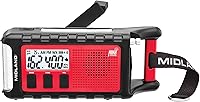
If you need a basic portable radio, compare the best battery powered radio for emergency use. For a model-specific comparison, our Midland ER310 vs ER210 guide explains another choice between emergency radio designs.
Brand origin may also matter in your decision. Read our overview of whether a NOAA weather radio is made in the USA before narrowing your shortlist.
Frequently asked questions
Is a battery powered radio better than a hand crank radio?
A battery powered radio is better if you want simple operation and can keep spare batteries on hand. A hand crank radio is useful when you want a way to add power manually.
Some emergency models combine a crank with replaceable batteries or solar charging, so compare all available power sources.
Can a hand crank radio work without batteries?
Some hand crank radios can generate power by cranking, but their other power options vary by model. The FosPower A1 also accepts 4 AAA batteries and has a solar panel.
The RunningSnail supports crank, solar, and USB charging.
Check how each model stores or uses power before relying on it.
Do battery powered radios receive NOAA weather alerts?
Some do, but battery power alone doesn't mean a radio receives NOAA weather broadcasts. The Panasonic radios here receive AM and FM, while the FosPower A1 and RunningSnail include weather band reception.
Check for weather band support if local alerts are part of your emergency plan.
Should an emergency radio use AA or AAA batteries?
Choose the battery size that you can keep fresh and store with your emergency kit. The Panasonic radios use 4 AA batteries, while the FosPower A1 uses 4 AAA batteries when you need battery power.
Hand-crank models can add other charging options, but their power systems differ.
Should I choose a battery or wind-up radio for a power outage?
Choose a battery or wind-up radio based on how you can maintain power during an outage. Spare batteries are simple to swap, while a hand crank offers a manual charging option.
For weather updates, also confirm the radio receives weather band broadcasts and keep it where you can reach it.