9 Best Hand Crank Emergency Radios (November 2026)
The best hand crank emergency radios include the Midland for NOAA alerts, the FosPower NOAA Emergency Weather Radio A1 7400mWh for compact kits, and the RunningSnail Hand Crank Radio with Flashlight for go-bags.
On this page (8 sections)
- How to choose the best hand crank radio for emergency use
- Which hand crank emergency radio suits your situation?
- What should you compare in a hand crank emergency radio?
- How do you set up a hand crank weather radio?
- How should you use and care for a crank radio?
- What mistakes should you avoid with an emergency crank radio?
- Is a hand crank radio enough for emergency power?
- Which hand crank radio for emergency use should you choose?
The best hand crank radio for emergency use is the Midland ER310 if you want weather scan and alert alongside multiple power sources. FosPower suits a compact kit with two lights, while RunningSnail is a lighter carry option with hand-crank and solar charging.
A hand-crank radio can help you receive broadcasts when household power or phone service is unavailable. The right choice depends on whether you need automatic weather alerts, a particular mix of charging methods, a useful light, or a compact body for a go-bag.
Start by deciding how you want to monitor weather. Then match the radio’s power options and size to where you plan to store it, and treat phone charging as a backup feature instead of its main job.
For broadcast basics, read our NOAA weather band radio guide. To compare broader emergency-radio features, see our best emergency weather radio choices.
Our picks at a glance
-
1

-
2
 Best for compact kits
FosPower NOAA Emergency Weather Radio A1 7400mWh
9.5/10 our score
See it on Amazon -
3

- 4
 Check it
Leaton Hand Crank Emergency Radio
Best for splashy outings - 5
 Check it
Kaito KA500 5-way Powered Solar Power
Best for shortwave listeners - 6
 Check it
Vokida Emergency Radio Hand Crank Solar
Best for bundled gear - 7
 Check it
Emgykit Hand Crank Radio with AM/FM/NOAA Weather
Best for tiny storage spaces - 8
 Check it
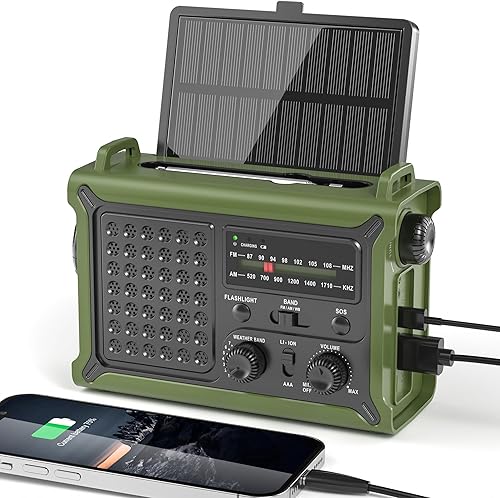
Mesqool Solar Radio Emergency Hand Crank 12000mAh
Best for home backup - 9
 Check it
sonicRapid Emergency Hand Crank Radio with LED
Best for multi-mode lighting
How to choose the best hand crank radio for emergency use
Choose a radio that receives the broadcasts you need, has charging methods you can maintain, and is easy for you to operate. For emergency use, the biggest practical difference is often how the radio handles NOAA weather information.
A radio that scans weather channels or alerts automatically can suit someone who wants warnings without tuning in first. A manually tuned model requires you to select a local NOAA station and listen, so it needs more attention.
Check the alert behavior before buying, especially if you plan to leave the radio on overnight.
Next, compare how each radio gets power. Hand cranking can provide backup energy, but it takes effort and should not be your only plan.
Solar can contribute power when the panel receives sunlight, while USB input or replaceable batteries can be easier when those supplies are available.
Battery capacity matters most if you expect to use the lights or charge a phone. Capacity figures alone do not predict exact runtime, and charging results vary by device and use.
Treat a radio’s USB output as emergency reserve power, not a replacement for a charged power bank.
Finally, consider where the radio will live. A home shelf can hold a larger unit with more lights or a larger battery, while a small go-bag favors a compact, lighter model.
If the radio may be used outdoors, check its water protection and limits.
We compared each radio’s stated bands, charging options, battery details, lighting, alerts and size against common emergency needs. The scores reflect how each feature set fits those needs.
| Product | Best for | Power | Connections | Size | Our score |
|---|---|---|---|---|---|
| Midland | NOAA alerts | 6 AA batteries required; included | USB | 9.61 x 2.95 x 6.85 in | 9.6 |
| FosPower NOAA Emergency Weather Radio A1 7400mWh | compact kits | Hand crank, solar, 4 AAA batteries and USB | 6.2 x 2.1 x 2.9 in | 9.5 | |
| RunningSnail Hand Crank Radio with Flashlight | go-bags | Hand crank, solar and rechargeable battery | 5 x 1.8 x 2.4 in | 9.4 | |
| Leaton Hand Crank Emergency Radio | splashy outings | 9.3 | |||
| Kaito KA500 5-way Powered Solar Power | shortwave listeners | Hand crank, solar, 3 AA batteries, rechargeable pack and USB input | 8.3 x 2.3 x 5.3 in | 9.1 | |
| Vokida Emergency Radio Hand Crank Solar | bundled gear | 8.9 | |||
| Emgykit Hand Crank Radio with AM/FM/NOAA Weather | tiny storage spaces | 5.16 x 2.09 x 2.6 in | 8.7 | ||
| Mesqool Solar Radio Emergency Hand Crank 12000mAh | home backup | Hand crank, solar, USB-C and 3 AAA batteries | 6.8 x 4.7 x 2.9 in | 8.4 | |
| sonicRapid Emergency Hand Crank Radio with LED | multi-mode lighting | 5.7 x 2.2 x 2.7 in | 8.1 |
Which hand crank emergency radio suits your situation?
The Midland ER310 is the clearest choice if automatic weather scanning and alerting lead your priorities. FosPower and RunningSnail are better fits when you want a smaller radio for a kit or travel bag.
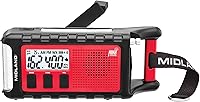
Midland: Best for NOAA alerts
- Multiple power sources
- NOAA weather scan and alert
- Built-in flashlight
- Ultrasonic dog whistle
The ER310 combines NOAA weather scan and alert with a flashlight and multiple power sources. Its USB connection supports compatible phones and tablets.
Pros
- NOAA weather scan and alert
- Built-in flashlight
- Multiple power sources
Cons
- Larger than the compact radios here
- Specific crank and battery runtime details are not confirmed
Midland’s ER310 is the lead pick because its listed features include NOAA weather scan and alert, multiple power sources and a built-in flashlight. It also has an ultrasonic dog whistle, which may be useful to emergency kit planners who want a signaling feature.
The radio’s USB connection is compatible with smartphones and tablets. It uses 6 included AA batteries, giving you a replaceable power option to keep available alongside the radio’s other power methods.
At 9.61 x 2.95 x 6.85 inches, the ER310 is larger than several compact choices below. Specific crank runtime and battery capacity details are not confirmed, so choose it for the alert and lighting combination rather than an assumed phone charging total.
Choose Midland if weather scan and alert are central to your plan. If you have this model and need battery guidance, see our Midland ER310 battery replacement guide.
FosPower NOAA Emergency Weather Radio A1 7400mWh: Best for compact kits
- 7400mWh (2000mAh) power bank
- Hand crank, solar, AAA batteries and USB
- Flashlight and reading light
- AM/FM/WB bands
FosPower combines hand-crank charging with solar, AAA batteries and USB. Its 2000mAh power bank, flashlight and reading light make it a compact multi-use option.
Pros
- Four power options
- Separate flashlight and reading light
- AM/FM/WB reception
Cons
- Small power bank capacity
- Four AAA batteries are required for battery operation
FosPower is a strong fit for a compact emergency kit that needs more than one way to stay powered. It supports hand crank, solar and AAA batteries, and its 7400mWh (2000mAh) power bank can provide emergency power to a small tablet or phone.
The 6.2 x 2.1 x 2.9 inch body is among the smaller options here. Its 1W flashlight gives you a focused beam, and the 4 LED reading light helps illuminate a nearby area.
FosPower receives AM, FM and weather band broadcasts. It includes an SOS alarm, but automatic NOAA alerts are not specified, so consider whether you are comfortable selecting and listening to a weather station yourself.
Pick FosPower if you want a compact radio with multiple power options and two kinds of light. For a comparison focused on solar charging, see our best solar-powered emergency radio picks.
RunningSnail Hand Crank Radio with Flashlight: Best for go-bags
- Hand crank, solar and built-in rechargeable battery
- 2000mAh battery
- 1W LED flashlight
- AM/FM and NOAA weather channels
This compact radio combines hand-crank and solar charging with a 2000mAh rechargeable battery. Its small size and 1W flashlight suit a go-bag or outdoor kit.
Pros
- Compact dimensions
- Three power sources
- NOAA, AM and FM reception
Cons
- No separate reading light is specified
- Rechargeable battery runtime is not specified
RunningSnail suits a go-bag or camping kit where size and weight matter. It measures 5 x 1.8 x 2.4 inches and weighs 7.84 ounces, with hand-crank, solar and built-in rechargeable battery power.
It receives AM and FM and has access to NOAA weather channels. A retractable antenna supports reception, and the 1W LED flashlight adds a basic lighting tool for an outage or outdoor use.
The built-in battery is 2000mAh, and the radio can charge compatible USB devices. That capacity is modest, so plan phone charging as an occasional backup rather than a replacement for a dedicated power bank.
Choose RunningSnail if you need a light radio with three power sources and a flashlight. Its lighting feature also makes it worth comparing with our emergency radios with flashlights.
Leaton Hand Crank Emergency Radio: Best for splashy outings
- 10000mAh rechargeable battery
- Hand crank, solar and USB-C input
- IPX6 water resistance
- Manual NOAA tuning
Leaton pairs a large rechargeable battery with hand-crank, solar and USB-C charging. Its NOAA broadcasts require manual tuning, and it does not provide automatic alerts.
Pros
- 10000mAh rechargeable battery
- IPX6 splash resistance
- Flashlight, reading lamp and compass
Cons
- NOAA reception requires manual tuning
- Not intended for heavy rain or immersion
Leaton stands out for its 10000mAh rechargeable battery and IPX6 water resistance. Hand crank, solar and USB-C input give you several ways to replenish power for a home, RV or camping kit.
The radio includes a flashlight with high, low and SOS modes, a reading lamp and a compass. It receives NOAA weather, AM and FM broadcasts, but NOAA tuning is manual, and the radio does not support automatic alerts or SAME technology.
Leaton says one minute of steady cranking provides about 15 to 20 minutes of radio listening, though actual runtime varies by use and cranking speed. Its IPX6 rating covers spray and splashing, not heavy rain or immersion.
Pick Leaton if battery capacity and splash resistance matter more than automatic weather alerting. For another model from Midland, read our Midland ER310PRO emergency radio review.
Kaito KA500 5-way Powered Solar Power: Best for shortwave listeners
- AM/FM, 2-band shortwave and 7 NOAA channels
- Hand crank and solar panel
- AA battery compartment
- Flashlight and reading lamp
The KA500 adds two shortwave bands to AM, FM and NOAA reception. Its several power inputs and built-in flashlight and reading lamp suit buyers who want more than local broadcasts.
Pros
- Shortwave, AM, FM and NOAA bands
- Multiple power methods
- Flashlight and reading lamp
Cons
- 3 AA batteries are not included
- Wall adapter is sold separately
Kaito’s KA500 is for listeners who want broadcasts beyond local AM, FM and NOAA stations. It adds two shortwave bands and has 7 pre-programmed NOAA weather channels, along with a hand-crank generator, solar panel and rechargeable battery pack.
It also has a compartment for 3 AA batteries, a USB input, and an AC/DC input for a wall adapter sold separately. A telescopic antenna extends to 14.5 inches, and the radio includes a flashlight, reading lamp and red SOS beacon.
The KA500 measures 8.3 x 2.3 x 5.3 inches. Its many power methods give you choices, but the AA batteries are not included and the wall adapter is separate.
Choose Kaito if shortwave reception belongs in your emergency setup. To compare Eton models, see our best Eton hand-crank radios guide.
Vokida Emergency Radio Hand Crank Solar: Best for bundled gear
- 37000mWh rechargeable battery
- Hand crank and solar charging
- Automatic NOAA weather scan
- Thermal blanket and paracord bracelet included
Vokida combines a hand-crank radio with automatic NOAA weather scanning and a 37000mWh rechargeable battery. The set also includes a thermal blanket and paracord bracelet.
Pros
- Automatic weather band scan
- Large stated battery capacity
- Includes blanket and bracelet
Cons
- Extra kit items add bulk beyond the radio alone
- Charging runtime is not specified
Vokida pairs an emergency radio with a rechargeable battery and extra kit items. Its 37000mWh battery, hand-crank and solar charging, and automatic scan across 7 weather band channels make it a feature-rich bundle.
The radio also includes a flashlight, headphone jack and SOS alarm. The package includes a thermal blanket and paracord bracelet, which may be useful if you want several items together in one kit.
Its stated battery capacity is larger than the other radios here, but capacity alone does not predict listening or phone charging time. Charging runtime is not specified, so keep it charged and have another power option available.
Choose Vokida if automatic weather scanning and the included kit items suit your needs. Skip it if you only want a radio and prefer to store emergency gear separately.
Emgykit Hand Crank Radio with AM/FM/NOAA Weather: Best for tiny storage spaces
- Hand crank, solar and Type-C charging
- 2000mAh rechargeable battery
- AM/FM/NOAA access
- 3W flashlight and SOS alarm
Emgykit is a small emergency radio with hand-crank, solar and Type-C charging. It also includes a flashlight, SOS alarm and a 2000mAh battery.
Pros
- Small dimensions
- Three charging methods
- NOAA, AM and FM access
Cons
- No separate reading lamp is specified
- Battery runtime is not specified
Emgykit is a compact choice with a 2000mAh rechargeable battery and three charging methods: hand crank, solar and Type-C. Its 5.16 x 2.09 x 2.6 inch body can fit in a small storage area or a packed kit.
It receives AM, FM and NOAA weather broadcasts. The 3W flashlight and SOS alarm add lighting and signaling functions, and the USB output can charge compatible devices.
Automatic alerts are not confirmed, so plan to tune in to local weather broadcasts if you choose this radio. Its 2000mAh battery can also provide emergency phone charging, though it is best treated as reserve power.
Pick Emgykit if compact size and three charging choices matter most. For extended radio and light use, consider a model with a larger stated battery.
Mesqool Solar Radio Emergency Hand Crank 12000mAh: Best for home backup
- 12000mAh lithium battery
- Hand crank, solar, USB-C and 3 AAA batteries
- NOAA, FM and AM bands
- Flashlight and reading lamp
Mesqool offers a 12000mAh battery alongside hand-crank, solar, USB-C and AAA power. Its flashlight and reading lamp provide two lighting options.
Pros
- Largest stated battery capacity in this group
- Four power methods
- Separate flashlight and reading lamp
Cons
- Heavier than the compact picks
- Crank charging time is not specified
Mesqool is an option for buyers who want a 12000mAh lithium battery and several backup power methods. It supports hand crank, solar, USB-C and 3 AAA batteries, with NOAA, AM and FM reception.
The radio has both a flashlight and a reading lamp, each with two brightness levels. At 1.6 lb and 6.8 x 4.7 x 2.9 inches, it is better suited to a home emergency shelf or vehicle kit than a very light day pack.
Automatic NOAA alerting is not specified. If you need unattended warnings, confirm how the radio handles alerts before choosing it, and keep the unit charged before storm season.
Choose Mesqool if capacity, lighting and several power choices matter more than low weight. It is less convenient for carrying on foot than the smaller picks.
sonicRapid Emergency Hand Crank Radio with LED: Best for multi-mode lighting
- Hand crank, solar and USB-C charging
- 2000mAh rechargeable battery
- AM/FM/NOAA access
- Three flashlight modes and SOS alarm
sonicRapid combines hand-crank, solar and USB-C charging in a compact radio. It includes AM/FM/NOAA access, three flashlight modes and an SOS alarm.
Pros
- Three power sources
- Three flashlight modes
- Compact dimensions
Cons
- No separate reading light is specified
- Battery runtime is not specified
sonicRapid is a compact emergency receiver with hand-crank, solar and USB-C charging. Its 2000mAh rechargeable battery supports emergency phone charging, while the radio receives AM, FM and NOAA weather broadcasts.
Three flashlight modes and an SOS alarm add lighting and signaling functions. The radio measures 5.7 x 2.2 x 2.7 inches and weighs 200 g.
Automatic weather alerts are not confirmed, so expect to tune in and listen unless you verify its alert behavior. The battery is best considered a backup for brief phone power, rather than a substitute for a larger power bank.
Choose sonicRapid if you want a compact radio with several charging methods and adjustable flashlight modes. Compare its size and broadcast bands with the other compact models before packing it.
What should you compare in a hand crank emergency radio?
Compare alert behavior, charging methods and battery capacity before you choose. Those details determine how you receive warnings and what backup power you can use when the grid is down.
Check whether NOAA reception scans automatically or requires manual tuning. Midland lists weather scan and alert, and Vokida says it automatically scans weather channels.
Leaton requires manual tuning and does not support automatic NOAA alerts.
Next, consider how you will charge the radio before and during an outage. Multiple methods give you options, but hand-crank and solar charging are backup methods.
Recharge the unit before an expected storm whenever possible.
Then match battery capacity and physical size to your needs. A 2000mAh radio may offer limited phone charging, while a larger model can add weight to a go-bag.
If phone access matters, keep a separate power bank charged as well.
How do you set up a hand crank weather radio?
Set up the radio before you need it by charging it, learning its controls and checking local weather reception. A few minutes of preparation can prevent confusion during a power outage.
Start with a full charge using the method recommended in the manual. If the model accepts replaceable batteries, keep the right type nearby and check them periodically.
Store the cable or adapter with the radio so it is easy to find.
Extend the antenna where the model has one, then tune to a local NOAA broadcast. Try the radio in the room or storage spot where you plan to use it, since reception can vary with placement.
If the radio has automatic scanning or alerts, learn how to enable that feature and confirm that it is active.
Turn on each light and locate the SOS control. These functions may be easy to trigger by mistake, so know how to switch them off.
For a model with manual tuning, write down the local channel or keep that information with your emergency supplies.
How should you use and care for a crank radio?
Keep the radio charged, dry within its stated limits, and easy to reach. Check the manual for model-specific charging and storage advice, especially if the radio uses a rechargeable battery.
Use the crank as an emergency reserve, not a routine substitute for charging from a supported source. If you rely on solar, place the panel in sunlight when conditions allow, then check that the radio still has enough charge for the next use.
For a water-resistant model, respect its limits. Leaton is described as resistant to spray and splashing, but not intended for heavy rain or immersion.
Do not assume another radio has the same protection unless its specifications say so.
If the radio includes a phone charging port, save that power for essential communication. Keep the screen dim, close unused apps and use a separate power bank for routine device charging when one is available.
What mistakes should you avoid with an emergency crank radio?
The most common mistake is buying for a single headline feature and overlooking how the radio actually receives alerts. A crank, solar panel or large battery does not guarantee that you will hear a warning without the right setup.
Do not assume every NOAA radio automatically alerts you. Some need manual tuning, and some product information does not confirm alert behavior.
Verify this before purchase, then practice using the controls.
Do not wait until a storm to charge the radio or find its cable. Keep it in a known location, check its charge now and then, and store spare batteries if your model uses them.
Do not count on a small radio battery to recharge a phone fully. A USB port is useful as emergency backup, but the amount of phone power depends on the radio and the device.
Keep a separate charged power bank when phone access is important.
Do not treat a crank as unlimited power. It takes effort, and the amount of energy generated depends on the model and how long you crank.
Start with a charged radio and use hand cranking when other charging methods are unavailable.
Is a hand crank radio enough for emergency power?
A hand crank radio is useful as one backup tool, but it should not be your only power plan. Cranking takes effort, solar depends on available sunlight, and a radio’s USB output may provide limited phone power.
Keep the radio charged and store spare batteries when your model uses them. A separate power bank and flashlight can cover needs the radio’s battery or light cannot meet.
Which hand crank radio for emergency use should you choose?
Choose the Midland ER310 if NOAA weather scan and alert are your top priority. Pick FosPower for a compact kit with several power options and two lights, or Leaton for a larger battery and splash resistance on outdoor trips.
For a lightweight setup, compare RunningSnail, Emgykit and sonicRapid by size and charging options. Choose Kaito for shortwave bands, Vokida for automatic weather scanning with extra kit items, or Mesqool for a larger battery and two lights.
Our top 3 picks at a glance
-
1
-
2
Best for compact kits
FosPower NOAA Emergency Weather Radio A1 7400mWh
9.5/10 our score
See it on Amazon -
3
Frequently asked questions
What should you look for in a hand crank emergency radio?
Choose a hand crank emergency radio with the broadcast bands you need, a charging method you can use, and controls you can manage in low light. Check whether NOAA reception scans or alerts automatically, or requires manual tuning.
Also compare battery capacity, charging inputs, lighting and size.
A crank is a backup source, so keep the radio charged and learn its controls before an outage.
Does a hand crank radio automatically warn you about severe weather?
Not always. Some radios scan or alert automatically, while others need you to select and tune a NOAA weather channel yourself.
Leaton requires manual tuning and does not support automatic NOAA alerts.
Check the radio's alert behavior before relying on it for overnight or unattended warnings.
Can a hand crank radio charge a phone?
Some models have a USB output for compatible phones, but a radio's battery capacity and charging output affect how useful that feature is. A small emergency radio battery may provide limited phone power.
Treat phone charging as a backup for brief communication, and keep a separate power bank charged if you depend on your phone.
Is solar charging enough to keep an emergency radio ready?
Solar charging can add power when the panel gets sunlight, but it may not replace a full charge from USB or batteries. Hand-crank charging also takes effort and depends on the model and how long you crank.
Keep the radio charged before severe weather and check its manual for charging guidance.
How is a hand crank radio different from a battery powered radio?
A hand crank radio can generate some power without disposable batteries or a wall outlet, while a battery-powered model depends on stored or replaceable batteries. Many emergency radios combine both approaches.
Compare the tradeoffs in our battery powered or hand crank radio guide before deciding which backup method fits your emergency plan.