9 Best Whole House Dehumidifiers (November 2026)
The best ducted whole house dehumidifiers include the Waykar 125 Pints Crawl Space Dehumidifier for ducted HVAC, the AEOCKY 5500 Sq.Ft Energy Star Most Efficient for energy efficiency, and the Waykar 80 Pints 5000 Sq. Ft for broad humidity control.
On this page (6 sections)
The best whole house dehumidifier for ducted HVAC in this group is the Waykar 125 Pints Crawl Space Dehumidifier, with dual ducts, a remote humidity sensor and a built-in pump. For a unit with included duct collars and a continuous drain fitting, consider the AprilAire E080.
That distinction matters because whole house can describe very different setups. A ducted unit is planned as part of an air distribution system, while a portable unit sits in a room and treats the air that reaches it.
The Waykar crawl space model suits a home where duct work, drainage and sensor placement can be designed together. The AprilAire suits a different ducted plan, with 10 inch inlet and outlet duct collars, a drain fitting and a washable filter.
Several other picks are portable dehumidifiers with large stated coverage areas. They can suit open basements or large rooms, but coverage figures alone do not show they will control humidity evenly across closed rooms or through a furnace system.
A portable unit works best near the damp area with clear airflow around it. Closed doors, furniture and separated floors can block dry air, so placement often matters more than the headline coverage number.
Capacity also needs context, as pint per day figures are stated under particular temperature and humidity conditions. Drainage is another dividing line, since a tank needs emptying and can stop the unit when full, while a hose or drain fitting can support longer runs if the route is suitable.
If you are weighing a central installation against one unit in a damp room, read our whole house dehumidifier vs portable comparison. The complete guide to which dehumidifier to buy covers capacity, drainage and placement basics.
Our picks at a glance
-
1

-
2
 Best for energy efficiency
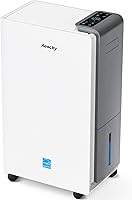
AEOCKY 5500 Sq.Ft Energy Star Most Efficient
9.6/10 our score
See it on Amazon -
3
- 4
 Best for smaller damp zonesCheck it
- 5
 Check it
AEOCKY 6000Sq.Ft Commercial Dehumidifier
Best for large open areas - 6Best for high moisture loadsCheck it
- 7
 Check it
boglvr 6000 Sq.Ft. Energy Star Dehumidifier
Best for app control - 8
 Check it
AprilAire E080 Pro 80-Pint Whole-House Dehumidifier
Best for included HVAC collars - 9
 Check it
Waykar 6000 Sq.Ft Energy Star Dehumidifier
Best for quieter room use
Which whole house dehumidifiers suit connected rooms?
For connected rooms, start with models designed to connect to ducts; use portable units when you can place them close to the damp area. Only the Waykar crawl-space model and AprilAire E080 have specific duct-related components in the facts here.
We compared stated capacity, coverage, drainage and installation features against the need for humidity control across multiple connected rooms. The picks are grouped by the kind of room, drainage route and control style each one suits.
| Product | Best for | Capacity | Coverage | Drainage | Our score |
|---|---|---|---|---|---|
| Waykar 125 Pints Crawl Space Dehumidifier | ducted HVAC | 125 pints per day | Up to 6,500 sq ft | Built-in pump or gravity hose | 8.4 |
| AEOCKY 5500 Sq.Ft Energy Star Most Efficient | energy efficiency | 80 pints per day | Up to 5,500 sq ft | Drain hose and tank | 9.6 |
| Waykar 80 Pints 5000 Sq. Ft | broad humidity control | 80 pints per day | Up to 5,000 sq ft | Tank or gravity hose | 9.5 |
| VEAGASO 34-36 Pint/D | smaller damp zones | 34 pints per day | Up to 2,500 sq ft | Tank or hose | 9.4 |
| AEOCKY 6000Sq.Ft Commercial Dehumidifier | large open areas | 105 pints per day | Up to 6,000 sq ft | Drain hose and tank | 9.3 |
| Waykar 120 Pints 6000 Sq. Ft | high moisture loads | 120 pints per day | Up to 6,000 sq ft | Tank or gravity hose | 9.0 |
| boglvr 6000 Sq.Ft. Energy Star Dehumidifier | app control | 100 pints per day | Up to 6,000 sq ft | Tank or gravity hose | 8.5 |
| AprilAire E080 Pro 80-Pint Whole-House Dehumidifier | included HVAC collars | 80 pints per day | Up to 4,400 sq ft | Continuous drain fitting | 8.3 |
| Waykar 6000 Sq.Ft Energy Star Dehumidifier | quieter room use | 120 pints per day | Up to 6,000 sq ft | Tank or gravity hose | 8.2 |
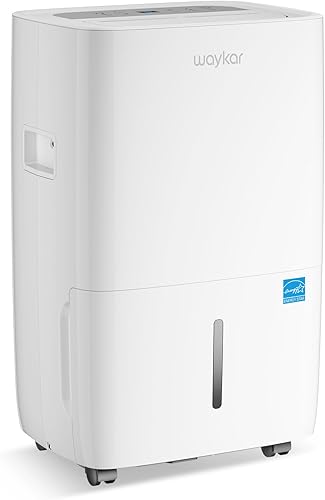
Waykar 125 Pints Crawl Space Dehumidifier: Best for ducted HVAC
- 125 pints per day
- Dual intake and exhaust ducts
- Built-in pump with 16.4 ft hose
- Remote humidity sensor and control
Separate intake and exhaust ducts support HVAC installation, while the remote sensor measures humidity away from the unit. The built-in pump allows upward drainage.
Pros
- Dual duct design
- Built-in pump and gravity drainage
- Remote control and humidity sensor
Cons
- Installation needs duct and drainage planning
- Unit weighs 57.3 lb
Waykar's 125 pint crawl-space model is the clearest fit for a ducted whole-house setup in this group. Its separate intake and exhaust ducts support HVAC installation, while a remote humidity sensor measures conditions away from the machine.
The included wired control panel can be placed up to 32.8 ft away, which can help when the equipment sits in a crawl space. For drainage, choose between a built-in pump with a 16.4 ft hose and a 6.6 ft gravity hose.
Waykar states capacity under 95°F and 90% relative humidity conditions. At 57.3 lb, the unit needs a planned installation location and access route.
Choose this model for a crawl space or mechanical area where ducts, sensor placement and drainage can be designed together. Skip it if you need a simple plug-in unit for a bedroom or cannot plan the duct and drain work; confirm compatibility and installation details with an HVAC professional.
AEOCKY 5500 Sq.Ft Energy Star Most Efficient: Best for energy efficiency
- 80 pints per day
- Coverage stated up to 5,500 sq ft
- ENERGY STAR Most Efficient 2025
- Drain hose included
A high-capacity portable unit for large spaces, with an ENERGY STAR Most Efficient 2025 designation and a drain hose. It isn't a ducted HVAC system.
Pros
- ENERGY STAR Most Efficient 2025
- Drain hose included
- Humidity control and several operating modes
Cons
- Not a ducted system
- Coverage figures do not guarantee even humidity throughout a home
AEOCKY's RHEA-001 is a portable compressor dehumidifier for buyers prioritizing efficiency in a large space. It has an 80 pint daily capacity, stated coverage up to 5,500 sq ft, a drain hose and automatic, continuous and other operating modes.
AEOCKY identifies it as ENERGY STAR Most Efficient 2025. That designation may appeal for an open basement where you can place the unit, but it doesn't make it a ducted whole-house system.
The tank holds 1.45 gallons, so continuous drainage is useful if it will run for long periods. Its narrow profile can fit some spaces where a wider machine would be awkward, provided intake and exhaust airflow remain clear.
Choose this model when portable placement and the named efficiency designation matter more than furnace integration. Skip it if you need humidity distribution through ducts; for other water-management options, compare our best whole house dehumidifier with pump picks.
Waykar 80 Pints 5000 Sq. Ft: Best for broad humidity control
- 80 pints per day
- Coverage stated up to 5,000 sq ft
- 30%–80% humidity setting range
- Gravity drain hose included
This portable Waykar offers a wide humidity setting range and continuous drainage support. Its room coverage claim does not make it a furnace-connected system.
Pros
- 30%–80% humidity control range
- Gravity drain hose included
- Auto swing airflow
Cons
- Not designed as a ducted HVAC unit
- Gravity drainage needs a suitable drain location
Waykar's 80 pint model is a portable choice for a large basement or open floor plan. Its 30%-80% humidity setting range gives broad adjustment, and its 90-degree auto-swing airflow helps spread air around the room.
The wide range can suit a damp basement at a lower target or a living area that only turns musty at times at a higher target. The auto-swing outlet reduces air blowing in one direction, although it cannot carry treated air through closed doors.
The included hose supports continuous gravity drainage, while the 1.14 gallon tank provides a manual option. Gravity drainage works when the drain sits below the unit and the hose runs without kinks or uphill sections.
Waykar states capacity under 95°F and 90% relative humidity conditions, so performance can vary in a cooler or less humid room. Keep the washable filter clean and the intake and outlet clear for best response.
Choose it for a large space where you can place the dehumidifier centrally and route its hose. Skip it for a dedicated ducted installation; for a different brand to compare, see our guide to the best Honeywell whole-house dehumidifier.
VEAGASO 34-36 Pint/D: Best for smaller damp zones
- 34 pints per day
- Coverage stated up to 2,500 sq ft
- Continuous drain hose included
- Portable with swivel casters
A portable choice for a smaller area, with continuous drainage and three modes. It's not a ducted dehumidifier for a furnace.
Pros
- Continuous drainage option
- Three operating modes
- Wheels for moving between rooms
Cons
- Lower capacity than other picks here
- Not a whole-home ducted system
VEAGASO's 34 pint model suits a smaller damp zone rather than a connected whole house. Its three modes cover regular dehumidifying, indoor clothes drying and continuous operation, while casters make it easier to move between rooms.
The unit offers a removable 0.53 gallon tank and an included hose for continuous drainage. Its stated coverage is up to 2,500 sq ft, so compare that figure with your room layout and don't assume it will reach closed rooms.
The controls include a humidity target, fan speed and timer, and power-failure memory restores its last settings when power returns. It has no duct collars or separate duct outlets.
Choose it when the damp area is limited and you want to move the machine as needed. Skip it if you need one system to serve distant, closed rooms; if your problem is limited to an attic, see our dehumidifier for attic guide.
AEOCKY 6000Sq.Ft Commercial Dehumidifier: Best for large open areas
- 105 pints per day
- Coverage stated up to 6,000 sq ft
- ENERGY STAR Most Efficient 2024
- Drain hose included
This portable AEOCKY has a higher stated daily capacity and coverage than its 5,500 sq ft sibling. It isn't a furnace-connected ducted model.
Pros
- ENERGY STAR Most Efficient 2024
- Drain hose included
- Automatic humidity and continuous modes
Cons
- Not a ducted system
- Confirm placement and airflow for separated rooms
AEOCKY's RHEA-002 is a portable high-capacity model for a large open area. It has a stated 105 pint daily capacity and coverage up to 6,000 sq ft, with an ENERGY STAR Most Efficient 2024 designation and a drain hose.
That capacity suits spaces where a large amount of moisture can collect, such as a basement or other open area with regular damp conditions. The stated coverage should still be read with the room layout in mind, since a single open space is easier to serve than several closed rooms.
Its tank holds 1.45 gallons, and it supports continuous drainage. Continuous drainage is worth planning for if the unit will run for long periods, since a full tank can stop operation.
Allow room around it for intake and exhaust airflow. A unit placed tight against a wall or furniture may struggle to draw in humid air and release it evenly, even when the stated capacity looks strong.
The manufacturer describes automatic humidity control, several operating modes and auto-defrost. These features suit regular use in a large room or basement, but the unit is not an HVAC duct system.
Auto-defrost is relevant in cooler spaces where frost can build up and interrupt operation. Following the stated temperature limits and keeping the filter clean helps the unit keep working through those conditions.
Set the humidity target and give the room time to respond before making frequent changes. Moving the unit or opening doors can also change how quickly the space dries.
Choose it when you want higher stated capacity in a portable format. Skip it if a free-standing unit is in the way or you need ducted distribution; for a different installation style, see our guide to choosing an in-wall dehumidifier.
Waykar 120 Pints 6000 Sq. Ft: Best for high moisture loads
- 120 pints per day
- Coverage stated up to 6,000 sq ft
- 30%–80% humidity setting range
- Gravity drain hose included
This portable Waykar is aimed at large spaces with high moisture loads. It supports continuous gravity drainage, but it does not connect to HVAC ducts.
Pros
- High stated daily capacity
- 30%–80% humidity range
- Auto swing airflow
Cons
- Not ducted for whole-home distribution
- Gravity drainage needs a suitable low drain
Waykar's 120 pint model targets large spaces with high moisture loads. Its 30%-80% humidity control range gives you flexibility for basements, storage areas and similar spaces.
The wider range can help in a room that stays damp for much of the year. A lower setting may suit storage or a basement, while a higher setting can reduce unnecessary running in a space that only needs moderate drying.
It supports gravity drainage through the included hose or manual emptying from a 1.14 gallon tank. Continuous drainage can make long runs simpler, provided a suitable low drain is within reach of the hose route.
The 90-degree auto-swing feature distributes airflow across a wider area than a fixed outlet. That can help an open room feel more even, although airflow still has limits when doors stay closed.
This is a portable dehumidifier, despite its whole-home use cases and coverage claim. If you need humidity control through existing supply ducts, compare it with the Waykar crawl-space model or AprilAire E080 instead.
Placement matters for a portable model of this size. Keep the intake and outlet clear, check that the hose slopes toward the drain, and leave enough room to remove and empty the tank when needed.
High stated capacity does not remove the need to check conditions. The room may be cooler or less humid than the conditions used for the pint rating, so the target setting and run time should match the actual space.
For storage areas, steady control can help protect fabrics and furnishings from damp conditions. For a basement, the same unit may need to run more often if moisture keeps entering from below.
Choose it when capacity and adjustable humidity matter for a large room or basement. Skip it if you need ducted coverage; buyers considering a central brand can also review our best AprilAire whole-house dehumidifier options.
boglvr 6000 Sq.Ft. Energy Star Dehumidifier: Best for app control
- 100 pints per day
- Coverage stated up to 6,000 sq ft
- Wi-Fi app and Alexa compatibility
- Gravity drain hose included
App and voice controls distinguish this portable unit, which also has a gravity drain hose. It isn't a ducted HVAC dehumidifier.
Pros
- Tuya or Smart Life app control
- Custom humidity settings
- Gravity drainage option
Cons
- Not a ducted system
- App-connected features may be unnecessary for simple humidity control
The boglvr model suits buyers who want remote control from a phone. Its Tuya or Smart Life app can adjust humidity, modes, fan speed and timers, and it is compatible with Amazon Alexa for voice control.
It has a stated 100 pint daily capacity and coverage up to 6,000 sq ft. The included 3.3 ft hose supports gravity drainage, and a standard 3/4 in garden hose can extend the route, though that hose is not included.
The 4.28 liter tank shuts the unit off when full. A washable filter and wheels support routine upkeep and repositioning, but this remains a portable room unit rather than ducted HVAC equipment.
Choose it if app scheduling matters and the unit can sit near the area you want to dry. Skip it if app control adds complexity without solving a need; first read what a whole house dehumidifier is to see how central systems differ.
AprilAire E080 Pro 80-Pint Whole-House Dehumidifier: Best for included HVAC collars
- 80 pints per day
- Coverage stated up to 4,400 sq ft
- 10 in inlet and outlet duct collars included
- Drain fitting and washable MERV 8 filter
The E080 includes 10 in inlet and outlet duct collars for a whole-house installation. It has a drain fitting instead of a water tray to empty.
Pros
- Duct collars included
- No water tray to empty
- Automatic humidity control
Cons
- Lower stated coverage than other ducted pick
- Duct installation requires a suitable layout
AprilAire's E080 is a duct-ready option for a basement, sealed crawl space or whole-house installation. The package includes 10 in inlet and outlet duct collars, a washable MERV 8 filter and a drain fitting.
It removes up to 80 pints per day and is intended for spaces up to 4,400 sq ft. Its automatic control starts dehumidification when sensed humidity rises above the target, and it does not use a water tray that needs emptying.
The unit measures 14 x 26 x 15 in and weighs 63 lb. AprilAire identifies it as ENERGY STAR Most Efficient certified, and its included components support a ducted setup.
Choose it when included collars and a continuous drain fitting suit your HVAC plan. Skip it if you need a higher stated capacity or pump drainage; compare another central option in our best Santa Fe whole-house dehumidifier guide.
Waykar 6000 Sq.Ft Energy Star Dehumidifier: Best for quieter room use
- 120 pints per day
- Coverage stated up to 6,000 sq ft
- Low setting stated at 40 dB
- Tank or gravity drain hose
This portable unit combines a high stated capacity with a low-speed noise figure and continuous drainage. It is not connected to a furnace or duct system.
Pros
- Low setting stated at 40 dB
- Gravity drainage option
- Auto Comfort mode
Cons
- Not a ducted system
- Gravity hose needs a suitable drain
This Waykar portable dehumidifier is aimed at large rooms where lower fan noise is a priority. The low setting is stated at 40 dB, with a high-capacity design for basements, bedrooms, laundry areas and other home spaces.
It offers Auto Comfort, Continuous and Standard modes, plus a removable tank and included drainage hose. The adjustable humidity range gives you control over the target, while wheels and a handle help with repositioning.
It has no duct connections, so a large coverage number should not be treated as evidence that it will condition every separated room. Keep the air path open and choose a spot that also allows the hose to reach a suitable drain.
Choose it for portable use where lower-speed noise matters and you can route the hose. Skip it if you need central duct distribution; use our whole-house versus portable comparison to decide whether room placement or duct installation better fits your layout.
How do you choose the best whole house dehumidifier?
Choose the system type first: a ducted unit for connected rooms, or a portable dehumidifier for a concentrated damp area. Then check moisture capacity, drainage, installation, controls and maintenance against your home rather than choosing by the largest coverage figure alone.
Start with the damp area. A single basement or open room may be served by a portable model placed near the moisture source.
Multiple closed rooms call for a planned air path, often through ducting, because a portable unit's stated coverage doesn't guarantee even humidity from room to room.
Match capacity to conditions. Pint-per-day figures depend on the temperature and humidity used for the rating.
Compare those conditions when available, and account for how damp the space gets, how often doors stay closed and whether moisture enters from a crawl space or other source.
Plan where water goes. A tank needs regular emptying and can stop operation when full.
A gravity hose needs a drain lower than the unit; a pump can move water upward within its hose limit.
Choose controls you'll use. A remote control can matter when the unit is in a crawl space.
App scheduling may be useful when you want to adjust a portable machine from another room, while a basic humidity target may be enough for a fixed setup.
Check service access. Filters need cleaning, air inlets and outlets need clear space, and the unit needs room for its drain connection.
A large machine in a tight closet can be harder to maintain and may not get the airflow it needs.
How should you set up a whole-house dehumidifier?
Set up a portable unit on a level surface near the damp area, with open space around its air intake and outlet. For a ducted unit, have the duct route, sensor position, power and drainage planned before installation.
Before placing equipment, identify where moisture is entering and whether a leak, poor drainage or ventilation issue needs attention as well. A dehumidifier removes moisture from air, but it does not repair a water source.
For a portable model, decide between the tank and continuous drainage before the first long run. If using a hose, keep it unkinked and sloping toward the drain, and check for leaks after water begins flowing.
For a ducted model, follow the installation instructions and have an HVAC professional confirm the duct sizes and layout. Position a remote humidity sensor where it can measure the area you intend to control, not beside a warm or damp discharge.
Set a reasonable humidity target and let the unit run long enough to respond before making repeated changes. If you move a portable unit between rooms, remember that each area may need its own time to dry.
What care helps a dehumidifier keep working?
Routine care starts with a clean filter, unobstructed airflow and a drain path that carries water away reliably. Check the unit periodically, especially after moving it or changing from tank drainage to a hose.
Clean washable filters as directed by the manufacturer. Dust on the filter or blocked inlet can reduce airflow, and a hose that has slipped, kinked or developed an uphill section can interrupt drainage.
Empty and rinse the tank when using manual drainage, then seat it fully before restarting. Check that any full-tank alert or automatic shutoff has not been triggered before assuming the dehumidifier has stopped working.
Keep the area around the machine clear and avoid placing items over its vents. In cool spaces, use a model with automatic defrost where available and follow its temperature limits and operating instructions.
A short routine check can catch small problems early. Look at the filter, the tank or hose connection, the air path and the space around the unit before starting another long run.
If humidity remains high, check the doors, airflow path, drain and filter before lowering the target further. A persistent damp problem may mean the unit is undersized for the conditions or that moisture is entering faster than it can be removed.
For a ducted unit, service access matters as well. The filter, controls, sensor and drain connection should remain reachable, and the duct path should stay clear of obstructions.
For a portable unit that moves between rooms, check its position each time. A level surface, open vents and a secure hose route help it start cleanly in a new spot.
What mistakes should you avoid when buying one?
The most common mistake is treating a portable unit's advertised floor area as proof it can manage an entire home. Closed doors, separated floors and weak airflow can leave remote rooms humid even when the machine is powerful.
A coverage figure describes a stated working area, not a promise about every room in a house. Ask where the unit will sit, how air will reach other spaces and whether doors stay open or closed.
Do not buy by pint capacity alone. Compare the measurement conditions, room layout and drainage method, then consider whether the intended use is a basement, crawl space, open living area or connected HVAC system.
Capacity figures are measured under stated temperature and humidity conditions, so two ratings may not mean the same thing in a cooler room. A lower target or longer run time may be needed when conditions change.
Avoid assuming every large dehumidifier connects to a furnace. In this group, the Waykar crawl-space model and AprilAire E080 have duct-related components, while the other models are portable units.
That difference affects placement, drainage and how treated air reaches the rooms. A portable unit needs open space around it, while a ducted unit needs a planned route for air, power and water.
Do not choose a gravity hose without checking the drain height and route. A low drain nearby may make gravity drainage simple, while a drain above the unit calls for a pump-equipped option or a different placement.
Finally, do not tuck a unit into a tight corner to hide it. Blocked vents, poor sensor placement and difficult filter access can undermine operation, and hidden placement makes a full tank or slipped hose harder to notice.
Which whole-house dehumidifier should you choose?
For a ducted setup, choose the Waykar 125 Pints Crawl Space Dehumidifier when its dual ducts, remote sensor and pump fit the installation plan. Choose the AprilAire E080 when included duct collars, automatic humidity control and a drain fitting match your system.
For a large open basement, choose the AEOCKY RHEA-002 if you want a portable high-capacity model with the ENERGY STAR Most Efficient 2024 designation. Choose the AEOCKY RHEA-001 for a lower stated capacity with the 2025 designation, or the boglvr if app and voice control are priorities.
For flexible portable use, the Waykar 80 pint model offers a broad humidity setting range, while the 120 pint Waykar models suit larger moisture loads. Choose VEAGASO for a smaller damp zone where moving the unit between rooms is more useful than ducted distribution.
The best whole house dehumidifier is the one that matches how your rooms connect and where water can drain. If you're deciding between one portable unit and central ducting, use our whole-house dehumidifier vs portable comparison before settling on a setup.
Our top 3 picks at a glance
-
1
-
2
Best for energy efficiency
AEOCKY 5500 Sq.Ft Energy Star Most Efficient
9.6/10 our score
See it on Amazon -
3
Frequently asked questions
What is the best whole house dehumidifier for ducted HVAC?
For a ducted HVAC setup, compare the Waykar 125 Pints Crawl Space Dehumidifier and AprilAire E080. Waykar has separate intake and exhaust ducts, a remote humidity sensor and a built-in pump, while AprilAire includes 10 in duct collars and a continuous drain fitting.
Confirm duct sizing, airflow needs, electrical requirements and installation details for your home before choosing.
Can a portable dehumidifier control humidity across a whole house?
A portable dehumidifier can help in a large open area, but its stated coverage doesn't guarantee even humidity in closed rooms. Airflow, door positions and where the unit sits all affect how far dry air reaches.
For connected rooms, a ducted unit can distribute treated air through a planned system.
What does a ducted whole-house dehumidifier need?
A ducted system needs a suitable location, duct connections, power, humidity sensing and a way to drain collected water. The Waykar includes dual ducts, a remote sensor and pump, while AprilAire includes inlet and outlet collars and a drain fitting.
Have an HVAC professional confirm the layout and installation requirements.
Is a whole-house dehumidifier for a furnace the same as a portable unit?
No. A furnace-connected or ducted whole-house unit connects to an air distribution system, while a portable unit treats air near its own intake and outlet.
Choose based on how rooms connect, where you can place and drain the equipment, and whether duct installation fits your home.
How do I choose the right capacity?
Use the home's moisture conditions and the manufacturer's stated coverage as starting points, then account for closed rooms, climate and drainage. Daily pint figures are measured under stated humidity and temperature conditions, so compare those conditions where available.
A professional can help size a ducted system for the layout.