How Does a Barometer Measure Air Pressure? What to Know
A barometer measures air pressure by using a sealed container of mercury or a sealed metal chamber that expands and contracts. When air pressure pushes down, it affects the mercury level or the metal chamber. A higher pressure pushes more, a lower pressure pushes less. This change is then recorded and displayed to show the current air pressure. It’s a clever way to tell how much the atmosphere is weighing on us!
Understanding air pressure is key to weather forecasting. Meteorologists use barometer readings to predict changes in the weather. A falling barometer often means stormy weather is on the way. Conversely, a rising barometer usually signals clearer skies ahead. Your home barometer works on the same scientific principles.
- Barometers measure air pressure.
- They work by changes in mercury or metal.
- Falling pressure often means bad weather.
- Rising pressure usually means good weather.
- They help predict weather changes.
Let’s walk through exactly how your barometer reads the weather outside, step by step.
“`htmlUnderstanding How Barometers Gauge Atmospheric Weight
You might be wondering how a simple device can tell us so much about the air around us. A barometer measures the weight of the atmosphere pressing down on the Earth’s surface. Think of it like a giant, invisible blanket of air covering everything. The barometer tells us how heavy that blanket is at any given moment. This measurement is called air pressure.
Why should you care about air pressure? Because changes in air pressure are directly linked to changes in the weather. Meteorologists watch these pressure readings closely. They’ve found that specific patterns often lead to certain weather conditions. A home barometer can give you a heads-up on what to expect outdoors.
The Two Main Types of Barometers
There are two primary ways barometers measure air pressure. Both rely on physical principles to show the invisible force of the atmosphere. The older, classic type uses mercury. A more modern and common type uses a sealed metal chamber.
The Mercury Barometer: A Classic Design
The mercury barometer is the original design, invented by Evangelista Torricelli in the 17th century. It’s a straightforward yet elegant instrument. You’ll often see these in historical weather stations or as decorative pieces. They show us the foundational science behind pressure measurement.
How it Works: Mercury’s Dance
Imagine a glass tube, closed at one end. This tube is filled completely with mercury. Then, it’s inverted and placed into a dish also containing mercury. The mercury in the tube doesn’t just pour out into the dish. Why? Because the weight of the air pressing down on the mercury in the dish supports the mercury in the tube. This creates a vacuum at the top of the tube.
The level of the mercury in the tube rises or falls based on the air pressure. When air pressure is high, it pushes down harder on the mercury in the dish. This forces more mercury up into the tube, making the column higher. Conversely, when air pressure is low, it pushes down less. Gravity then pulls more mercury back down into the dish, making the column shorter. A scale next to the tube measures the height of this mercury column, giving you the pressure reading.
It’s important to note that mercury is a toxic substance. For this reason, mercury barometers are less common in homes today. Safety concerns and the availability of alternatives have led to their decline in everyday use.
The Aneroid Barometer: Modern Simplicity
The aneroid barometer is the type you’re most likely to find in homes now. “Aneroid” means “without fluid.” Instead of mercury, it uses a small, flexible, sealed metal box. This box is often made of a metal alloy like beryllium copper. It’s called an aneroid cell.
The Aneroid Cell’s Role
This aneroid cell is not completely empty. Most of the air has been pumped out of it. The cell is also designed to be very sensitive to changes in external pressure. When the air pressure outside increases, it squeezes the metal cell, making it slightly smaller. When the air pressure decreases, the cell expands slightly outward.
Connecting the Cell to a Pointer
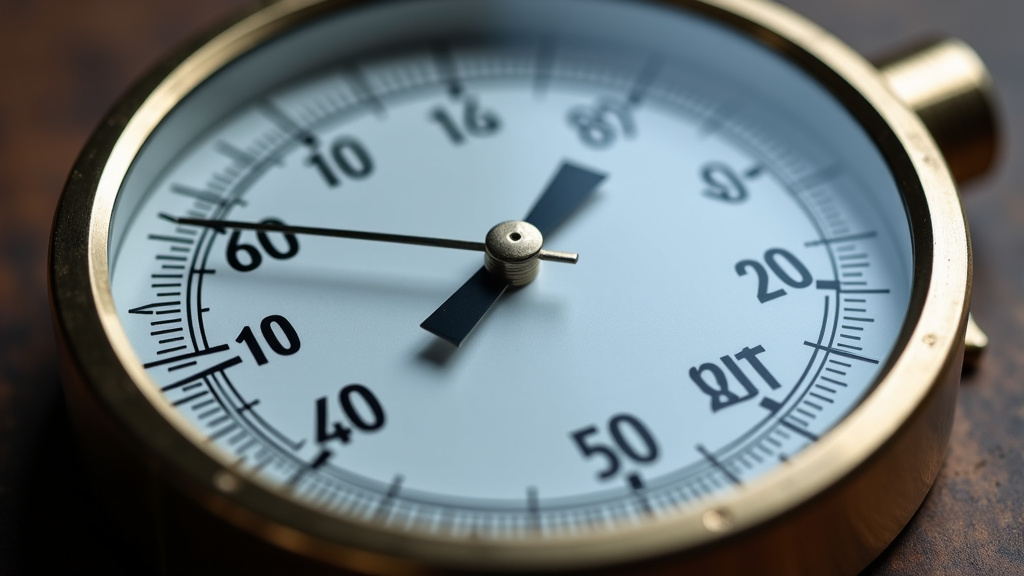
The magic happens with how this tiny expansion and contraction is magnified. A system of springs and levers is attached to the aneroid cell. These mechanical components translate the minuscule movements of the cell into a larger motion. This larger motion is then used to move a pointer across a dial. The dial is calibrated to show air pressure readings.
So, as the air pressure changes, the aneroid cell flexes. This flex is amplified by the levers and springs. The pointer then moves to indicate the current pressure level on the dial. It’s a clever mechanical system that effectively translates invisible atmospheric pressure into a visible measurement.
What Do Barometer Readings Mean for Your Day?
Understanding the numbers on your barometer is where the real insight comes in. Barometers don’t just display numbers; they tell a story about the atmosphere. Meteorologists have spent years studying these stories. They’ve learned to interpret the trends and predict upcoming weather.
Falling Pressure: A Signal of Change
If the needle on your barometer is moving downwards, it means the air pressure is falling. Generally, falling pressure indicates that a low-pressure system is approaching. Low-pressure systems are often associated with unsettled weather. This can mean clouds, increased humidity, and precipitation.
Why does falling pressure signal bad weather? As air pressure drops, the air tends to rise. As this air rises, it cools and condenses, forming clouds. If there’s enough moisture, these clouds can develop into rain or snow. Think of it as the atmosphere sighing and becoming less dense, allowing moisture to collect more easily.
A rapid drop in pressure is especially significant. It suggests a storm system might be moving in quickly. Many experts say that a drop of more than a few millibars in a few hours can be a strong indicator of approaching stormy weather (National Oceanic and Atmospheric Administration). A rapid drop in pressure is especially significant, and our guide to weather station alarm settings explains how to get alerts for rapid pressure drops.
Rising Pressure: A Sign of Stability
When the needle on your barometer is moving upwards, the air pressure is rising. This typically means a high-pressure system is moving in or strengthening. High-pressure systems are generally associated with fair, stable weather conditions.
High pressure means the air is denser and heavier. This denser air pushes down, inhibiting upward air movement. When upward air movement is suppressed, clouds are less likely to form. This results in clearer skies and calmer conditions. It’s like the atmosphere is taking a deep, steady breath.
A steady rise in pressure often indicates that a period of pleasant weather is likely to continue or begin. If you’re planning an outdoor event, seeing the pressure rise on your barometer can be good news. It suggests conditions are becoming more favorable for clear skies.
Steady Pressure: What to Expect
If the pressure reading on your barometer remains fairly constant, it suggests that the current weather conditions are likely to persist. There isn’t a strong push from either a high or low-pressure system. This can mean a day of continuing sunshine or prolonged gray skies, depending on what the pressure is.
However, even a steady pressure shouldn’t be taken for granted. Subtle changes can still occur. It’s always a good idea to observe the pressure trend over time rather than just one single reading. Looking at your barometer over a few hours can give you a much better picture.
Understanding Barometer Units and Scales
Barometer dials come with different units of measurement. Knowing what these units mean can help you understand your readings better. They are all measuring the same thing: the force exerted by the atmosphere.
Common Units of Air Pressure
You’ll most commonly see these units on home barometers:
- Inches of Mercury (inHg): This unit directly relates to the height of the mercury column in a mercury barometer. A typical reading at sea level is around 29.92 inHg.
- Millibars (mb): This is the standard unit used by meteorologists worldwide. One millibar is equal to 100 Pascals. Standard sea-level pressure is 1013.25 millibars.
- Hectopascals (hPa): This unit is equivalent to millibars, as “hecto” means 100. So, 1013.25 millibars is the same as 1013.25 hectopascals. You’ll often see hPa used on weather maps.
Some barometers might also include words like “Fair,” “Change,” or “Stormy” alongside the numerical readings. These are general indicators based on typical pressure changes associated with weather patterns. They offer a quick interpretation.
How Pressure Varies by Location and Altitude
It’s interesting to know that air pressure isn’t the same everywhere. It changes based on several factors. One of the most significant is altitude. The higher you go, the less air there is above you.
This means that at higher altitudes, the air pressure is naturally lower. For example, the air pressure in Denver, Colorado, which is at a high elevation, will be lower than the air pressure at sea level in San Francisco. This is why weather stations often need to adjust their readings or use instruments calibrated for their specific location. Your home barometer might be set for your general region.
Temperature and humidity also play minor roles, but altitude is the biggest factor influencing baseline pressure. When you look at weather reports, they often provide “sea-level pressure” to standardize the data for comparison.
Tips for Using Your Barometer Effectively
To get the most out of your barometer, consider a few simple tips. Using it consistently will help you understand the patterns specific to your area. It’s like learning to read a local weather forecast from your own home!
- Place it correctly: Hang your barometer on an inside wall away from direct sunlight, heat sources (like radiators or fireplaces), and drafts. These can all affect the readings and make them inaccurate.
- Allow it to acclimate: When you first get your barometer or move it, let it sit for a few hours. This allows the internal mechanisms to adjust to the room’s temperature and pressure.
- Observe trends, not just single readings: Don’t just look at the number once. Check it a few times a day. Watch how the needle moves. Is it steadily rising, falling, or staying put? This trend is more informative than any single data point.
- Compare with local forecasts: Over time, you can learn to correlate your barometer’s readings and trends with the actual weather you experience. You can also compare your barometer’s readings to official weather forecasts to see how well it aligns.
Many sources suggest that a consistent reading around 30.00 inHg (1016 mb) indicates fair weather. Deviations from this can signal upcoming changes. For instance, readings consistently below 29.50 inHg (999 mb) often suggest unsettled or stormy conditions.
| Pressure Reading (approximate) | Associated Weather Trend |
|---|---|
| Above 30.20 inHg (1022 mb) | Fair and settled weather, often with light winds. |
| 30.00 to 30.20 inHg (1016 to 1022 mb) | Fair weather, but possible change approaching. |
| 29.80 to 30.00 inHg (1009 to 1016 mb) | Moderate, possibly changing weather. |
| 29.50 to 29.80 inHg (999 to 1009 mb) | Increasingly unsettled weather, clouds and precipitation likely. |
| Below 29.50 inHg (999 mb) | Stormy weather, strong winds and heavy precipitation possible. |
Keep in mind that these are general guidelines. Local conditions and the speed of pressure changes play a big role. Your barometer is a fantastic tool to give you a general idea of what’s happening with the weather outside. It empowers you with a little bit of meteorological knowledge!
Barometers and Weather Forecasting
While your home barometer won’t give you a detailed forecast with exact timing, it’s an excellent indicator of general weather trends. Professional meteorologists use sophisticated equipment and models, but the fundamental principle remains the same: air pressure changes drive weather changes.
By observing your barometer, you can become more attuned to atmospheric shifts. You can anticipate changes before they happen. This can be useful for planning daily activities. It’s a small tool that connects you directly to the larger forces shaping our weather. You’re essentially reading a simplified version of what the weather service reports.
“`Conclusion
You’ve learned how barometers measure air pressure using mercury or an aneroid cell. You now understand that falling pressure often signals stormy weather, while rising pressure usually means clearer skies. Your home barometer is a simple yet effective tool. It connects you to the atmosphere’s whispers about upcoming weather. Use your barometer consistently and observe its trends. This practice will help you become more attuned to local weather changes.
Frequently Asked Questions
Can I use a barometer to predict the exact time of rain?
A barometer is an indicator of general weather trends, not a precise forecasting tool. While it can tell you if stormy weather is approaching, it won’t give you an exact time for rain. You’ll need to combine barometer readings with other weather information for more specific timing.
How often should I check my barometer for accurate readings?
For the most useful information, check your barometer at least twice a day. Observing the trend over several hours or even a full day provides a better picture than a single reading. Consistent monitoring helps you understand your local pressure patterns.
Is a mercury barometer safer to have in my home than an aneroid one?
No, mercury barometers are not safer for home use due to the toxicity of mercury. Aneroid barometers, which use a sealed metal cell, are much safer and are the preferred choice for home weather monitoring. They work effectively without hazardous materials.
Why does my barometer reading differ from the weather report?
Your barometer may show a different reading because official weather reports often use standardized sea-level pressure. Your home barometer measures local atmospheric pressure, which is affected by your specific altitude. Altitude causes lower baseline pressure readings.
What does it mean if my barometer’s needle is stuck or not moving?
If your barometer’s needle is stuck or not moving, the instrument might be malfunctioning. It could also be that the atmospheric pressure is very stable in your area. If you suspect a malfunction, consult the barometer’s manual or consider getting it serviced.