Tempest vs Ambient Weather: Which Station Should You Choose? (November 2026)
Choose Tempest for a compact, non-mechanical sensor system; choose Ambient Weather WS-2902 for a separate sensor array and color console. Your preference for display access, weather measurements and remote monitoring should guide the choice.
On this page (8 sections)
- Tempest vs Ambient Weather: how do their sensors differ?
- Which station needs more maintenance?
- How do the display and remote monitoring options compare?
- Which station measures more of the weather?
- Which system fits your monitoring needs?
- What should you check before installing either system?
- What if a Tempest station needs repair or replacement?
- Which station should you choose?
Choose Tempest for a non-mechanical sensor system, or Ambient Weather WS-2902 for a sensor array paired with a color console. The Tempest weather station vs Ambient Weather choice comes down to how you want to collect, view and share backyard readings.
Tempest gathers many outdoor measurements in one solar-powered sensor and has no built-in display. The WS-2902 pairs an Osprey sensor array with a color LCD console and Wi-Fi remote monitoring.
We compared the systems by sensing approach, maintenance, measurements and monitoring needs. A Tempest weather station review covers Tempest in more detail.
 Best for indoor display features
Newentor Weather Station Wireless Indoor Outdoor Thermometer
 Best for console and Wi-Fi monitoring
Ambient Weather WS-2902 Wi-Fi Smart Weather Station
Tempest vs Ambient Weather: how do their sensors differ?
Tempest uses a non-mechanical outdoor sensor, while the WS-2902 uses a separate Osprey sensor array with a rain cup. That distinction affects what you inspect and where you install the equipment.
Tempest measures temperature, humidity, barometric pressure, wind speed and direction, dew point, solar radiation, UV index, lightning strikes and rainfall. Its one-device approach may appeal if you want several outdoor readings from a single sensor location.
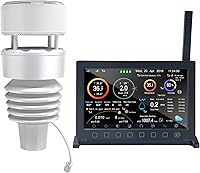
Ambient Weather's WS-2902 divides the system between the array and the console. The array measures wind, temperature, humidity, rainfall, UV and solar radiation, and the console displays readings indoors.
The Tempest sensor has no moving parts, according to its product details. The WS-2902's array includes a rain cup, so you may prefer to check the collection area as part of routine care.
Neither system removes the need to think about placement. Wind and rain readings depend on the sensor's surroundings, and a convenient spot beside a wall or under an overhang may not represent open outdoor conditions well.
Which station needs more maintenance?
Tempest's non-mechanical design has fewer moving components to inspect, while the WS-2902's array includes a rain cup that can collect debris. Both stations still benefit from periodic visual checks.
WeatherFlow describes Tempest as designed for near-zero maintenance. That is a maker claim, not a promise that the sensor never needs attention; check for dirt, damage and clear exposure after storms.
The WS-2902 array has a rain cup and several outdoor sensing functions. Keep the array accessible enough to inspect, and follow its instructions for cleaning and care.
Think about access before mounting either sensor. If reaching a roofline or tall pole would be difficult, choose a lower suitable location that still gives useful exposure and remains within the system's communication range.
Mounting can shape the upkeep routine as much as the sensor design. Use a stable site and check the best weather station pole mounting kit guide when the array needs a pole.
How do the display and remote monitoring options compare?
Choose the WS-2902 if you want a dedicated color console and Wi-Fi remote access; choose Tempest if app and Alexa access fits your routine. Tempest does not include a built-in display.
The WS-2902 includes a color LCD console and can send data over Wi-Fi for remote monitoring and alerts. Its sensor array first communicates with the console by radio, so the system has two wireless connections to consider.
Tempest is app and Alexa enabled, but you'll need a compatible way to view its readings. If you want a screen for Tempest, use this guide to choose a display for a Tempest weather station.
A console is more than a larger screen. It gives you a fixed place to check readings at home, while remote access helps when you're away; learn what a weather station console does before deciding which style suits your household.
Which station measures more of the weather?
Both systems cover common outdoor conditions, but Tempest includes lightning detection and the WS-2902 pairs its broader array with a console. Compare the measurements that change your decisions, not the length of a feature list.
Tempest lists wind speed and direction, temperature, humidity, pressure, dew point, UV, solar radiation, lightning and rainfall. Those readings can help you notice local changes around a home, garden or outdoor project.
The WS-2902 measures wind, temperature, humidity, rainfall, UV intensity and solar radiation. Its console and online tools add ways to view and share the station's data.
Pressure readings need context. A local station's pressure and a weather report's adjusted barometric pressure may use different reference levels, so consult the guide to station pressure vs barometric pressure before comparing numbers.
Don't treat either unit as a guarantee of future conditions. A personal station describes weather at its own location, while forecasts combine broader data and models.
Which system fits your monitoring needs?
Pick Tempest when you value a single non-mechanical sensor and app access; pick the WS-2902 when you want a console, array and Wi-Fi monitoring. The right choice depends on where you'll check readings and what you plan to do with them.
The WS-2902 may be a stronger fit if you want readings visible indoors without opening an app. Its network features also support remote access and alerts, and the Ambient Weather Network can host a customizable dashboard.
Tempest may suit you if you want to reduce the number of moving parts and don't need a dedicated screen in the box. Check your preferred app workflow and how you'll power and position the hub or viewing device before you buy.
If your needs are mostly indoor and outdoor temperature and humidity on a screen, a simpler display station may be enough. The Newentor and La Crosse options below focus on those home readings rather than wind and rainfall.
These two display stations are not direct substitutes for either Tempest or the WS-2902. They are worth considering if you want a simpler room-to-outdoor setup and don't need a full outdoor array.
What should you check before installing either system?
Confirm the installation spot, communication path and viewing setup before mounting a station. A good location needs useful exposure and practical access for setup and occasional checks.
The WS-2902 array communicates with its console by radio, while the console uses Wi-Fi for online features. Plan the console location near a suitable network connection and test the sensor communication before finalizing a mount.
Tempest's outdoor sensor is solar powered and transmits wirelessly. Check the installation instructions for the sensor and any required hub or app setup, then verify readings in the spot where you plan to mount it.
Avoid mounting where a roof edge, wall or nearby trees block the conditions you want to measure. Follow each system's placement guidance, and make sure you can reach the equipment safely for inspection.
What if a Tempest station needs repair or replacement?
Start with the specific symptom and check setup, power and communication before replacing a Tempest component. A missing reading can come from placement or connection issues as well as a hardware fault.
Use the Tempest weather station troubleshooting guide to narrow down common problems. If a component cannot be restored, read the Tempest weather station replacement guide to plan the next step.
Replacement decisions should account for the full system, including how you view data. If you move from Tempest to another station, check which measurements, apps and display habits you rely on before changing equipment.
Which station should you choose?
Choose Tempest for a non-mechanical sensor and app-centered access; choose Ambient Weather WS-2902 for a color console, Wi-Fi access and a separate sensor array. If you mainly want indoor and outdoor temperature on a screen, consider a simpler display station.
Your monitoring habits are the deciding factor: pick the system you'll check and maintain in its actual location. For the Tempest weather station vs Ambient Weather decision, choose the WS-2902 when its console matters, and Tempest when its sensor design and app workflow fit better.
Frequently asked questions
Is Tempest better than Ambient Weather?
Tempest may suit you better if you want a non-mechanical sensor and app-based monitoring. Ambient Weather WS-2902 may fit better if you want a separate sensor array, a color LCD console and Wi-Fi remote access.
Compare the measurements and display setup you will actually use.
Does Tempest come with a display?
No, the Tempest has no built-in display. It is app and Alexa enabled, so plan how you'll check readings before choosing it.
If you want a separate screen for Tempest data, review the available display options and confirm compatibility with your setup.
Does the Ambient Weather WS-2902 measure wind and rain?
Yes. The WS-2902 sensor array measures wind speed and direction and rainfall, along with temperature, humidity, UV intensity and solar radiation.
It also includes a color LCD display, while Wi-Fi supports remote access and alerts.
Which station needs less maintenance?
Tempest uses a non-mechanical sensor and is solar powered, which can mean fewer moving parts to inspect. Ambient Weather WS-2902 uses a sensor array with a rain cup.
Both still need a sensible installation location and periodic checks for debris or damage.
Can either station help you predict the weather?
Both provide weather information, but a home station is best used to understand conditions around your property rather than as a guaranteed forecast. Tempest includes weather forecasting features, and the WS-2902 connects with the Ambient Weather Network.
See how a home weather station can predict weather for a realistic guide.